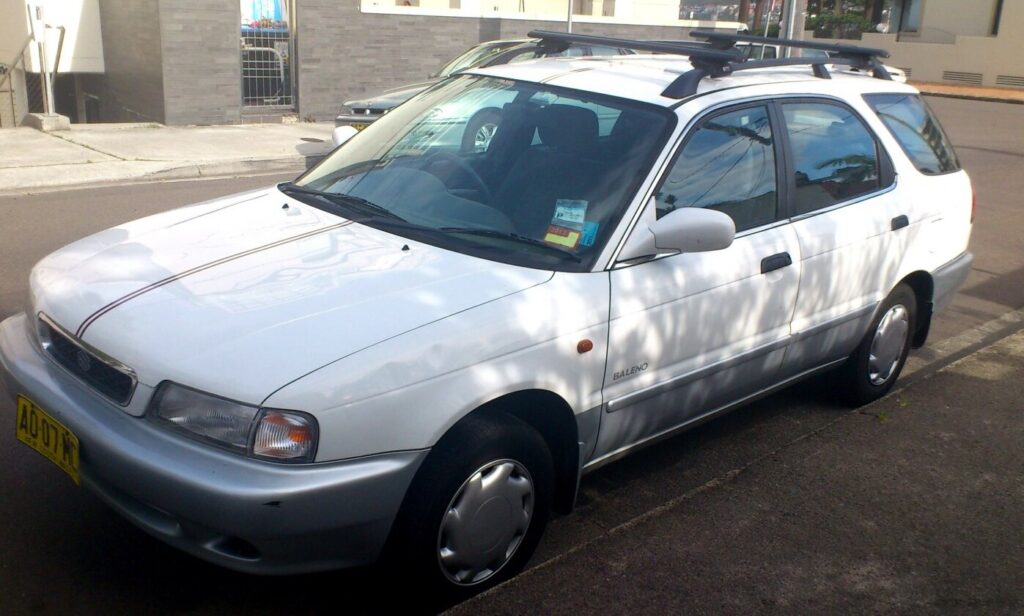
The Suzuki Baleno Combi (EG), produced between 1996 and 2000, represented Suzuki’s entry into the European compact estate car market. This variant, specifically the 1.8 i 16V model, offered a blend of practicality, reasonable performance, and affordability. It was positioned as a mid-range offering within the Baleno Combi lineup, slotting above the lower-displacement 1.3 and 1.6-liter models, but below any potential future performance or diesel variants. The Baleno Combi itself was based on the 1HX0/A3 platform, shared with other compact vehicles of the era, and aimed to provide a spacious and versatile alternative to traditional hatchbacks.
1.8L 16V Powertrain & Engine Architecture
The heart of the Baleno Combi 1.8 i 16V is the J18A engine, a 1.8-liter (1840 cc) inline four-cylinder gasoline engine. This engine is characterized by its multi-port fuel injection system and a double overhead camshaft (DOHC) valvetrain, contributing to its relatively high output for its displacement. The engine produces 121 horsepower at 6200 rpm and 152 Nm (112.11 lb-ft) of torque at 3400 rpm. The compression ratio is set at 9.8:1. Bore and stroke dimensions are 84mm x 83mm respectively. The engine oil capacity is 4.7 liters (4.97 US quarts or 4.14 UK quarts), and it requires coolant totaling 4.7 liters (4.97 US quarts or 4.14 UK quarts).
While a five-speed manual transmission was the most common pairing for this engine, an optional four-speed automatic transmission was also available. This automatic transmission, while offering convenience, did impact the vehicle’s acceleration and fuel economy compared to the manual version. The automatic transmission featured standard torque converter technology and was designed for smooth, everyday driving rather than sporty performance. The transmission’s gear ratios were tuned to prioritize fuel efficiency and comfortable cruising.
Engine Code Specifics
The J18A engine code is crucial for identifying specific parts and maintenance requirements. It signifies a particular iteration of the 1.8-liter engine used across several Suzuki models during this period. Understanding the engine code allows mechanics and owners to source the correct components and follow the appropriate service intervals. The J18A engine is generally considered a reliable unit, though regular maintenance, including oil changes and timing belt replacements, is essential for longevity.
Driving Characteristics
The Baleno Combi 1.8 i 16V offered a respectable driving experience for its class. With 121 hp, it provided adequate acceleration for everyday driving and highway cruising. The 0-100 km/h (0-62 mph) sprint took approximately 10.5 seconds, while top speed was rated at 185 km/h (114.95 mph). The automatic transmission, while convenient, did slightly diminish the car’s responsiveness compared to the manual version. Gear changes were generally smooth, but not particularly quick. The power delivery was linear, with a noticeable increase in torque around 3400 rpm. The weight-to-power ratio of 9.4 kg/hp and weight-to-torque ratio of 7.5 kg/Nm contributed to a reasonably balanced feel.
Compared to the lower-displacement 1.3 and 1.6-liter Baleno Combi models, the 1.8 i 16V offered a significant performance boost, making it more suitable for carrying passengers and luggage on longer journeys. However, it wasn’t intended to compete with more powerful estate cars like those offered by Ford or Volkswagen. The suspension was tuned for comfort, providing a relatively smooth ride, although it wasn’t particularly sporty.
Equipment & Trim Levels
The Baleno Combi 1.8 i 16V typically came equipped with a reasonable level of standard features for its price point. These included power steering, central locking, electric front windows, and an adjustable steering column. Interior upholstery was typically cloth, with a relatively simple dashboard layout. Air conditioning was often an optional extra, as were features like alloy wheels and a radio/cassette player. Higher trim levels might have included features like a sunroof, upgraded upholstery, and more comprehensive audio systems.
The Baleno Combi’s interior was designed with practicality in mind, offering ample space for passengers and cargo. The rear seats could be folded down to increase the luggage capacity from 375 liters (13.24 cu ft) to 1377 liters (48.63 cu ft). The overall interior ambiance was functional rather than luxurious.
Chassis & Braking
The Baleno Combi 1.8 i 16V utilized a front-engine, front-wheel-drive layout. The front suspension consisted of wishbone springs, while the rear suspension also employed a wishbone configuration. This setup provided a comfortable ride and reasonable handling characteristics. The braking system featured ventilated discs on the front wheels and discs on the rear wheels. Anti-lock Braking System (ABS) was included as a standard safety feature. The steering system was a rack and pinion type with hydraulic power assistance. The vehicle rode on 185/60 R14 tires mounted on 14-inch wheel rims.
Market Reception & Comparison
The Suzuki Baleno Combi 1.8 i 16V was generally well-received by automotive critics as a practical and affordable estate car. It was praised for its spacious interior, reasonable performance, and fuel efficiency. Fuel consumption figures were around 10.4 l/100 km (22.6 US mpg / 27.2 UK mpg) in urban conditions and 6.4 l/100 km (36.8 US mpg / 44.1 UK mpg) on the extra-urban cycle. Compared to the lower-displacement models, the 1.8 i 16V offered a noticeable improvement in performance, but at the cost of slightly higher fuel consumption. Reliability was generally good, although some owners reported minor issues with the electrical system. The Baleno Combi competed with other compact estate cars such as the Ford Escort Estate and the Vauxhall/Opel Astra Estate.
Technical Specifications
| Brand | Suzuki |
| Model | Baleno Combi (EG) |
| Type | 1.8 i 16V (121 Hp) |
| Start of production | 1996 |
| End of production | 2000 |
| Engine Displacement | 1840 cm3 (112.28 cu. in.) |
| Number of Cylinders | 4 |
| Engine Configuration | Inline |
| Power | 121 Hp @ 6200 rpm |
| Torque | 152 Nm @ 3400 rpm (112.11 lb.-ft. @ 3400 rpm) |
| Fuel Type | Petrol (Gasoline) |
| Acceleration 0-100 km/h | 10.5 sec |
| Acceleration 0-62 mph | 10.5 sec |
| Maximum Speed | 185 km/h (114.95 mph) |
| Kerb Weight | 1135 kg (2502.25 lbs) |
| Max. Weight | 1590 kg (3505.35 lbs) |
| Fuel Tank Capacity | 51 l (13.47 US gal | 11.22 UK gal) |
| Trunk (boot) space – minimum | 375 l (13.24 cu. ft.) |
| Trunk (boot) space – maximum | 1377 l (48.63 cu. ft.) |
| Tires Size | 185/60 R14 |
Legacy
The Suzuki Baleno Combi 1.8 i 16V, while not a particularly iconic vehicle, remains a reasonably well-regarded compact estate car from the late 1990s. The J18A engine is known for its durability, and well-maintained examples can still be found on the used car market today. However, age and mileage are significant factors, and potential buyers should be aware of the possibility of wear and tear on components such as the timing belt and suspension. The Baleno Combi’s practicality and affordability continue to appeal to budget-conscious buyers looking for a spacious and versatile vehicle. Parts availability can be a concern, but many components are still available through Suzuki dealerships and aftermarket suppliers. Overall, the Baleno Combi 1.8 i 16V represents a solid and dependable choice for those seeking a classic compact estate car.