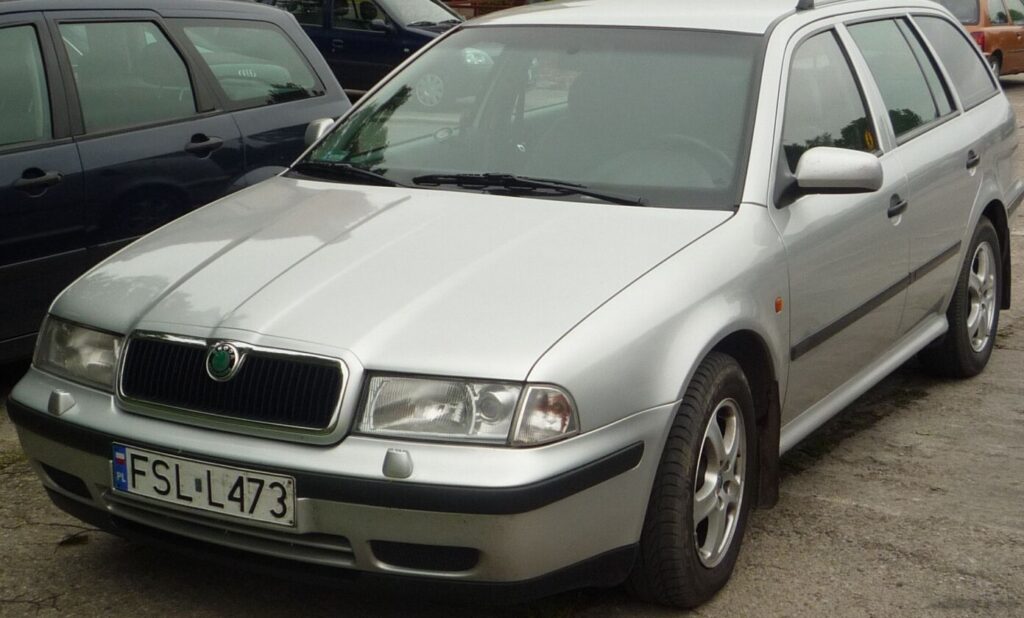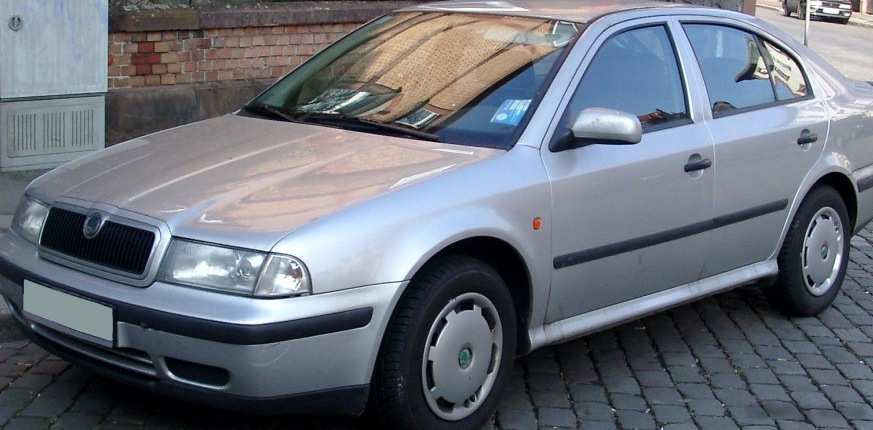
The Skoda Octavia I Tour 1.8 T (150 hp) Automatic, produced between December 1997 and July 2000, represented a significant step forward for Skoda, offering a blend of practicality, performance, and value within the compact family car segment. This variant occupied a mid-range position in the Octavia I lineup, positioned above the base 1.6-liter models and below the performance-oriented 1.8T 20V and later, the diesel options. Built on the Volkswagen Group’s 1HX0/A3 platform – shared with the Volkswagen Golf, Audi A3, and SEAT Leon – the Octavia I Tour established Skoda as a credible competitor in the European market and beyond.
Powertrain & Engine Architecture
At the heart of the Octavia 1.8 T Automatic lies the 1781cc (108.68 cu. in.) inline-four cylinder engine, identifiable by engine codes AGU, ARZ, and AUM. This engine is a turbocharged, multi-point fuel-injected gasoline engine. The turbocharger, a key component, significantly boosted power output compared to naturally aspirated engines of similar displacement. The engine featured a dual overhead camshaft (DOHC) valvetrain with five valves per cylinder (three intake, two exhaust), optimizing gas flow for improved performance.
The 1.8T engine utilized Bosch Motronic engine management, controlling fuel injection and ignition timing. Fuel delivery was handled by a multi-port fuel injection system, ensuring precise fuel metering. The engine’s compression ratio was set at 9:1. The automatic transmission paired with this engine was typically a four-speed unit, designed to provide smooth and convenient shifting. While not as sporty as a manual transmission, it catered to drivers prioritizing ease of use, particularly in urban environments. The transmission was electronically controlled, adapting shift points based on throttle position and vehicle speed.
Engine Specifications
Key engine specifications include a maximum power output of 150 hp (112 kW) at 5700 rpm and a peak torque of 210 Nm (154.89 lb-ft) available from 1750 rpm. This torque curve provided good low-end and mid-range responsiveness, making the car feel lively in everyday driving situations. The engine’s power-to-liter ratio was a respectable 84.2 hp/liter.
Driving Characteristics
The Octavia 1.8 T Automatic offered a comfortable and capable driving experience. Acceleration from 0 to 100 km/h (0-62 mph) took approximately 9.9 seconds, while 0-60 mph was achieved in around 9.4 seconds. Top speed was rated at 217 km/h (134.84 mph). Compared to the manual transmission version of the same engine, the automatic typically resulted in a slight decrease in acceleration due to inherent transmission losses. However, the automatic provided a more relaxed driving experience, particularly in stop-and-go traffic.
The four-speed automatic transmission’s gear ratios were tuned for a balance between fuel efficiency and performance. First gear provided adequate acceleration from a standstill, while higher gears allowed for comfortable cruising at highway speeds. The transmission’s shift quality was generally smooth, although it lacked the responsiveness of more modern automatic transmissions. The weight-to-power ratio of 8.6 kg/hp and weight-to-torque ratio of 6.1 kg/Nm contributed to a reasonably engaging driving experience, despite the automatic transmission.
Equipment & Trim Levels
The Octavia 1.8 T Automatic was typically equipped with a reasonable level of standard features. These included power windows, central locking, power steering, and an anti-lock braking system (ABS). Interior upholstery was usually cloth, with options for upgraded materials available. The dashboard layout was functional and straightforward, typical of Volkswagen Group designs of the era.
Optional extras included air conditioning, alloy wheels, a radio/cassette player (later upgraded to CD players), and a sunroof. Higher trim levels, often denoted by specific package names, could add features such as leather upholstery, heated seats, and upgraded audio systems. The Octavia’s spacious interior and large trunk (528-1328 liters / 18.65-46.9 cu. ft.) were key selling points, making it a practical choice for families.
Chassis & Braking
The Octavia I Tour featured a MacPherson strut front suspension and a coil spring rear suspension. This setup provided a comfortable ride quality while maintaining reasonable handling characteristics. Stabilizer bars were fitted to both the front and rear axles to reduce body roll during cornering. The braking system consisted of ventilated discs on the front wheels and discs on the rear wheels. The ABS system enhanced braking performance and stability, particularly on slippery surfaces.
The Octavia 1.8 T Automatic’s kerb weight of 1285 kg (2832.94 lbs) influenced the suspension tuning and braking performance. The suspension was generally tuned for comfort, prioritizing ride quality over outright sportiness. Tire size was typically 195/65 R15, mounted on 6J x 15 inch wheel rims.
Market Reception & Comparison
The Skoda Octavia 1.8 T Automatic was generally well-received by automotive critics. It was praised for its spacious interior, comfortable ride, and strong engine performance. However, some critics noted that the automatic transmission felt somewhat dated compared to newer designs. Fuel economy was a mixed bag, with combined fuel consumption averaging around 9 l/100 km (26.1 US mpg / 31.4 UK mpg / 11.1 km/l). This was comparable to other cars in its class, but the turbocharged engine could be thirsty under hard acceleration.
Compared to the 1.6-liter Octavia models, the 1.8 T Automatic offered significantly more power and performance. However, it was more expensive to purchase and operate. Compared to the higher-output 1.8T 20V version, the 150 hp engine provided a more relaxed driving experience, while the automatic transmission offered greater convenience. The diesel variants offered superior fuel economy but lacked the 1.8T’s responsiveness.
Technical Specifications
| Brand | Skoda |
| Model | Octavia |
| Generation | Octavia I Tour |
| Type (Engine) | 1.8 T (150 Hp) Automatic |
| Start of production | December, 1997 |
| End of production | July, 2000 |
| Fuel consumption (urban) | 12.8 l/100 km (18.4 US mpg, 22.1 UK mpg, 7.8 km/l) |
| Fuel consumption (extra urban) | 6.9 l/100 km (34.1 US mpg, 40.9 UK mpg, 14.5 km/l) |
| Fuel consumption (combined) | 9 l/100 km (26.1 US mpg, 31.4 UK mpg, 11.1 km/l) |
| Fuel Type | Petrol (Gasoline) |
| Acceleration 0 – 100 km/h | 9.9 sec |
| Acceleration 0 – 62 mph | 9.9 sec |
| Acceleration 0 – 60 mph | 9.4 sec |
| Maximum speed | 217 km/h (134.84 mph) |
| Power | 150 Hp @ 5700 rpm |
| Torque | 210 Nm @ 1750 rpm (154.89 lb.-ft. @ 1750 rpm) |
| Engine Displacement | 1781 cm3 (108.68 cu. in.) |
| Number of cylinders | 4 |
| Compression ratio | 9:1 |
| Kerb Weight | 1285 kg (2832.94 lbs) |
| Max. weight | 1830 kg (4034.46 lbs) |
| Trunk (boot) space – minimum | 528 l (18.65 cu. ft.) |
| Trunk (boot) space – maximum | 1328 l (46.9 cu. ft.) |
| Fuel tank capacity | 55 l (14.53 US gal, 12.1 UK gal) |
| Length | 4511 mm (177.6 in) |
| Width | 1731 mm (68.15 in) |
| Height | 1429 mm (56.26 in) |
| Wheelbase | 2512 mm (98.9 in) |
| Number of gears and type of gearbox | 4 gears, automatic transmission |
Legacy
The Skoda Octavia I Tour 1.8 T Automatic, while now an older vehicle, enjoys a reasonable reputation for reliability. The 1.8T engine, when properly maintained, is known to be durable. Common issues include turbocharger wear, occasional problems with the fuel injection system, and age-related wear and tear on the automatic transmission.
On the used car market, these Octavias are often sought after for their practicality, affordability, and relatively strong performance. They represent a good value proposition for buyers looking for a spacious and reliable family car. However, potential buyers should carefully inspect the vehicle for signs of wear and tear, particularly the turbocharger and transmission. The Octavia I Tour 1.8 T Automatic played a crucial role in establishing Skoda as a mainstream automotive brand, demonstrating the company’s ability to produce well-engineered and competitively priced vehicles.