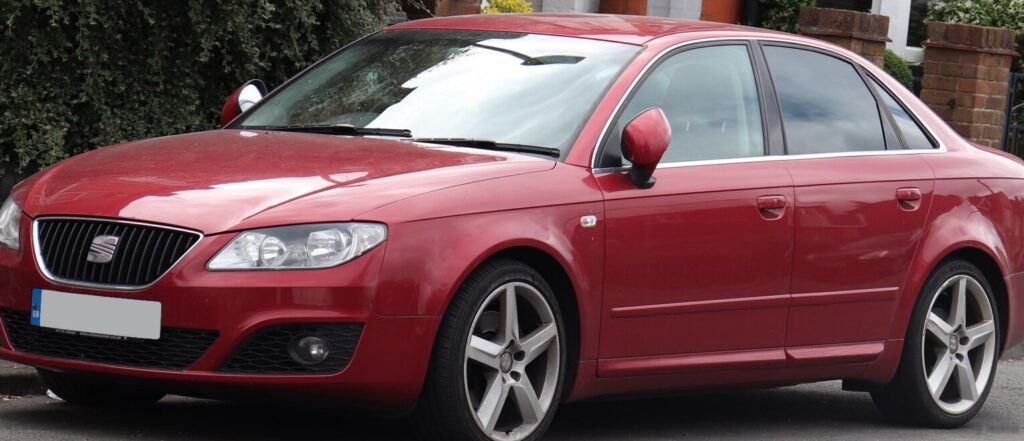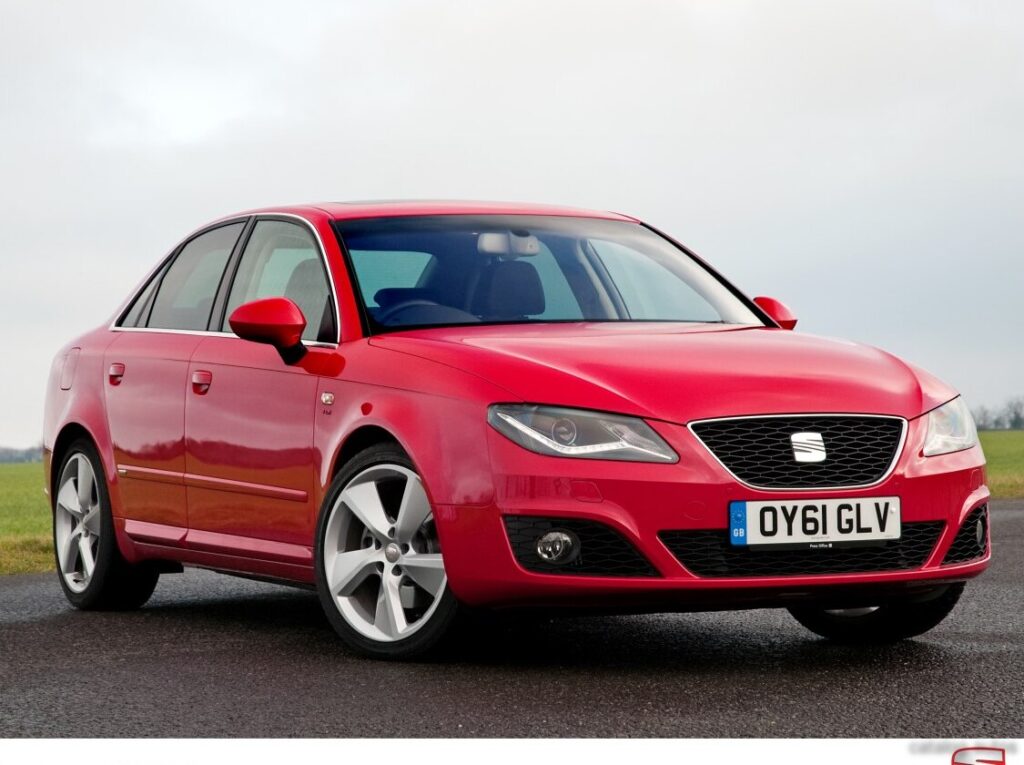
The Seat Exeo, launched in 2008 and receiving a significant facelift in 2011, represented Seat’s entry into the mid-size executive car segment. Based heavily on the outgoing Audi B7 A4 platform (internally designated 1HX0/A3), the Exeo aimed to provide a more sophisticated and refined offering than previous Seat models. The 2.0 TDI 170 hp variant, produced from September 2011 to May 2013, occupied a central position within the Exeo lineup, offering a balance between performance, fuel economy, and equipment. It was positioned above the lower-powered TDI models and below the flagship petrol variants, targeting fleet buyers and private customers seeking a practical and efficient executive saloon.
Seat Exeo 2.0 TDI (170 hp) – An Overview
The 2.0 TDI 170 hp Exeo was a key model in Seat’s range during its relatively short production run. It combined a potent diesel engine with a comfortable and well-equipped saloon body style. The facelifted model, introduced in 2011, featured revised styling cues, including a new front grille, headlights, and bumpers, along with interior upgrades designed to enhance the car’s perceived quality. This variant was primarily sold in Europe, where diesel engines held a significant market share in the executive car segment.
Powertrain & Engine Architecture
At the heart of the Exeo 2.0 TDI 170 hp lay the Volkswagen Group’s EA189 series common rail diesel engine, specifically the CGLB engine code. This 1968 cc (120.09 cu. in.) inline-four cylinder engine featured a turbocharger with an intercooler to boost power and efficiency. The engine utilized a sophisticated common rail direct injection system, delivering fuel directly into the combustion chamber at extremely high pressure. This system, coupled with a double overhead camshaft (DOHC) valvetrain with four valves per cylinder, allowed for precise control over the combustion process, resulting in improved performance and reduced emissions. The compression ratio was set at 16.5:1. The engine produced 170 hp (125 kW) at 4200 rpm and 350 Nm (258.15 lb.-ft.) of torque between 1750 and 2500 rpm. The engine was mounted longitudinally in the front of the vehicle.
The Exeo 2.0 TDI 170 hp was typically paired with a six-speed manual transmission, although a six-speed automatic transmission (specifically the 09G) was also available as an option. The automatic transmission offered smooth and convenient gear changes, but generally resulted in a slight decrease in fuel economy compared to the manual version. The automatic transmission featured Tiptronic functionality, allowing drivers to manually select gears when desired.
Driving Characteristics
The 2.0 TDI 170 hp Exeo offered a compelling blend of performance and economy. Acceleration from 0 to 100 km/h (0-62 mph) took approximately 8.4 seconds, while top speed was rated at 229 km/h (142.29 mph). The engine’s strong low-end torque made it well-suited for everyday driving, providing effortless acceleration in urban environments and ample power for overtaking on the highway. Compared to the lower-powered TDI variants, the 170 hp version offered noticeably more punch, making it a more enjoyable driving experience. However, it didn’t quite match the responsiveness of the petrol engines, particularly the 2.0 TFSI. The six-speed manual transmission provided precise gear changes, while the optional automatic transmission offered a more relaxed driving experience. The gear ratios were tuned to prioritize fuel efficiency, with taller gearing in higher gears for comfortable cruising.
Equipment & Trim Levels
The Exeo 2.0 TDI 170 hp was available in several trim levels, each offering a different level of equipment. Standard features typically included air conditioning, electric windows, central locking, a CD stereo, and alloy wheels. Higher trim levels added features such as leather upholstery, a sunroof, a navigation system, parking sensors, and automatic headlights and wipers. Interior upholstery options included cloth and leather, with a range of color choices available. The dashboard layout was functional and well-designed, with clear instrumentation and intuitive controls. Optional extras included a premium sound system, heated seats, and a rear parking camera.
Chassis & Braking
The Exeo’s chassis was derived from the Audi B7 A4, providing a solid and well-engineered foundation. The front suspension featured independent multi-link suspension with a transverse stabilizer bar, while the rear suspension utilized an independent on trapezoidal lever setup, also with a transverse stabilizer bar. This suspension configuration delivered a comfortable ride quality and good handling characteristics. The Exeo 2.0 TDI 170 hp was equipped with ventilated discs on the front wheels (312×25 mm) and solid discs on the rear wheels (255×12 mm). Anti-lock braking system (ABS) was standard, providing enhanced braking performance and stability. The steering was a hydraulic power-assisted rack and pinion system, offering precise and responsive steering feel.
Market Reception & Comparison
The Seat Exeo 2.0 TDI 170 hp received generally positive reviews from automotive critics. It was praised for its comfortable ride, spacious interior, and strong diesel engine. However, some critics noted that the Exeo lacked the brand prestige of its Audi and BMW rivals. Fuel economy was a strong point, with combined fuel consumption figures of around 5.4 l/100 km (43.6 US mpg / 52.3 UK mpg). Compared to the lower-powered TDI variants, the 170 hp version offered a significant improvement in performance, making it a more appealing option for drivers who prioritized driving enjoyment. Compared to the petrol engines, the 2.0 TDI offered superior fuel economy and torque, but lacked the same level of responsiveness. Reliability was generally good, although some owners reported issues with the diesel particulate filter (DPF) and the turbocharger.
Technical Specifications
| Engine Model/Code | EA189 / CGLB |
| Engine Displacement | 1968 cm3 (120.09 cu. in.) |
| Number of Cylinders | 4 |
| Engine Configuration | Inline |
| Cylinder Bore | 81 mm (3.19 in.) |
| Piston Stroke | 95.5 mm (3.76 in.) |
| Compression Ratio | 16.5:1 |
| Number of Valves per Cylinder | 4 |
| Fuel Injection System | Diesel Commonrail |
| Engine Aspiration | Turbocharger, Intercooler |
| Valvetrain | DOHC |
| Engine Oil Capacity | 4.6 l (4.86 US qt | 4.05 UK qt) |
| Coolant Capacity | 8 l (8.45 US qt | 7.04 UK qt) |
| Power | 170 hp @ 4200 rpm |
| Torque | 350 Nm @ 1750-2500 rpm (258.15 lb.-ft. @ 1750-2500 rpm) |
| Fuel Consumption (Urban) | 7.3 l/100 km (32.2 US mpg / 38.7 UK mpg / 13.7 km/l) |
| Fuel Consumption (Extra Urban) | 4.4 l/100 km (53.5 US mpg / 64.2 UK mpg / 22.7 km/l) |
| Fuel Consumption (Combined) | 5.4 l/100 km (43.6 US mpg / 52.3 UK mpg / 18.5 km/l) |
| CO2 Emissions | 142 g/km |
| Kerb Weight | 1455 kg (3207.73 lbs.) |
| Max. Weight | 2015 kg (4442.31 lbs.) |
| Trunk (Boot) Space (Minimum) | 460 l (16.24 cu. ft.) |
| Trunk (Boot) Space (Maximum) | 833 l (29.42 cu. ft.) |
| Fuel Tank Capacity | 70 l (18.49 US gal | 15.4 UK gal) |
Legacy
The Seat Exeo, while a well-regarded car, was discontinued in 2013 due to Seat’s strategic decision to focus on more mainstream models. The 2.0 TDI 170 hp variant remains a popular choice on the used car market, offering a good balance of performance, economy, and practicality. The EA189 engine, while known for some potential issues with the DPF and turbocharger, is generally reliable if properly maintained. The Exeo’s relatively low production numbers and its status as a somewhat overlooked executive car have contributed to its growing appeal among enthusiasts seeking a distinctive and affordable saloon.