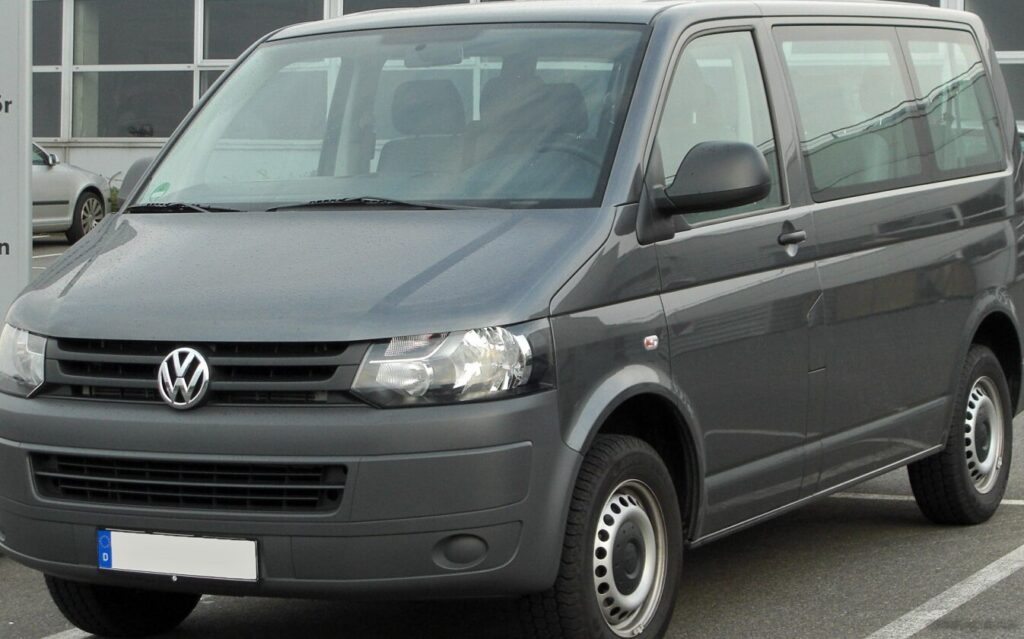
The Volkswagen Transporter (T5) facelift, produced from 2009 to 2015, represented a significant refresh of the fifth-generation Transporter line. Within this generation, the Kombi variant offered a versatile blend of commercial practicality and passenger comfort. The 2.0 TDI (84 hp) L1H1 configuration, specifically, served as an entry-level option, appealing to budget-conscious buyers and those prioritizing fuel efficiency over outright performance. This model occupied the lower end of the T5 range, positioned below more powerful TDI variants and the gasoline-powered options. The “L1H1” designation refers to the vehicle’s body length (L1 – short wheelbase) and roof height (H1 – standard roof).
Powertrain & Engine Architecture
The heart of the Transporter Kombi 2.0 TDI (84 hp) is the EA189 series 2.0-liter four-cylinder diesel engine, specifically identified by engine code CAAA. This engine is a turbocharged common rail diesel, representing a move towards more refined and efficient diesel technology. The 1968 cc engine features a cast iron block and aluminum cylinder head, employing a double overhead camshaft (DOHC) valvetrain with four valves per cylinder. This configuration allows for efficient gas exchange and contributes to the engine’s relatively flat torque curve.
Fuel is delivered via a Bosch common rail system operating at high pressure, ensuring precise fuel atomization and optimized combustion. The turbocharger, coupled with an intercooler, forces more air into the cylinders, boosting power output. The engine produces 84 horsepower at 3500 rpm and 220 Nm (162.26 lb-ft) of torque between 1250 and 2500 rpm. This torque band is particularly useful for a van intended for carrying loads, providing usable power at lower engine speeds.
The 2.0 TDI (84 hp) was typically paired with a five-speed manual transmission, although a six-speed automatic transmission was available as an option. The automatic transmission, while offering convenience, slightly impacted fuel economy and performance compared to the manual version. The transmission is a conventional torque converter automatic, designed for durability and ease of use.
Engine Specifications (CAAA)
The CAAA engine, while robust, was subject to scrutiny regarding potential Dieselgate emissions issues. While not as severely affected as some other EA189 engines, it’s important to note that software updates were available to address emissions compliance.
Driving Characteristics
The 84 hp 2.0 TDI, when coupled with the standard five-speed manual transmission, provided adequate, though not exhilarating, performance. Acceleration from 0-100 km/h (0-62 mph) took approximately 21.1 seconds, and top speed was limited to 146 km/h (90.72 mph). The focus was on usability and fuel economy rather than outright speed. The engine’s torque delivery made it well-suited for everyday driving and carrying moderate loads. However, when fully loaded or tackling steep inclines, the engine could feel strained, requiring frequent downshifts.
The optional six-speed automatic transmission further softened the driving experience, but at the cost of some responsiveness. Gear changes were generally smooth, but the transmission could sometimes hunt for the right gear, particularly under heavy acceleration. Compared to the more powerful 140 hp or 180 hp TDI versions, the 84 hp model felt significantly slower and less refined. The manual transmission offered a more engaging driving experience and allowed for better control over the engine’s power.
Equipment & Trim Levels
The Transporter Kombi 2.0 TDI (84 hp) L1H1 typically came with a relatively basic level of equipment, reflecting its position as an entry-level model. Standard features generally included power steering, ABS brakes, a driver’s airbag, and basic steel wheels. The interior was typically trimmed with durable, hard-wearing plastics and cloth upholstery. The Kombi configuration offered seating for up to nine passengers, with a flexible seating arrangement that could be adapted to suit different needs.
Optional extras included air conditioning, electric windows, central locking, a radio/CD player, and upgraded upholstery. Higher trim levels, such as Trendline and Highline, added more features as standard, including alloy wheels, upgraded interior trim, and additional safety equipment. The L1H1 configuration offered a generous cargo capacity of 5800 liters (204.83 cu. ft.) with the rear seats folded down, making it a practical choice for both commercial and family use.
Chassis & Braking
The T5 Transporter utilized a robust chassis designed to withstand the demands of commercial use. The front suspension consisted of independent McPherson struts with coil springs and an anti-roll bar, providing a comfortable ride and good handling. The rear suspension employed a semi-independent trailing arm setup with coil springs and a transverse stabilizer bar. This configuration offered a good balance between ride comfort and load-carrying capacity.
Braking duties were handled by ventilated disc brakes on all four wheels, providing ample stopping power. ABS (Anti-lock Braking System) was standard, enhancing safety in emergency braking situations. The steering system was a hydraulic power-assisted rack and pinion setup, offering precise and responsive steering feel. The vehicle’s weight-to-power ratio of 22.6 kg/hp indicated that performance was not a primary focus, but the robust chassis and braking system ensured safe and controlled handling.
Market Reception & Comparison
The Transporter Kombi 2.0 TDI (84 hp) L1H1 was generally well-received as a practical and affordable van. Critics praised its fuel efficiency, versatility, and durability. However, the engine’s limited power output was often cited as a drawback, particularly when compared to the more powerful TDI variants. Fuel economy figures averaged around 7.3 l/100 km (32.2 US mpg), making it an economical choice for businesses and individuals alike.
Compared to the 140 hp TDI version, the 84 hp model offered significantly lower running costs but lacked the performance needed for demanding applications. The gasoline-powered versions offered a smoother and quieter driving experience but were less fuel-efficient. The 84 hp TDI struck a balance between affordability and practicality, making it a popular choice for those who prioritized economy over performance.
Technical Specifications
| Brand | Volkswagen |
| Model | Transporter |
| Generation | Transporter (T5, facelift 2009) Kombi |
| Type | 2.0 TDI (84 Hp) L1H1 |
| Start of production | 2009 |
| End of production | 2015 |
| Engine Code | CAAA |
| Engine Displacement | 1968 cm3 (120.09 cu. in.) |
| Number of Cylinders | 4, Inline |
| Power | 84 Hp @ 3500 rpm |
| Torque | 220 Nm @ 1250-2500 rpm (162.26 lb.-ft.) |
| Fuel Consumption (Urban) | 9.5 l/100 km (24.8 US mpg) |
| Fuel Consumption (Extra Urban) | 6.1 l/100 km (38.6 US mpg) |
| Fuel Consumption (Combined) | 7.3 l/100 km (32.2 US mpg) |
| CO2 Emissions | 193 g/km |
| Kerb Weight | 1901-2066 kg (4190.99 – 4554.75 lbs.) |
| Max. Weight | 2600-3000 kg (5732.02 – 6613.87 lbs.) |
| Fuel Tank Capacity | 80 l (21.13 US gal) |
| Transmission | 5-speed manual (optional 6-speed automatic) |
| Brakes (Front) | Ventilated discs, 308×29.5 mm |
| Brakes (Rear) | Ventilated discs, 294×22 mm |
Legacy
The 2.0 TDI (84 hp) engine, while not the most powerful option in the T5 range, proved to be a reliable and durable unit when properly maintained. The CAAA engine code, despite the Dieselgate concerns, generally held up well over time. Today, used examples of the Transporter Kombi 2.0 TDI (84 hp) L1H1 remain relatively affordable and represent a practical choice for those seeking a versatile and economical van. However, potential buyers should be aware of the potential for emissions-related issues and ensure that any vehicle they consider has received the necessary software updates. The T5 Transporter, in all its variants, has established a strong reputation for reliability and practicality, making it a popular choice in the used vehicle market.