
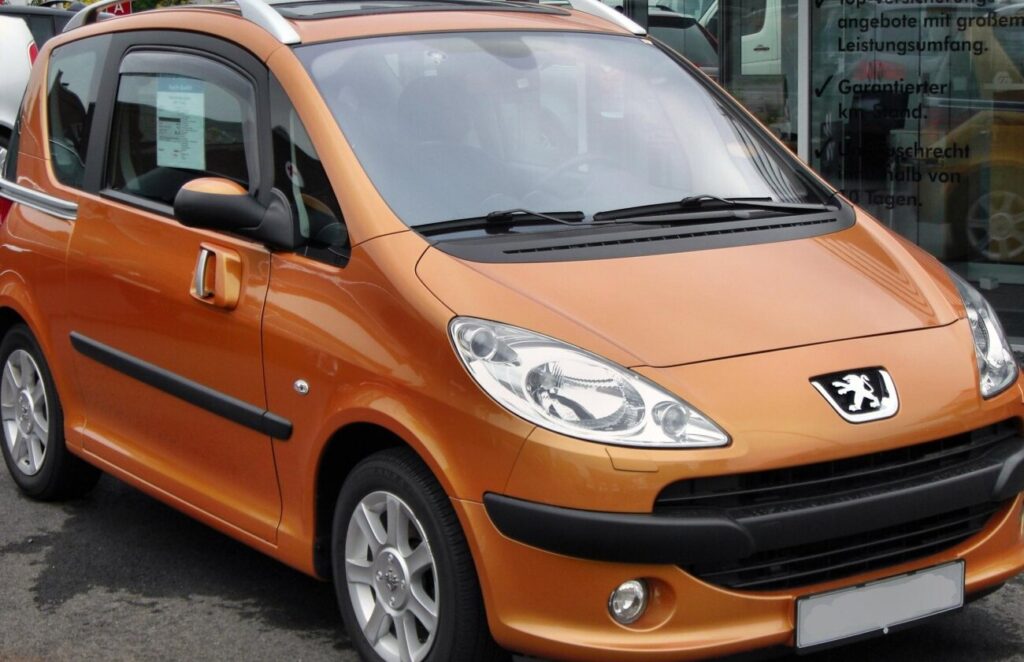
The Peugeot 1007 1.6 16V, produced between 2005 and 2007, was a distinctive subcompact MPV (Multi-Purpose Vehicle) marketed by the French automaker Peugeot. This variant occupied the mid-range position within the 1007 lineup, offering a balance between affordability and performance compared to the lower-powered engine options. It was built on Peugeot’s 1 platform, also known as the 1HX0/A3 platform, shared with the Citroën C2 and C3. The 1007 was notable for its innovative, electronically controlled sliding rear doors, a feature intended to improve accessibility in tight parking spaces.
Peugeot 1007 1.6 16V: An Overview
The 1.6 16V version of the Peugeot 1007 aimed to provide a more engaging driving experience than the base 1.4-liter engine, while remaining a practical and economical choice for urban commuters and small families. It distinguished itself with a higher power output and slightly improved performance figures. The 1007, in general, was designed to maximize interior space within a small footprint, making it a popular choice in European cities where parking is often limited. The electronically operated rear sliding doors were a key selling point, offering convenience and a unique aesthetic.
Powertrain & Engine Architecture
At the heart of the 1007 1.6 16V lies the NFU (and sometimes TU5JP4) engine code, a 1.6-liter inline four-cylinder gasoline engine. This engine featured a double overhead camshaft (DOHC) valvetrain with four valves per cylinder, contributing to its improved breathing and power delivery. The engine utilized multi-port fuel injection, a common technology at the time, to deliver fuel directly into the intake manifold. The engine’s displacement is 1587 cm³ (96.84 cubic inches), and it produces a maximum power output of 110 horsepower (Hp) at 5800 rpm. Torque output is rated at 147 Nm (108.42 lb-ft) at 4000 rpm. The engine is naturally aspirated, meaning it does not employ a turbocharger or supercharger.
The 1007 1.6 16V was primarily offered with a 5-speed manual transmission. While an automatic transmission was available in some markets, it was less common and often considered to detract from the driving experience due to its slower shift times and less responsive nature. The manual transmission provided a more direct connection to the engine, allowing drivers to fully utilize the available power. The transmission’s gear ratios were tuned for a balance of acceleration and fuel efficiency, prioritizing usability in urban environments.
Driving Characteristics
The Peugeot 1007 1.6 16V offered a noticeable improvement in performance compared to the 1.4-liter version. Acceleration from 0 to 100 km/h (0-62 mph) took approximately 11.1 seconds, and 0 to 60 mph was achieved in around 10.5 seconds. While not a particularly sporty vehicle, the 1.6-liter engine provided sufficient power for everyday driving, including highway merging and overtaking. The car’s relatively light weight (between 1203-1280 kg or 2652.16 – 2821.92 lbs) helped to offset the modest power output. The handling was generally considered competent, with a comfortable ride quality suitable for city driving. The steering, while electrically assisted, provided reasonable feedback. Compared to the manual transmission version, the automatic variant felt somewhat sluggish, with slower acceleration and a less engaging driving experience.
Equipment & Trim Levels
The 1007 1.6 16V typically came equipped with a reasonable level of standard features. These included power steering, central locking, electric front windows, and an audio system. Air conditioning was often included as standard or available as an option. Interior upholstery was typically cloth, with a range of colors available. Higher trim levels offered upgrades such as alloy wheels, a panoramic sunroof, and upgraded audio systems. Optional extras included parking sensors, leather upholstery, and a trip computer. The dashboard layout was functional and relatively simple, with easy-to-read gauges and controls. The interior space, while compact, was well-utilized, providing comfortable seating for four adults.
Chassis & Braking
The Peugeot 1007 featured an independent McPherson strut suspension at the front, providing a comfortable and controlled ride. The rear suspension utilized a coil spring and torsion beam setup, which was a cost-effective solution for maintaining ride quality and handling. The front brakes were ventilated discs, offering good stopping power, while the rear brakes were drums. Anti-lock Braking System (ABS) was standard, enhancing safety by preventing wheel lockup during hard braking. The steering system was a rack and pinion type with electric power assistance. Tire sizes typically ranged from 185/60 R15 to 195/50 R16, depending on the trim level.
Market Reception & Comparison
The Peugeot 1007 1.6 16V received mixed reviews from automotive critics. While the innovative sliding rear doors were widely praised, some critics found the interior space to be somewhat limited and the overall driving experience to be unremarkable. The 1.6-liter engine was generally considered adequate, but not particularly exciting. Fuel economy was a strong point, with combined fuel consumption figures around 6.9 l/100 km (34.1 US mpg or 40.9 UK mpg). In terms of reliability, the 1007 had a somewhat mixed reputation. Some owners reported issues with the electronic sliding doors and other electrical components. However, the 1.6-liter engine itself was generally considered to be reliable. Compared to other subcompact MPVs of the time, such as the Renault Modus and the Fiat Idea, the 1007 offered a unique combination of style, practicality, and innovative features.
Technical Specifications
| Brand | Peugeot |
| Model | 1007 |
| Generation | 1007 |
| Type (Engine) | 1.6 16V (110 Hp) |
| Start of production | 2005 |
| End of production | 2007 |
| Powertrain Architecture | Internal Combustion engine |
| Body type | Minivan |
| Seats | 4 |
| Doors | 3 |
| Fuel consumption (economy) – urban (NEDC) | 9.2 l/100 km (25.6 US mpg) |
| Fuel consumption (economy) – extra urban (NEDC) | 5.5 l/100 km (42.8 US mpg) |
| Fuel consumption (economy) – combined (NEDC) | 6.9 l/100 km (34.1 US mpg) |
| CO2 emissions (NEDC) | 163 g/km |
| Fuel Type | Petrol (Gasoline) |
| Acceleration 0 – 100 km/h | 11.1 sec |
| Acceleration 0 – 62 mph | 11.1 sec |
| Acceleration 0 – 60 mph | 10.5 sec |
| Maximum speed | 190 km/h (118.06 mph) |
| Emission standard | Euro 4 |
| Weight-to-power ratio | 10.9 kg/Hp |
| Weight-to-torque ratio | 8.2 kg/Nm |
| Power | 110 Hp @ 5800 rpm |
| Torque | 147 Nm @ 4000 rpm (108.42 lb.-ft. @ 4000 rpm) |
| Engine layout | Front, Transverse |
| Engine Model/Code | NFU TU5JP4 |
| Engine displacement | 1587 cm3 (96.84 cu. in.) |
| Number of cylinders | 4 |
| Engine configuration | Inline |
| Cylinder Bore | 78 mm (3.07 in.) |
| Piston Stroke | 83 mm (3.27 in.) |
| Number of valves per cylinder | 4 |
| Fuel injection system | Multi-port manifold injection |
| Engine aspiration | Naturally aspirated engine |
| Valvetrain | DOHC |
| Engine oil capacity | 3.25 l (3.43 US qt | 2.86 UK qt) |
| Coolant | 5.9 l (6.23 US qt | 5.19 UK qt) |
| Kerb Weight | 1203-1280 kg (2652.16 – 2821.92 lbs.) |
| Max. weight | 1606 kg (3540.62 lbs.) |
| Trunk (boot) space – minimum | 364 l (12.85 cu. ft.) |
| Fuel tank capacity | 40 l (10.57 US gal | 8.8 UK gal) |
| Minimum turning circle | 10.7 m (35.1 ft.) |
| Drive wheel | Front wheel drive |
| Number of gears and type of gearbox | 5 gears, manual transmission |
| Front suspension | Independent type McPherson |
| Rear suspension | Coil spring, Torsion |
| Front brakes | Ventilated discs |
| Rear brakes | Drum |
Legacy
The Peugeot 1007 1.6 16V, while not a sales success on the scale of some of its competitors, remains a fondly remembered vehicle for its quirky design and innovative features. The 1.6-liter engine proved to be relatively durable, and well-maintained examples continue to be found on the used car market today. However, potential buyers should be aware of the potential for issues with the electronic sliding doors and other electrical components. The 1007 paved the way for Peugeot’s continued experimentation with compact MPV designs and helped to establish the brand’s reputation for innovative features.
