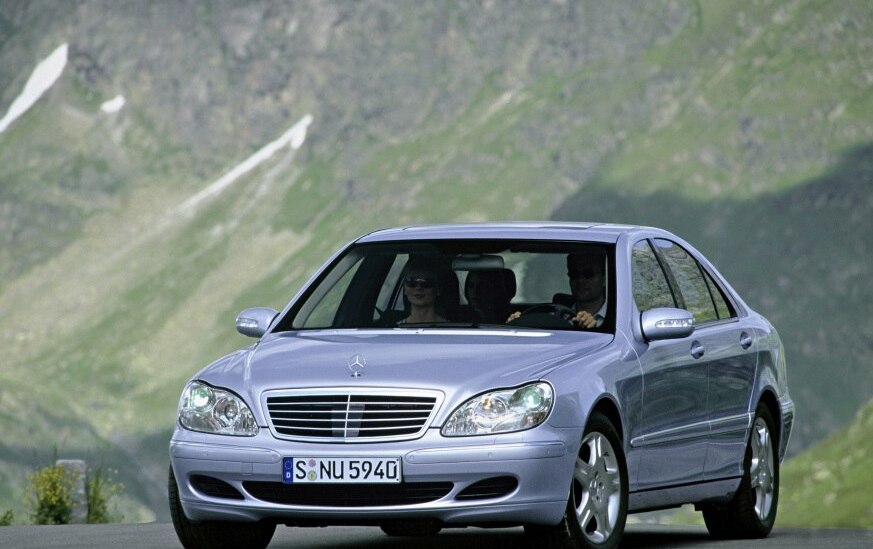
The Mercedes-Benz S 500, part of the W220 S-Class facelift introduced in August 2002 and produced through August 2003, represented a significant iteration of the flagship luxury sedan. This variant, equipped with a 5.0-liter V8 engine producing 306 horsepower and a 5G-TRONIC automatic transmission, occupied a central position within the W220 lineup, offering a balance of performance and refinement. The W220 facelift addressed many of the criticisms leveled at the initial 1998 launch, improving build quality and incorporating updated technology. The S 500 specifically aimed to provide a luxurious and powerful driving experience, appealing to buyers who desired a high level of comfort and prestige without opting for the even more exclusive V12 models.
Powertrain & Engine Architecture
The heart of the S 500 was the M113.960 engine, a naturally aspirated 5.0-liter (4966 cc) V8. This engine was a significant upgrade over previous Mercedes-Benz V8s, featuring all-aluminum construction, a short-stroke design, and three valves per cylinder (two intake, one exhaust). The engine utilized multi-port fuel injection, delivering fuel directly into the intake ports. The valvetrain employed a single overhead camshaft (SOHC) design. Maximum power output was rated at 306 hp (228 kW) at 5600 rpm, with peak torque of 460 Nm (339.28 lb-ft) available between 2700 and 4250 rpm. The compression ratio was 10:1. Engine oil capacity was 8 liters (8.45 US quarts / 7.04 UK quarts), and Mercedes-Benz specified a particular oil grade for optimal performance and longevity.
Paired with the M113.960 engine was the 5G-TRONIC automatic transmission. This five-speed automatic was a sophisticated unit for its time, offering smooth and responsive shifts. It featured a torque converter lock-up clutch to improve fuel efficiency at cruising speeds. The transmission was electronically controlled, adapting shift points based on driving style and road conditions. While not offering the outright speed of some contemporary transmissions, the 5G-TRONIC prioritized comfort and refinement, aligning with the S-Class’s overall character.
Engine Codes & Variations
The M113 engine family saw several variations throughout its production run. The M113.960 specifically designated the 5.0-liter version used in the S 500. Other variants included the M113.940 (4.3-liter) and the M113.990 (5.5-liter). The S 500’s engine was positioned between these two in terms of performance and fuel consumption. Compared to the 4.3-liter engine found in the S 430, the S 500 offered a noticeable increase in power and torque, resulting in quicker acceleration. Conversely, the 5.5-liter engine in the S 600 provided even greater performance, but at the cost of increased fuel consumption and a higher price point.
Driving Characteristics
The S 500 delivered a refined and powerful driving experience. Acceleration from 0 to 100 km/h (0-62 mph) took approximately 6.5 seconds, and 0-60 mph was achieved in around 6.2 seconds. While these figures weren’t groundbreaking for a luxury sedan of this caliber, they were more than adequate for comfortable and confident highway cruising and overtaking. The 5G-TRONIC transmission contributed to smooth acceleration, although it wasn’t as quick to downshift as some later-generation transmissions. The engine’s broad torque curve meant that strong acceleration was available across a wide range of engine speeds. The electronically limited top speed of 250 km/h (155 mph) provided ample performance for most drivers.
Compared to the S 430, the S 500 felt noticeably more responsive, particularly during acceleration. The larger engine provided a more effortless feel, especially when fully loaded with passengers and luggage. However, the S 500 didn’t possess the raw, visceral power of the S 600, which offered a more aggressive and sporty driving experience. The S 500 struck a balance, providing ample power for everyday driving while maintaining a comfortable and refined ride.
Equipment & Trim Levels
The S 500 came standard with a comprehensive array of luxury features. Interior upholstery typically consisted of high-quality leather, available in a range of colors. Wood trim adorned the dashboard and door panels, adding to the luxurious ambiance. Standard equipment included automatic climate control, power-adjustable seats with memory function, a premium sound system, and a multi-function steering wheel. The S 500 also featured advanced safety systems, such as anti-lock brakes (ABS), traction control, and multiple airbags.
Numerous optional extras were available, allowing buyers to customize their S 500 to their specific preferences. These included a panoramic sunroof, rear seat entertainment system, massaging seats, and a more advanced navigation system. The Distronic adaptive cruise control system, a pioneering feature at the time, was also available as an option. The S 500’s trim level was generally considered to be mid-to-high range within the W220 lineup, offering a significant step up in luxury and features compared to the base S 320 model.
Chassis & Braking
The S 500 featured an independent multi-link suspension system at both the front and rear. Air suspension was standard, providing a remarkably smooth and comfortable ride. The air suspension system automatically adjusted ride height and damping characteristics based on road conditions and driving style. A transverse stabilizer bar was fitted to both the front and rear axles to reduce body roll during cornering. The braking system consisted of ventilated discs on all four wheels, providing ample stopping power. ABS (Anti-lock Braking System) was standard, enhancing safety and control during emergency braking situations. The hydraulic power steering provided precise and responsive steering feel.
Market Reception & Comparison
The W220 S-Class facelift, including the S 500 variant, was generally well-received by automotive critics. The improvements in build quality and the updated styling were praised. The S 500 was lauded for its powerful engine, smooth transmission, and luxurious interior. Fuel economy was rated at 11.9 l/100 km combined (19.8 US mpg / 23.7 UK mpg), which was typical for a large luxury sedan with a V8 engine. Reliability was improved compared to the pre-facelift W220 models, but some issues with the air suspension system and electronic components were still reported.
Compared to its siblings, the S 500 offered a compelling combination of performance and value. The S 320 was more fuel-efficient but lacked the S 500’s power. The S 600 offered even greater performance but came at a significantly higher price. The S 500 represented a sweet spot in the lineup, providing a luxurious and powerful driving experience without the exorbitant cost of the V12 model.
Technical Specifications
| Brand | Mercedes-Benz |
| Model | S-Class |
| Generation | S-Class (W220, facelift 2002) |
| Type | S 500 V8 (306 Hp) 5G-TRONIC |
| Start of production | August, 2002 |
| End of production | August, 2003 |
| Powertrain Architecture | Internal Combustion engine |
| Body type | Sedan |
| Seats | 5 |
| Doors | 4 |
| Fuel consumption (urban) | 18 l/100 km (13.1 US mpg / 15.7 UK mpg) |
| Fuel consumption (extra urban) | 8.7 l/100 km (27 US mpg / 32.5 UK mpg) |
| Fuel consumption (combined) | 11.9 l/100 km (19.8 US mpg / 23.7 UK mpg) |
| CO2 emissions | 285 g/km |
| Fuel Type | Petrol (Gasoline) |
| Acceleration 0-100 km/h | 6.5 sec |
| Acceleration 0-62 mph | 6.5 sec |
| Acceleration 0-60 mph | 6.2 sec |
| Maximum speed | 250 km/h (155.34 mph) |
| Emission standard | Euro 4 |
| Weight-to-power ratio | 5.9 kg/Hp |
| Weight-to-torque ratio | 3.9 kg/Nm |
| Power | 306 Hp @ 5600 rpm |
| Torque | 460 Nm @ 2700-4250 rpm (339.28 lb.-ft.) |
| Maximum engine speed | 6400 rpm |
| Engine layout | Front, Longitudinal |
| Engine Model/Code | M 113.960 |
| Engine displacement | 4966 cm3 (303.04 cu. in.) |
| Number of cylinders | 8 |
| Engine configuration | V-engine |
| Cylinder Bore | 97 mm (3.82 in.) |
| Piston Stroke | 84 mm (3.31 in.) |
| Compression ratio | 10:1 |
| Number of valves per cylinder | 3 |
| Fuel injection system | Multi-port manifold injection |
| Engine aspiration | Naturally aspirated |
| Valvetrain | SOHC |
| Engine oil capacity | 8 l (8.45 US qt / 7.04 UK qt) |
| Kerb Weight | 1800 kg (3968.32 lbs.) |
| Max. weight | 2400 kg (5291.09 lbs.) |
| Max load | 600 kg (1322.77 lbs.) |
| Trunk (boot) space | 500 l (17.66 cu. ft.) |
| Fuel tank capacity | 88 l (23.25 US gal / 19.36 UK gal) |
| Length | 5043 mm (198.54 in.) |
| Width | 1855 mm (73.03 in.) |
| Height | 1444 mm (56.85 in.) |
| Wheelbase | 2965 mm (116.73 in.) |
| Front track | 1574 mm (61.97 in.) |
| Rear track | 1574 mm (61.97 in.) |
| Drag coefficient (Cd) | 0.27 |
| Minimum turning circle | 11.7 m (38.39 ft.) |
| Drivetrain | Rear wheel drive |
| Number of gears | 5 |
| Gearbox type | Automatic transmission G-TRONIC |
| Front suspension | Independent multi-link, Transverse stabilizer, Air suspension |
| Rear suspension | Independent multi-link, Air suspension, Transverse stabilizer |
| Front brakes | Ventilated discs |
| Rear brakes | Ventilated discs |
| Assisting systems | ABS |
| Steering type | Steering rack and pinion |
| Power steering | Hydraulic |
| Tires size | 225/60 R16 |
| Wheel rims size | 7.5J x 16 |
Legacy
The M113 engine, including the M113.960 variant found in the S 500, proved to be a robust and reliable powerplant when properly maintained. While the air suspension system could be prone to issues, the engine itself was generally considered durable. Today, well-maintained W220 S 500 models are sought after by enthusiasts who appreciate their combination of luxury, performance, and relative affordability. Parts availability remains good, and the car’s relatively simple (compared to modern luxury cars) architecture makes it appealing to DIY mechanics. However, potential buyers should be aware of the potential for age-related issues, such as worn suspension components and electronic malfunctions. The S 500 represents a high point in Mercedes-Benz engineering, offering a classic luxury car experience that continues to appeal to discerning drivers.