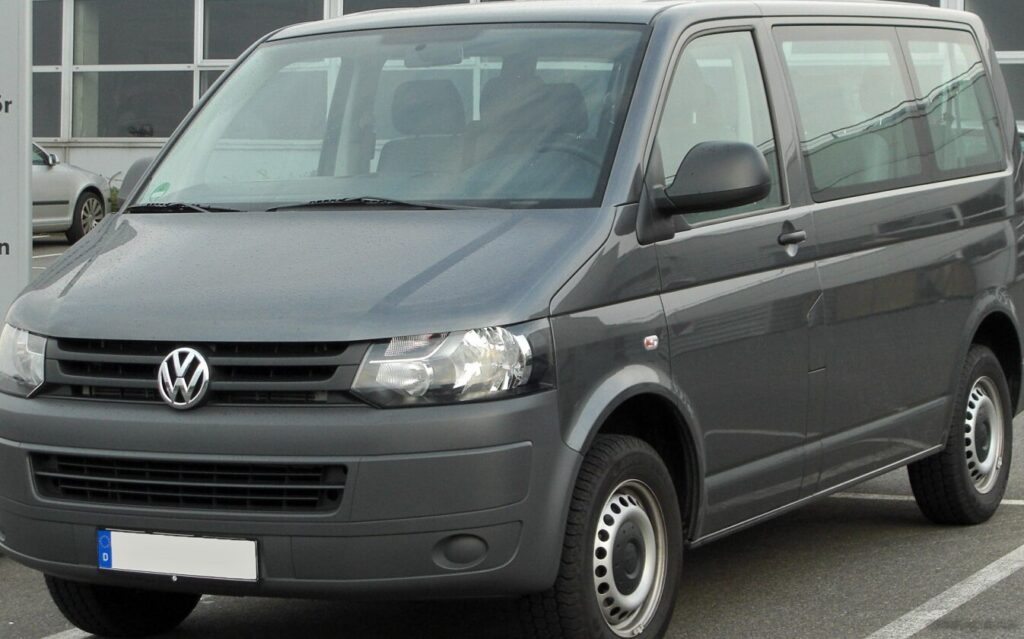
The Volkswagen Transporter (T5) facelift, produced from 2009 to 2015, represented a significant refresh of the fifth-generation Transporter line. Within this generation, the Kombi variant offered a versatile blend of commercial practicality and passenger comfort. The 2.0 TDI (84 hp) L1H2 configuration was a popular choice, particularly in European markets, serving as an entry-level option for businesses and families needing a dependable and economical van. The “L1H2” designation refers to the vehicle’s body length (L1 – short wheelbase) and roof height (H2 – high roof), providing a good balance between cargo capacity and maneuverability. This variant occupied the lower end of the T5 Kombi range, positioned below more powerful TDI engines and higher trim levels.
The 2.0 TDI (84 hp) Engine and its Role in the T5 Lineup
The 2.0 TDI 84 hp engine, identified by engine code CAAA, was a key component of Volkswagen’s efforts to offer a fuel-efficient and cost-effective Transporter option. It was part of the EA189 engine family, a widely used series of inline-four diesel engines. This particular iteration of the 2.0 TDI was designed for applications where outright performance was less critical than economy and reliability. Compared to the more powerful 140 hp and 180 hp versions of the 2.0 TDI available in the T5, the 84 hp engine offered significantly reduced running costs but at the expense of acceleration and overall speed. It also differed substantially from the gasoline engine options available, providing the characteristic diesel torque and fuel efficiency favored by commercial users.
Powertrain & Engine Architecture
The CAAA engine is a 1,968 cc (120.09 cu. in.) inline-four cylinder diesel engine. It utilizes a turbocharger with an intercooler to boost power output, and features a diesel common rail fuel injection system. This system allows for precise control of fuel delivery, optimizing combustion and reducing emissions. The engine employs a Double Overhead Camshaft (DOHC) valvetrain with four valves per cylinder, contributing to improved breathing and efficiency. The compression ratio is relatively high at 16.5:1, typical for diesel engines. The engine oil capacity is 7 liters (7.4 US qt / 6.16 UK qt), and requires a specification adhering to Volkswagen’s standards. A particulate filter was included as standard equipment to meet Euro 5 emission standards.
The 2.0 TDI 84 hp engine was typically paired with a five-speed manual transmission, although a six-speed automatic transmission was also available as an option. The automatic transmission, while offering convenience, slightly impacted fuel economy and performance compared to the manual version. The front-wheel-drive configuration was standard for this variant, contributing to lower weight and improved fuel efficiency.
Driving Characteristics
The driving experience in a T5 Kombi equipped with the 2.0 TDI 84 hp engine and a manual transmission is best described as utilitarian. Acceleration is modest, taking approximately 21.2 seconds to reach 62 mph (100 km/h). The engine delivers its peak torque of 220 Nm (162.26 lb-ft) between 1250 and 2500 rpm, providing adequate pulling power for everyday driving and moderate loads. However, overtaking maneuvers require careful planning. The five-speed gearbox is well-matched to the engine’s characteristics, allowing drivers to keep the engine within its optimal torque band. The automatic transmission, while smoother, further diminishes acceleration and can feel sluggish when attempting to climb hills or accelerate quickly. The suspension, tuned for comfort and load-carrying capacity, provides a reasonably smooth ride even when the vehicle is fully loaded.
Equipment & Trim Levels
The 2.0 TDI 84 hp Kombi L1H2 typically served as the base trim level. Standard equipment generally included power steering, ABS (Anti-lock Braking System), driver and passenger airbags, and basic steel wheels. Interior appointments were functional rather than luxurious, with durable cloth upholstery and a straightforward dashboard layout. Air conditioning was often an optional extra, as were features like power windows, central locking, and a radio/CD player. Higher trim levels, such as Trendline and Highline, added features like alloy wheels, upgraded interior trim, and more advanced infotainment systems. The Kombi configuration allowed for flexible seating arrangements, typically accommodating between four and nine passengers depending on the specific configuration chosen.
Chassis & Braking
The T5 Kombi’s chassis featured independent suspension at both the front and rear. The front suspension utilized a McPherson strut setup with coil springs and an anti-roll bar, while the rear employed a trailing arm configuration with coil springs and a transverse stabilizer. This setup provided a good balance between ride comfort and handling stability. Braking duties were handled by ventilated discs on all four wheels, providing adequate stopping power for the vehicle’s weight. The hydraulic steering system offered precise control and reasonable feedback. Tire size was typically 215/65 R16, mounted on 6.5J x 16 inch steel or alloy wheels.
Market Reception & Comparison
The 2.0 TDI 84 hp T5 Kombi was well-received in markets where fuel economy and affordability were paramount. Critics acknowledged its practicality and reliability, but often noted its lack of outright performance. Compared to the more powerful TDI variants, the 84 hp engine was considered underpowered, particularly when carrying a full load or traveling on hilly terrain. However, its lower running costs and simpler mechanicals made it an attractive option for businesses and individuals on a budget. Fuel consumption figures averaged around 7.3 l/100 km (32.2 US mpg / 38.7 UK mpg), making it a relatively economical choice for a vehicle of its size and weight. Reliability was generally good, although the EA189 engine family later became subject to scrutiny regarding emissions compliance.
Technical Specifications
| Brand | Volkswagen |
| Model | Transporter (T5, facelift 2009) Kombi |
| Type | 2.0 TDI (84 Hp) L1H2 |
| Start of production | 2009 |
| End of production | 2015 |
| Engine Code | CAAA |
| Engine Displacement | 1968 cm3 (120.09 cu. in.) |
| Number of Cylinders | 4, Inline |
| Power | 84 Hp @ 3500 rpm |
| Torque | 220 Nm @ 1250-2500 rpm (162.26 lb.-ft.) |
| Fuel Consumption (Urban) | 9.5 l/100 km (24.8 US mpg / 29.7 UK mpg) |
| Fuel Consumption (Extra Urban) | 6.1 l/100 km (38.6 US mpg / 46.3 UK mpg) |
| Fuel Consumption (Combined) | 7.3 l/100 km (32.2 US mpg / 38.7 UK mpg) |
| CO2 Emissions | 193 g/km |
| Kerb Weight | 1901-2066 kg (4190.99 – 4554.75 lbs.) |
| Max. Weight | 2800-3000 kg (6172.94 – 6613.87 lbs.) |
| Fuel Tank Capacity | 80 l (21.13 US gal / 17.6 UK gal) |
| Acceleration 0-100 km/h | 21.2 sec |
| Maximum Speed | 142 km/h (88.23 mph) |
Legacy
The 2.0 TDI 84 hp engine in the T5 Transporter Kombi has proven to be a relatively durable and reliable powertrain. While the EA189 engine family faced scrutiny regarding emissions, the 84 hp version generally exhibited fewer issues than the higher-output variants. In the used car market, these Kombis remain popular due to their affordability and practicality. However, potential buyers should be aware of the potential for diesel particulate filter (DPF) issues, particularly if the vehicle has been primarily used for short journeys. Regular maintenance and adherence to Volkswagen’s recommended service intervals are crucial for ensuring the long-term reliability of this powertrain. The T5 Kombi with the 2.0 TDI 84 hp engine continues to serve as a dependable workhorse for businesses and families seeking a versatile and economical van.