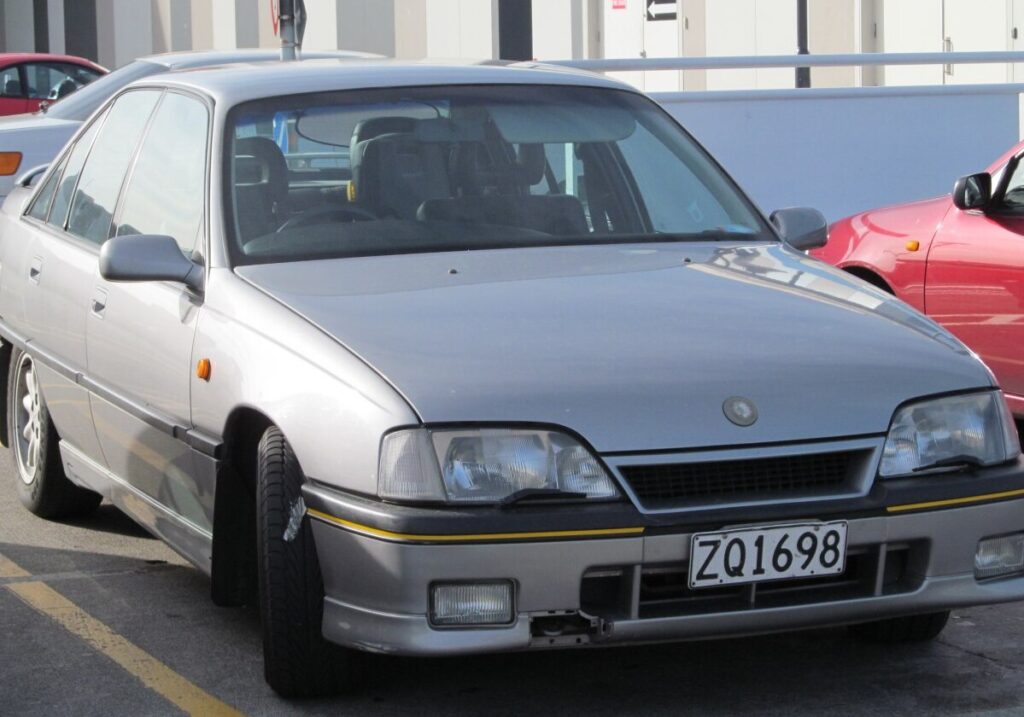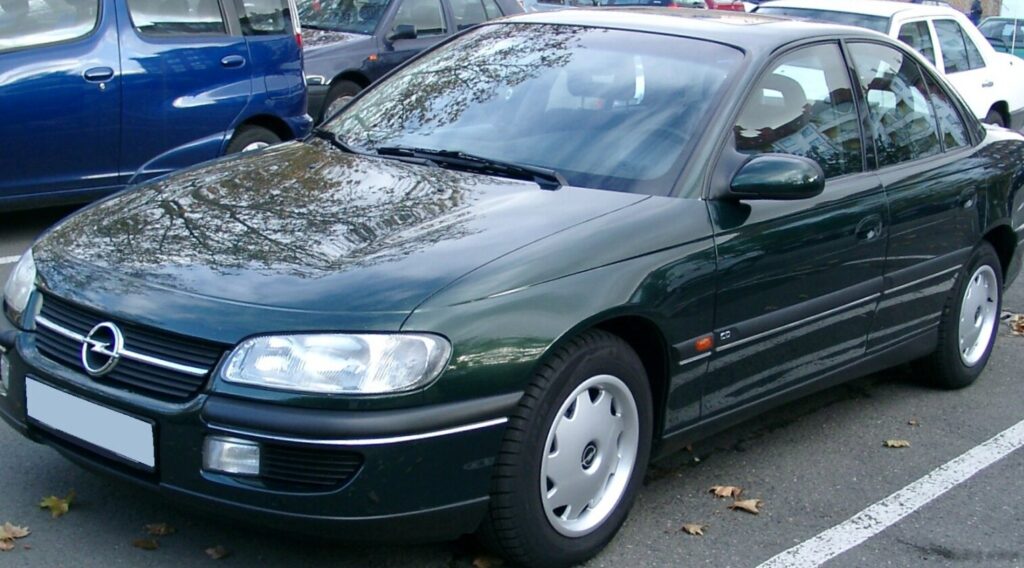
The Opel Omega B 3.0i V6 Automatic, produced between April 1994 and July 1999, represented the upper echelon of Opel’s flagship sedan during that period. Part of the Omega B generation (chassis code 1HX0/A3), this variant offered a blend of performance and luxury, positioned as a premium offering within the Omega lineup. It catered to buyers seeking a spacious, comfortable, and relatively quick executive car, often compared to rivals like the Ford Scorpio and BMW 5 Series. The 3.0i V6 Automatic was distinguished by its larger displacement engine and automatic transmission, setting it apart from the base models and more economy-focused trims.
Powertrain & Engine Architecture
The heart of the Omega B 3.0i V6 Automatic is the X30XE engine, a 2.962-liter (180.75 cubic inches) naturally aspirated V6. This engine is characterized by its 60-degree V-angle configuration, contributing to a relatively compact engine bay footprint. It produces 211 horsepower at 6000 rpm and 270 Nm (199.14 lb-ft) of torque at 3400 rpm. The engine utilizes multi-port fuel injection, delivering fuel directly to each intake port for optimized combustion. The valvetrain employs a Double Overhead Camshaft (DOHC) design with four valves per cylinder, enhancing volumetric efficiency and contributing to the engine’s power output.
The X30XE engine features a cast iron block and aluminum cylinder heads, a common construction for engines of this era balancing durability and weight. Compression ratio is set at 10.8:1. The engine’s oil capacity is 5.75 liters (6.08 US quarts / 5.06 UK quarts), and it requires coolant totaling 9.7 liters (10.25 US quarts / 8.53 UK quarts). The engine is longitudinally mounted in the front of the vehicle, driving the rear wheels.
Paired with the X30XE engine is a 4-speed automatic transmission. While not the most modern transmission by today’s standards, it was a reliable unit designed to handle the engine’s torque output. The transmission’s gear ratios were tuned for a balance of acceleration and cruising efficiency, prioritizing smooth shifts and comfortable operation over outright performance. Specific gear ratios are not widely documented, but the transmission was designed to provide adequate acceleration without excessive engine strain.
Engine Code Specifics
The X30XE engine code is crucial for identifying this specific variant. It signifies a particular iteration of the 3.0-liter V6, with specific calibrations for fuel injection and ignition timing. This engine code is essential for sourcing correct replacement parts and understanding the engine’s specific maintenance requirements.
Driving Characteristics
The Omega B 3.0i V6 Automatic delivers a refined driving experience. Acceleration from 0 to 100 km/h (0-62 mph) takes approximately 9.8 seconds, while 0 to 60 mph is achieved in around 9.3 seconds. Top speed is electronically limited to 238 km/h (147.89 mph). The automatic transmission provides smooth, if not particularly rapid, gear changes. Compared to the manual transmission versions of the 3.0i V6, the automatic sacrifices some responsiveness, but gains in ease of use, particularly in urban driving conditions.
The engine’s torque curve provides adequate pulling power throughout the rev range, making overtaking maneuvers relatively effortless. However, the engine doesn’t exhibit the same level of urgency as turbocharged alternatives or higher-output V6 variants. The rear-wheel-drive configuration contributes to balanced handling, although the Omega B is a large car and doesn’t feel particularly agile. The suspension is tuned for comfort, absorbing bumps and imperfections in the road surface effectively.
Equipment & Trim Levels
The 3.0i V6 Automatic trim typically included a generous level of standard equipment. This included power windows, power steering (hydraulic), central locking, an anti-lock braking system (ABS), and often, leather upholstery. Air conditioning was standard, as were electrically adjustable front seats. The dashboard layout was functional and well-built, featuring clear instrumentation and logically placed controls.
Optional extras included a sunroof, upgraded audio systems, and wood trim interior accents. Some models were also equipped with traction control, a relatively advanced feature for the time. The Omega B offered a spacious interior, with ample legroom and headroom for both front and rear passengers. The trunk capacity ranged from 530 liters (18.72 cubic feet) with the rear seats up to 830 liters (29.31 cubic feet) with the rear seats folded down.
Chassis & Braking
The Omega B 3.0i V6 Automatic utilizes a coil spring suspension system at both the front and rear. The suspension geometry is designed to provide a comfortable ride and stable handling. Front brakes are ventilated discs, providing ample stopping power. Rear brakes are solid discs, a cost-saving measure compared to the ventilated discs found on some higher-performance models. The car’s kerb weight of 1605 kg (3538.42 lbs) contributes to its substantial feel.
The steering system is a worm-reduction unit with hydraulic power assistance. While not as precise as more modern steering systems, it provides adequate feedback and makes maneuvering the large sedan relatively easy. Tire size is typically 225/55 R16, mounted on 7J x 16 inch wheel rims.
Market Reception & Comparison
The Opel Omega B 3.0i V6 Automatic was generally well-received by automotive critics. It was praised for its spacious interior, comfortable ride, and refined engine. However, some critics noted that the automatic transmission could feel sluggish at times, and the car’s size made it challenging to maneuver in tight spaces. Fuel economy was also a concern, with combined fuel consumption averaging around 12.7 l/100km (18.4 US mpg / 22.2 UK mpg).
Compared to other trims in the Omega B lineup, the 3.0i V6 Automatic offered a significant performance upgrade over the 2.0-liter and 2.5-liter models. However, it was less fuel-efficient and more expensive to maintain. Compared to the turbocharged 2.6-liter models, the 3.0i V6 Automatic offered a smoother, more linear power delivery, but lacked the same level of outright performance. Reliability was generally good, although the automatic transmission could be prone to issues if not properly maintained.
Technical Specifications
| Brand | Opel |
| Model | Omega |
| Generation | Omega B |
| Type (Engine) | 3.0i V6 (211 Hp) Automatic |
| Start of production | April, 1994 |
| End of production | July, 1999 |
| Powertrain Architecture | Internal Combustion engine |
| Body type | Sedan |
| Seats | 5 |
| Doors | 4 |
| Fuel consumption (urban) | 16.8 l/100 km (14 US mpg / 16.8 UK mpg) |
| Fuel consumption (extra urban) | 8.4 l/100 km (28 US mpg / 33.6 UK mpg) |
| Fuel Type | Petrol (Gasoline) |
| Acceleration 0 – 100 km/h | 9.8 sec |
| Acceleration 0 – 62 mph | 9.8 sec |
| Acceleration 0 – 60 mph | 9.3 sec |
| Maximum speed | 238 km/h (147.89 mph) |
| Weight-to-power ratio | 7.6 kg/Hp |
| Weight-to-torque ratio | 5.9 kg/Nm |
| Power | 211 Hp @ 6000 rpm |
| Torque | 270 Nm @ 3400 rpm (199.14 lb.-ft. @ 3400 rpm) |
| Engine layout | Front, Longitudinal |
| Engine Model/Code | X30XE |
| Engine displacement | 2962 cm3 (180.75 cu. in.) |
| Number of cylinders | 6 |
| Engine configuration | V-engine |
| Cylinder Bore | 86 mm (3.39 in.) |
| Piston Stroke | 85 mm (3.35 in.) |
| Compression ratio | 10.8:1 |
| Number of valves per cylinder | 4 |
| Fuel injection system | Multi-port manifold injection |
| Engine aspiration | Naturally aspirated engine |
| Valvetrain | DOHC |
| Engine oil capacity | 5.75 l (6.08 US qt | 5.06 UK qt) |
| Coolant | 9.7 l (10.25 US qt | 8.53 UK qt) |
| Kerb Weight | 1605 kg (3538.42 lbs.) |
| Max. weight | 2170 kg (4784.03 lbs.) |
| Max load | 565 kg (1245.61 lbs.) |
| Trunk (boot) space – minimum | 530 l (18.72 cu. ft.) |
| Trunk (boot) space – maximum | 830 l (29.31 cu. ft.) |
| Fuel tank capacity | 75 l (19.81 US gal | 16.5 UK gal) |
| Length | 4785 mm (188.39 in.) |
| Width | 1785 mm (70.28 in.) |
| Height | 1450 mm (57.09 in.) |
| Wheelbase | 2730 mm (107.48 in.) |
| Front track | 1515 mm (59.65 in.) |
| Rear (Back) track | 1530 mm (60.24 in.) |
| Ride height (ground clearance) | 140 mm (5.51 in.) |
| Drag coefficient (Cd) | 0.38 |
| Drivetrain Architecture | Rear wheel drive |
| Number of gears and type of gearbox | 4 gears, automatic transmission |
Legacy
The Opel Omega B 3.0i V6 Automatic, while no longer in production, maintains a following among enthusiasts. The X30XE engine is known for its durability and relatively straightforward maintenance. However, age-related issues such as corrosion and wear on rubber components are common. Parts availability can be a challenge, but many components are still available through specialist suppliers. Today, these Omegas represent an affordable entry point into classic executive car ownership, offering a comfortable and stylish driving experience for those willing to invest in their upkeep.