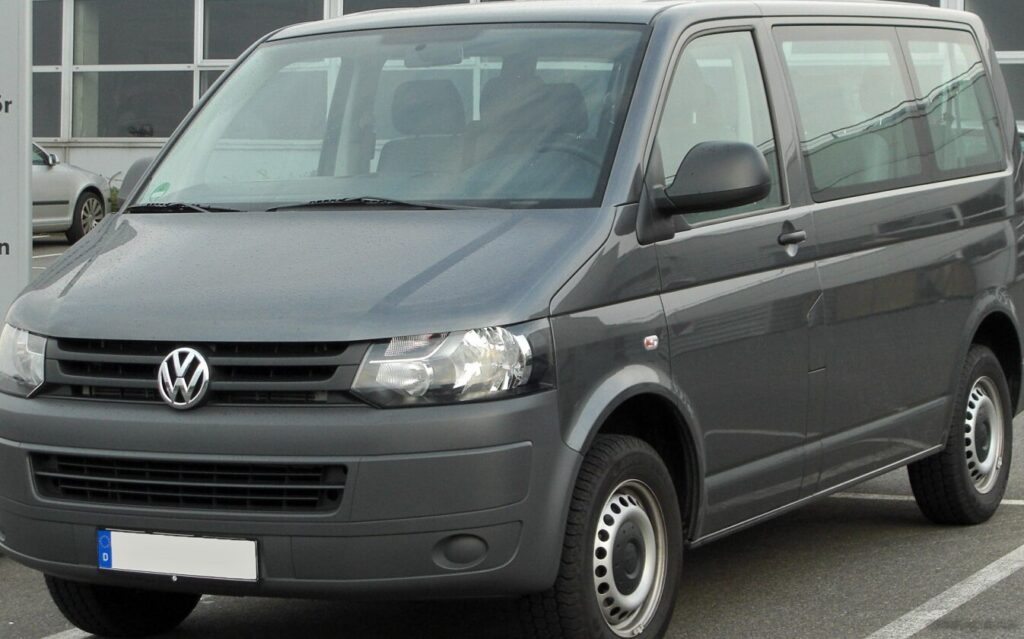
The Volkswagen Transporter (T5) facelift, produced from 2009 to 2015, represented a significant refresh of the fifth-generation Transporter line. Within this generation, the Kombi 2.0 TDI variant with 84 horsepower (Hp) and a manual transmission occupied a crucial position as an entry-level option, particularly appealing to businesses and individuals prioritizing practicality and fuel efficiency over outright performance. This specific configuration, often designated with engine code CAAA, was a mainstay of the T5 range, offering a balance between affordability and the renowned Volkswagen commercial vehicle durability. The T5 platform (1HX0/A3) was known for its versatility, serving as the basis for various commercial and passenger vehicle derivatives, including the Caravelle, Multivan, and California.
The 84 Hp 2.0 TDI Kombi: Positioning and Target Audience
The 84 Hp 2.0 TDI Kombi was positioned as the base engine option within the T5 facelift range. Above it sat more powerful TDI variants (typically 102, 140, and 180 Hp) and, in some markets, gasoline engines. The target audience for this variant was broad, encompassing small businesses needing a reliable work van, tradespeople requiring a practical vehicle for carrying tools and materials, and families seeking an affordable and spacious people carrier. Its lower price point made it accessible to a wider customer base compared to the higher-spec models. The “Kombi” designation indicated a flexible interior layout, typically featuring seating for between four and nine passengers, and a combination of cargo and passenger space.
Powertrain & Engine Architecture
The heart of the 84 Hp Kombi is the 2.0-liter inline four-cylinder diesel engine, specifically the EA189 family, identified by the engine code CAAA. This engine utilizes a common rail direct injection system, delivering fuel directly into the combustion chamber at extremely high pressure. This technology, coupled with a turbocharger and intercooler, optimizes combustion efficiency and power output. The engine features a double overhead camshaft (DOHC) valvetrain with four valves per cylinder, enhancing breathing and contributing to improved performance. The compression ratio is relatively high at 16.5:1, typical for diesel engines, maximizing energy extraction from the fuel. A particulate filter was included as standard equipment to meet increasingly stringent Euro 5 emission standards.
The 2.0 TDI was paired with a five-speed manual transmission. This transmission was chosen for its robustness and cost-effectiveness, aligning with the entry-level positioning of the variant. The gear ratios were optimized for fuel economy and drivability, prioritizing low-end torque over high-speed acceleration. While an automatic transmission was available on other T5 models, it was not offered with the 84 Hp engine, likely due to cost considerations and the desire to maintain a focus on efficiency.
Engine Specifications (CAAA)
Key engine specifications include a bore of 81 mm (3.19 in) and a stroke of 95.5 mm (3.76 in), resulting in a total displacement of 1968 cm³ (120.09 cu. in). The engine produces a maximum power output of 84 Hp at 3500 rpm and a peak torque of 220 Nm (162.26 lb.-ft.) between 1250 and 2500 rpm. This relatively flat torque curve provides good pulling power at lower engine speeds, making it suitable for carrying loads and navigating urban environments.
Driving Characteristics
The driving experience in the 84 Hp 2.0 TDI Kombi is characterized by its practicality and fuel efficiency rather than sporty performance. Acceleration is modest, with a 0-100 km/h (0-62 mph) time of approximately 21.1 seconds. The focus is on providing sufficient power for everyday driving and carrying loads. The five-speed manual transmission requires frequent shifting, particularly when ascending hills or overtaking. However, the engine’s strong low-end torque makes it relatively easy to drive in urban conditions. Compared to the more powerful TDI variants, the 84 Hp model feels noticeably slower, especially when fully loaded. The manual transmission provides greater driver control compared to the automatic options available on higher-spec T5s.
Equipment & Trim Levels
The 84 Hp 2.0 TDI Kombi typically came with a relatively basic level of standard equipment, reflecting its entry-level status. Standard features generally included power steering, ABS (Anti-lock Braking System), driver and passenger airbags, and a basic audio system. The interior upholstery was typically cloth, and the dashboard featured a functional, utilitarian design. Optional extras included air conditioning, electric windows, central locking, and upgraded audio systems. Higher trim levels within the Kombi range offered additional features such as alloy wheels, upgraded interior trim, and parking sensors.
Chassis & Braking
The T5 Kombi utilized a robust chassis designed to handle the demands of commercial and passenger vehicle use. The front suspension featured an independent McPherson strut setup with coil springs and an anti-roll bar, providing a comfortable ride and good handling. The rear suspension employed a semi-independent trailing arm configuration with coil springs and a transverse stabilizer bar. This setup offered a good balance between ride comfort and load-carrying capacity. Braking duties were handled by ventilated discs on all four wheels, providing adequate stopping power for the vehicle’s weight. The size of the front discs was 308×29.5 mm, while the rear discs measured 294×22 mm.
Market Reception & Comparison
The 84 Hp 2.0 TDI Kombi received generally positive reviews for its practicality, fuel efficiency, and reliability. Critics praised its affordability and its suitability for commercial applications. However, some reviewers noted its lack of power, particularly when fully loaded or traveling on hilly terrain. Compared to the more powerful TDI variants, the 84 Hp model offered significantly lower fuel economy (7.3 l/100 km combined) and slower acceleration. However, it also came with a lower purchase price and potentially lower maintenance costs. In terms of reliability, the CAAA engine proved to be generally robust, although issues with the diesel particulate filter (DPF) could occur, particularly with frequent short journeys.
Technical Specifications
| Brand | Volkswagen |
| Model | Transporter (T5, facelift 2009) Kombi |
| Type | 2.0 TDI (84 Hp) L2H1 |
| Start of production | 2009 |
| End of production | 2015 |
| Engine Code | CAAA |
| Engine Displacement | 1968 cm³ (120.09 cu. in.) |
| Number of Cylinders | 4, Inline |
| Power | 84 Hp @ 3500 rpm |
| Torque | 220 Nm (162.26 lb.-ft.) @ 1250-2500 rpm |
| Fuel Consumption (Combined) | 7.3 l/100 km (32.2 US mpg, 38.7 UK mpg) |
| CO2 Emissions | 193 g/km |
| Transmission | 5-speed Manual |
| Kerb Weight | 1901-2193 kg (4190.99 – 4834.74 lbs.) |
| Max. Weight | 2800-3000 kg (6172.94 – 6613.87 lbs.) |
| Fuel Tank Capacity | 80 l (21.13 US gal, 17.6 UK gal) |
| Length | 5292 mm (208.35 in.) |
| Width | 1904 mm (74.96 in.) |
| Height | 1990 mm (78.35 in.) |
Legacy
The 84 Hp 2.0 TDI Kombi remains a popular choice in the used car market due to its affordability, reliability, and practicality. While not the most powerful or refined T5 variant, it offers a cost-effective solution for businesses and individuals needing a versatile and dependable vehicle. The CAAA engine, when properly maintained, is known for its longevity. However, potential buyers should be aware of the possibility of DPF issues and ensure that the vehicle has been regularly serviced. The T5 platform as a whole enjoys a strong reputation for durability, and the 84 Hp Kombi continues to be a viable option for those seeking a reliable and economical workhorse.