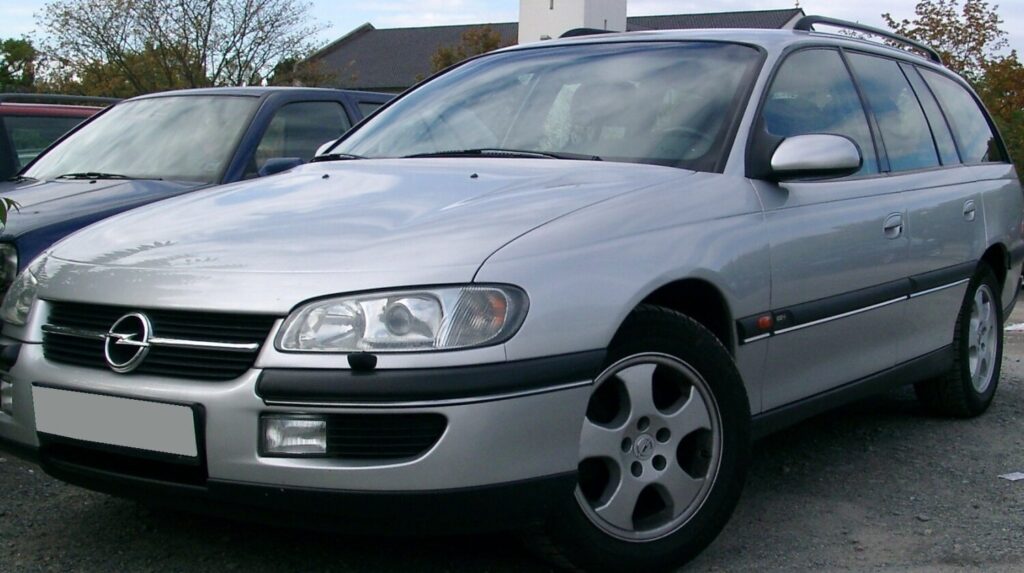
The Opel Omega B Caravan 2.0 DTI 16V, produced from February 1998 to July 1999, was a diesel-powered station wagon representing a practical and spacious offering within the broader Omega B range. Part of the second generation of the Omega (designated the B-series), the Caravan body style – Opel’s term for a station wagon or estate – aimed to provide family-oriented buyers with a comfortable and versatile vehicle. This particular 2.0 DTI 16V variant occupied a mid-range position in the Omega B lineup, offering a balance between fuel efficiency, reasonable performance, and a more accessible price point compared to the higher-specification petrol models. It was built on the GM Epsilon platform, also known internally as the 1HX0/A3 platform, shared with other vehicles of the era like the Saab 9-5 and Vectra.
The 2.0 DTI 16V Engine and Powertrain
The heart of the Omega B Caravan 2.0 DTI 16V is the X20DTH engine, a 1995cc (121.74 cu. in.) inline four-cylinder diesel engine. This engine featured a 16-valve cylinder head (hence the “16V” designation) and was equipped with a turbocharger and a diesel common rail fuel injection system. The common rail system, a relatively new technology at the time, allowed for more precise fuel delivery, resulting in improved combustion efficiency, reduced noise, and lower emissions compared to older diesel injection systems. The engine produced 101 horsepower (Hp) at 4300 rpm and 205 Nm (151.2 lb.-ft.) of torque at 1650 rpm. The engine’s bore and stroke measured 84mm x 90mm, respectively, and it operated with a compression ratio of 18.5:1.
The engine was longitudinally mounted in the front of the vehicle, driving the rear wheels. While a five-speed manual transmission was standard, an optional four-speed automatic transmission was also available, though less common. The automatic transmission was a traditional hydraulic control unit, offering smooth but not particularly sporty shifts. The automatic gearbox was geared for fuel economy and relaxed cruising rather than rapid acceleration.
Engine Code Specifics & Fuel Injection
The X20DTH engine code is crucial for identifying this specific variant. It signifies a direct injection diesel engine with 16 valves. The common rail system utilized by the X20DTH operated at extremely high pressures (around 1,800 bar) to atomize the fuel into a fine mist, promoting complete combustion. This system was a significant advancement over earlier diesel technologies, contributing to the engine’s relatively quiet operation and improved fuel economy. The engine required 5.5 liters (5.81 US qt / 4.84 UK qt) of engine oil meeting specific Opel specifications, and 7.9 liters (8.35 US qt / 6.95 UK qt) of coolant.
Driving Characteristics
The Omega B Caravan 2.0 DTI 16V, particularly when equipped with the manual transmission, offered a reasonably refined driving experience for a diesel vehicle of its era. The 205 Nm of torque, available from a low 1650 rpm, provided ample pulling power for everyday driving and hauling loads. However, the 101 hp output meant that acceleration was not particularly brisk. 0-100 km/h (0-62 mph) took approximately 16 seconds, and 0-60 mph was achieved in around 15.2 seconds. Top speed was limited to 180 km/h (111.85 mph).
The automatic transmission, while convenient, further dulled the performance. The gear ratios were optimized for fuel efficiency, resulting in a more relaxed but less responsive driving experience. The automatic transmission also increased the vehicle’s weight-to-power ratio, further impacting acceleration. Compared to the more powerful petrol versions of the Omega B (like the 2.5 V6 or 3.0 V6), the 2.0 DTI 16V felt significantly slower, but it offered a substantial advantage in fuel economy.
Equipment & Trim Levels
The 2.0 DTI 16V Omega B Caravan typically came with a respectable level of standard equipment, positioning it as a well-equipped mid-range option. Standard features generally included power windows, central locking, power steering, an anti-lock braking system (ABS), and a basic audio system. Interior upholstery was typically cloth, with options for upgraded velour or leather available at extra cost. The dashboard layout was functional and straightforward, with clearly labeled controls. Optional extras included air conditioning, a sunroof, upgraded audio systems, and alloy wheels.
Trim levels varied slightly depending on the market, but generally, the 2.0 DTI 16V could be upgraded with packages that added features like automatic climate control, heated seats, and more sophisticated audio systems. The Caravan body style itself offered a significant amount of practicality, with a minimum trunk capacity of 540 liters (19.07 cu. ft.) expanding to a maximum of 1800 liters (63.57 cu. ft.) with the rear seats folded down.
Chassis & Braking
The Omega B Caravan 2.0 DTI 16V utilized a coil spring suspension system at both the front and rear. The suspension was tuned for comfort, providing a relatively smooth ride, even on uneven surfaces. Front brakes were discs, while rear brakes were also discs, providing adequate stopping power for the vehicle’s weight. The steering system was a hydraulic power-assisted worm-reduction unit, offering reasonable steering feel and assistance. The standard tire size was 195/65 R15, mounted on 6J x 15 inch wheel rims.
Market Reception & Comparison
The Opel Omega B Caravan 2.0 DTI 16V was generally well-received by critics as a practical and economical family vehicle. It was praised for its spacious interior, comfortable ride, and relatively quiet diesel engine (for its time). However, its performance was often criticized as being somewhat underwhelming, particularly when compared to the more powerful petrol versions. Fuel economy was a major selling point, with combined fuel consumption figures of around 7.5 l/100 km (31.3 US mpg / 37.6 UK mpg). Compared to the 2.0 16V petrol version, the DTI offered significantly better fuel economy but less outright power.
Reliability was generally good, although the common rail fuel injection system could be prone to issues if not properly maintained. Regular servicing and the use of high-quality diesel fuel were essential to ensure the longevity of the engine. The Omega B, in general, suffered from some electrical gremlins, but these were not specific to the 2.0 DTI 16V variant.
Technical Specifications
| Brand | Opel |
| Model | Omega |
| Generation | Omega B Caravan |
| Type (Engine) | 2.0 DTI 16V (101 Hp) |
| Start of production | February, 1998 |
| End of production | July, 1999 |
| Powertrain Architecture | Internal Combustion engine |
| Body type | Station wagon (estate) |
| Seats | 5 |
| Doors | 5 |
| Fuel consumption (urban) | 9.3 l/100 km (25.3 US mpg / 30.4 UK mpg) |
| Fuel consumption (extra urban) | 5.6 l/100 km (42 US mpg / 50.4 UK mpg) |
| Fuel Type | Diesel |
| Acceleration 0 – 100 km/h | 16 sec |
| Acceleration 0 – 62 mph | 16 sec |
| Acceleration 0 – 60 mph | 15.2 sec |
| Maximum speed | 180 km/h (111.85 mph) |
| Weight-to-power ratio | 16.4 kg/Hp |
| Power | 101 Hp @ 4300 rpm |
| Torque | 205 Nm @ 1650 rpm (151.2 lb.-ft. @ 1650 rpm) |
| Engine layout | Front, Longitudinal |
| Engine Model/Code | X20DTH |
| Engine displacement | 1995 cm3 (121.74 cu. in.) |
| Number of cylinders | 4 |
| Cylinder Bore | 84 mm (3.31 in.) |
| Piston Stroke | 90 mm (3.54 in.) |
| Compression ratio | 18.5:1 |
| Fuel injection system | Diesel Commonrail |
| Engine aspiration | Turbocharger |
| Kerb Weight | 1660 kg (3659.67 lbs.) |
| Max. weight | 2265 kg (4993.47 lbs.) |
| Fuel tank capacity | 75 l (19.81 US gal / 16.5 UK gal) |
| Length | 4820 mm (189.76 in.) |
| Width | 1785 mm (70.28 in.) |
| Height | 1500 mm (59.06 in.) |
| Wheelbase | 2730 mm (107.48 in.) |
Legacy
The Opel Omega B Caravan 2.0 DTI 16V, while not the most exciting version of the Omega B, remains a reasonably well-regarded vehicle among enthusiasts and used car buyers. The X20DTH engine, when properly maintained, proved to be durable and reliable. Today, finding a well-preserved example can be challenging, as many have succumbed to age and mileage. However, those that remain offer a spacious, comfortable, and economical option for those seeking a classic European station wagon. The 2.0 DTI 16V represents a significant step forward in diesel engine technology, showcasing the benefits of common rail fuel injection and turbocharging. Its blend of practicality, fuel efficiency, and relative reliability has ensured its continued presence on roads and in the hearts of some automotive enthusiasts.