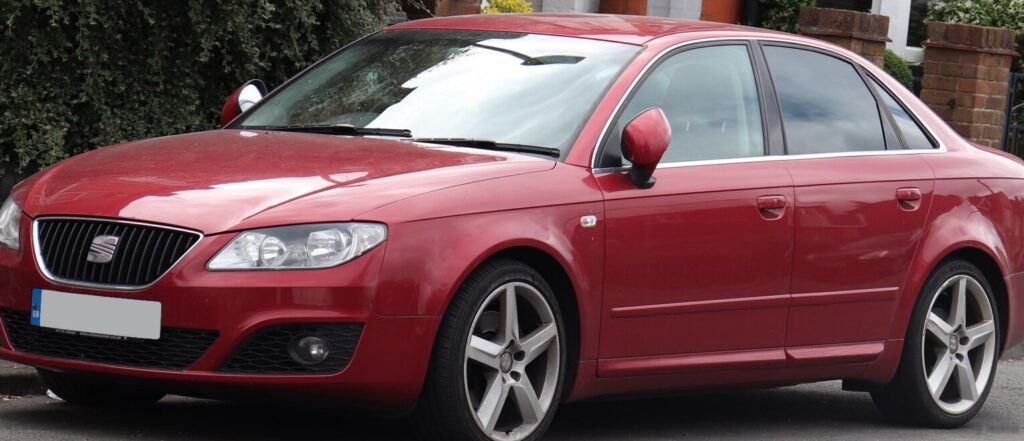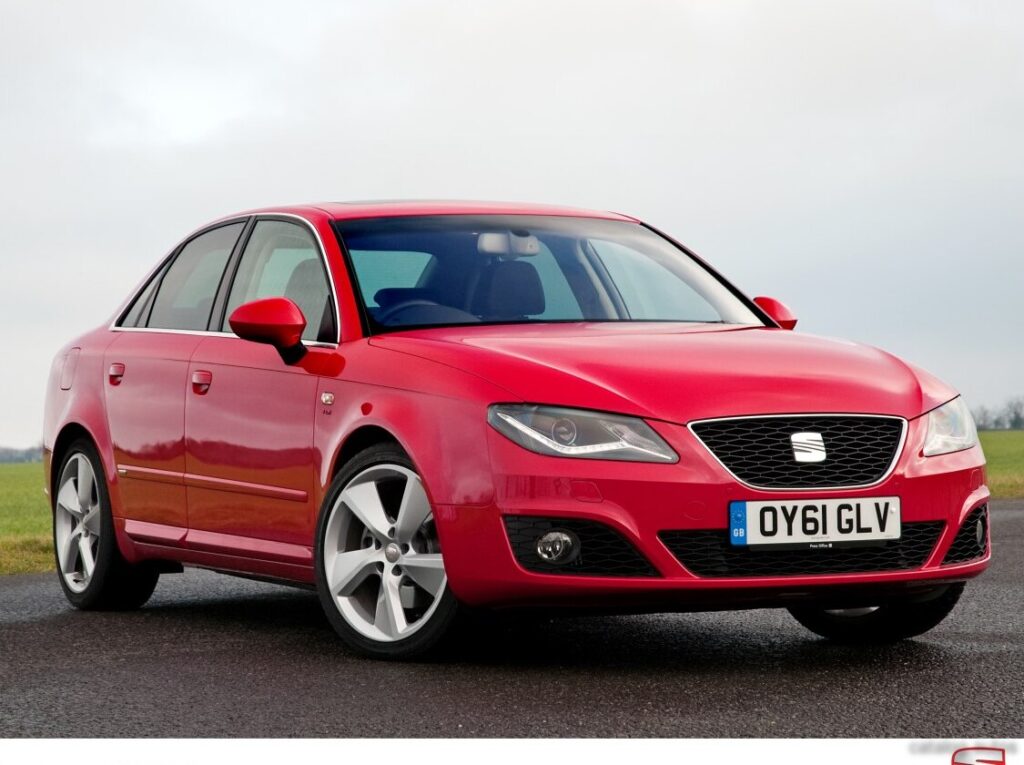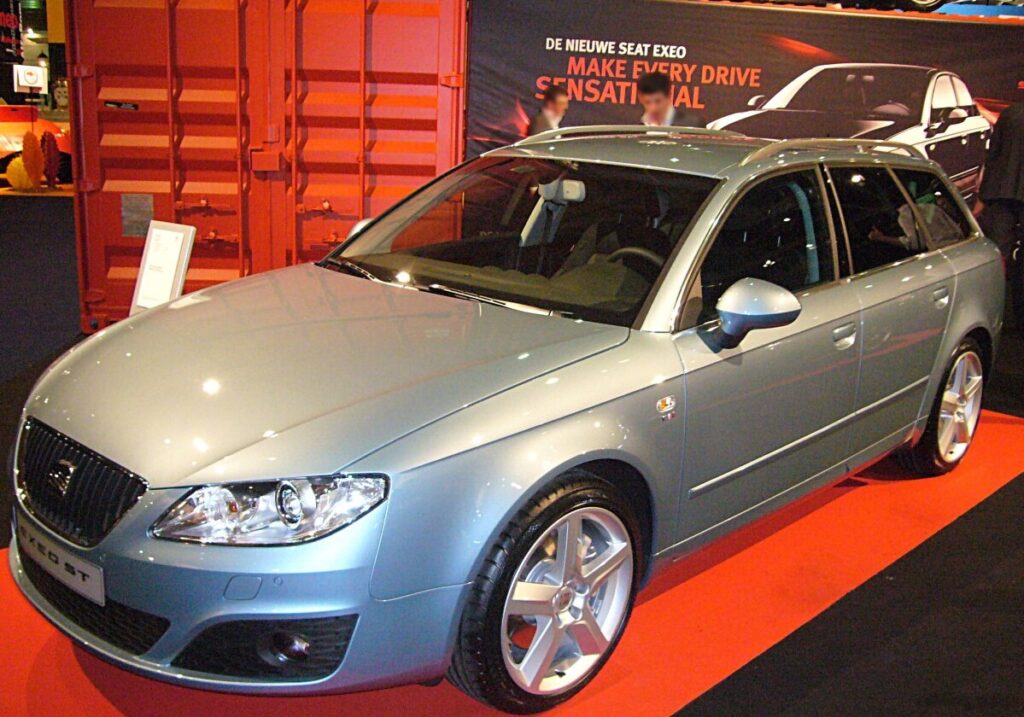
The Seat Exeo ST 1.8 T, produced from May 2009 to May 2010, was a station wagon (estate) variant of the Exeo model line. Positioned as a mid-range offering within the Exeo ST family, it aimed to provide a balance between performance, fuel efficiency, and practicality. The Exeo itself was a significant vehicle for SEAT, representing their first foray into the mid-size executive car segment, built upon the Volkswagen Group’s B7 (1HX0/A3) platform – shared with the Audi A4 and Volkswagen Passat of the same era. The ST designation denoted the “Sport Tourer” or station wagon body style, offering increased cargo capacity compared to the sedan version.
The 1.8 T Engine and Powertrain
At the heart of the Exeo ST 1.8 T lay the CFMA engine code, a 1.8-liter turbocharged inline-four cylinder gasoline engine. This engine was a member of the EA888 family, a widely used powerplant across the Volkswagen Group. It featured multi-port fuel injection and an intercooled turbocharger, allowing for a respectable 150 horsepower at 5700 rpm and 210 Nm (154.89 lb-ft) of torque available from 1750 rpm. The engine’s configuration was inline, with a cylinder bore of 81 mm (3.19 in) and a piston stroke of 86.4 mm (3.4 in), resulting in a compression ratio of 9.5:1. The valvetrain utilized an Overhead Cam (OHC) design with five valves per cylinder, contributing to efficient combustion and power delivery.
While a six-speed manual transmission was standard, the Exeo ST 1.8 T was also offered with an optional six-speed automatic transmission. This automatic, a conventional torque-converter type, was chosen for its smoothness and ease of use, appealing to buyers prioritizing comfort over outright performance. The engine oil capacity was 4.4 liters (4.65 US qt / 3.87 UK qt), and the recommended oil specification adhered to Volkswagen Group standards.
Engine Code Specifics: CFMA
The CFMA engine code signifies a specific iteration of the EA888 engine, optimized for front-wheel-drive applications. It differed from some other EA888 variants used in Audi models, which were often longitudinally mounted for quattro all-wheel drive. The CFMA’s tuning prioritized fuel efficiency and drivability, making it well-suited for the Exeo ST’s intended role as a practical and comfortable family vehicle. The turbocharger was a key component, providing a noticeable boost in power across the rev range, mitigating some of the limitations of the relatively small 1.8-liter displacement.
Driving Characteristics
The Exeo ST 1.8 T offered a composed and refined driving experience. Acceleration from 0 to 100 km/h (0-62 mph) took approximately 9.6 seconds, while the 0-60 mph sprint was calculated at 9.1 seconds. Maximum speed was electronically limited to 210 km/h (130.49 mph). Compared to the more powerful Exeo variants, such as those equipped with the 2.0 TFSI engine, the 1.8 T felt less urgent in its acceleration. However, the readily available torque from 1750 rpm ensured that the car felt responsive in everyday driving situations, such as overtaking and merging onto highways.
The six-speed automatic transmission, while smooth, wasn’t particularly quick-shifting. It prioritized comfort and fuel economy over sporty responsiveness. The gear ratios were tuned to maximize fuel efficiency at cruising speeds, but this sometimes resulted in the engine feeling slightly strained when accelerating hard. Drivers seeking a more engaging driving experience generally preferred the six-speed manual transmission, which offered greater control and a more direct connection to the engine.
Equipment & Trim Levels
The Exeo ST 1.8 T typically came equipped with a reasonable level of standard features. These included air conditioning, power windows, power mirrors, a CD stereo system, and alloy wheels. Safety features such as ABS (Anti-lock Braking System) and front airbags were also standard. Interior upholstery was typically cloth, although leather options were available as upgrades. Dashboard configuration was consistent across the Exeo range, featuring a functional and straightforward design.
Optional extras included a sunroof, upgraded audio system, navigation system, parking sensors, and automatic climate control. Higher trim levels, such as the Sport or Stylance, added additional features as standard, including sport seats, upgraded interior trim, and more sophisticated audio systems. The Exeo ST aimed to compete with established players in the mid-size executive wagon segment, offering a compelling package of features and value.
Chassis & Braking
The Exeo ST’s chassis featured a double wishbone front suspension and an independent multi-link rear suspension with a stabilizer bar. This suspension setup provided a comfortable ride quality while maintaining good handling characteristics. The front brakes were ventilated discs, offering strong stopping power, while the rear brakes were solid discs. The steering system was a hydraulic rack and pinion setup, providing precise and responsive steering feel.
The kerb weight of the Exeo ST 1.8 T was 1460 kg (3218.75 lbs), and the maximum weight was 2020 kg (4453.34 lbs). The car’s weight distribution was relatively balanced, contributing to its stable handling. Tire sizes varied depending on the trim level, ranging from 205/55 R16 to 225/45 R17 and 225/40 R18. Wheel rim sizes also varied accordingly, from 7J x 16 to 7.5J x 17 and 8J x 18.
Market Reception & Comparison
The Seat Exeo ST 1.8 T received generally positive reviews from automotive critics. It was praised for its comfortable ride, spacious interior, and good fuel economy. However, some critics noted that the 1.8-liter engine felt somewhat underpowered compared to its rivals, particularly when fully loaded. Fuel consumption figures were rated at 11.2 l/100 km (21 US mpg / 25.2 UK mpg) in urban conditions, 6.3 l/100 km (37.3 US mpg / 44.8 UK mpg) on the extra-urban cycle, and 9.6 l/100 km (24.5 US mpg / 29.4 UK mpg) combined. The car met Euro 5 emission standards.
Compared to other trims in the Exeo lineup, the 1.8 T offered a more affordable entry point into the model range. It was a popular choice for buyers who prioritized fuel efficiency and comfort over outright performance. The 2.0 TFSI variants offered significantly more power but came at a higher price point. The diesel-powered Exeo models (primarily the 2.0 TDI) provided even better fuel economy but were generally more expensive to purchase and maintain.
Technical Specifications
| Brand | Seat |
| Model | Exeo ST |
| Type (Engine) | 1.8 T (150 Hp) |
| Start of production | May, 2009 |
| End of production | May, 2010 |
| Powertrain Architecture | Internal Combustion engine |
| Body type | Station wagon (estate) |
| Seats | 5 |
| Doors | 5 |
| Fuel consumption (urban) | 11.2 l/100 km (21 US mpg / 25.2 UK mpg) |
| Fuel consumption (extra urban) | 6.3 l/100 km (37.3 US mpg / 44.8 UK mpg) |
| Fuel consumption (combined) | 9.6 l/100 km (24.5 US mpg / 29.4 UK mpg) |
| Fuel Type | Petrol (Gasoline) |
| Acceleration 0 – 100 km/h | 9.6 sec |
| Acceleration 0 – 62 mph | 9.6 sec |
| Acceleration 0 – 60 mph | 9.1 sec |
| Maximum speed | 210 km/h (130.49 mph) |
| Emission standard | Euro 5 |
| Weight-to-power ratio | 9.7 kg/Hp |
| Weight-to-torque ratio | 7 kg/Nm |
| Power | 150 Hp @ 5700 rpm |
| Torque | 210 Nm @ 1750 rpm (154.89 lb.-ft. @ 1750 rpm) |
| Engine layout | Front, Longitudinal |
| Engine Model/Code | CFMA |
| Engine displacement | 1781 cm3 (108.68 cu. in.) |
| Number of cylinders | 4 |
| Engine configuration | Inline |
| Cylinder Bore | 81 mm (3.19 in.) |
| Piston Stroke | 86.4 mm (3.4 in.) |
| Compression ratio | 9.5:1 |
| Number of valves per cylinder | 5 |
| Fuel injection system | Multi-port manifold injection |
| Engine aspiration | Turbocharger, Intercooler |
| Valvetrain | OHC |
| Engine oil capacity | 4.4 l (4.65 US qt | 3.87 UK qt) |
| Kerb Weight | 1460 kg (3218.75 lbs.) |
| Max. weight | 2020 kg (4453.34 lbs.) |
| Max load | 560 kg (1234.59 lbs.) |
| Trunk (boot) space – minimum | 442 l (15.61 cu. ft.) |
| Trunk (boot) space – maximum | 1354 l (47.82 cu. ft.) |
| Fuel tank capacity | 70 l (18.49 US gal | 15.4 UK gal) |
| Length | 4670 mm (183.86 in.) |
| Width | 1772 mm (69.76 in.) |
| Height | 1430 mm (56.3 in.) |
| Wheelbase | 2642 mm (104.02 in.) |
Legacy
The Seat Exeo ST 1.8 T, while not a long-lived model, has gained a reputation for being a reliable and practical family car. The CFMA engine, when properly maintained, is known for its durability. Common issues are generally related to age and mileage, such as turbocharger wear and oil leaks. On the used car market, the Exeo ST 1.8 T represents a relatively affordable option in the mid-size executive wagon segment. Its combination of comfort, space, and fuel efficiency continues to appeal to buyers seeking a sensible and well-rounded vehicle. However, potential buyers should be aware of the car’s age and ensure that it has been regularly serviced to maintain its reliability.