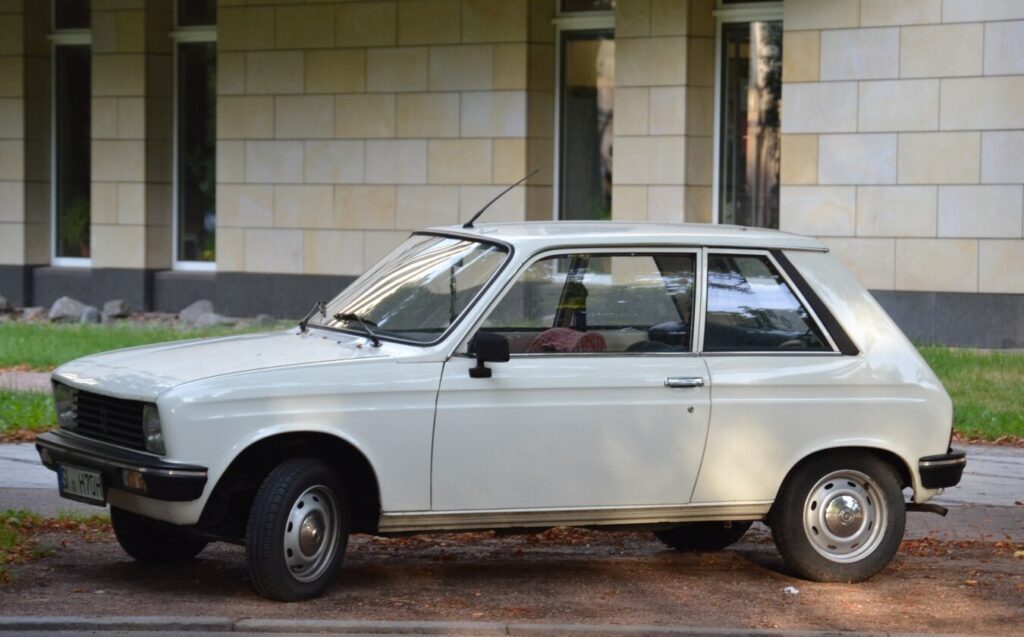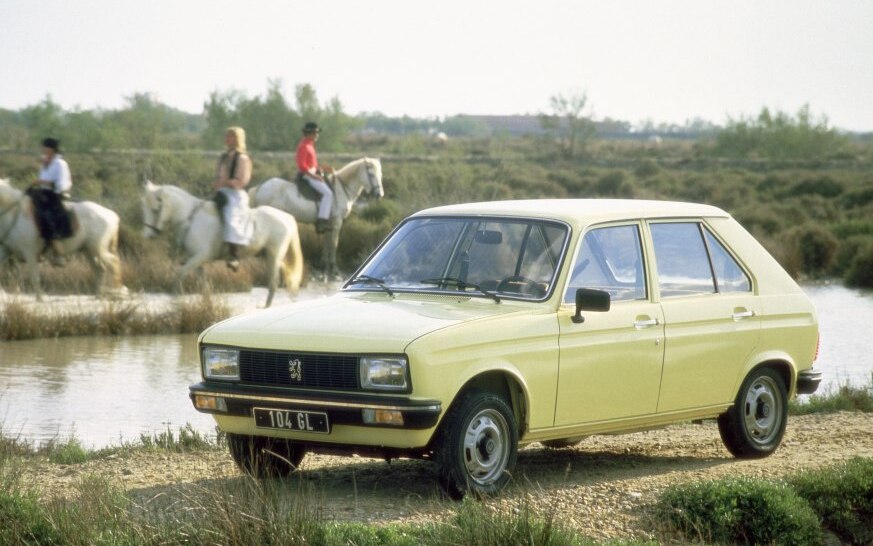
The Peugeot 104 0.9, producing 46 horsepower, was a foundational model within the Peugeot 104 range, manufactured between 1972 and 1979. It represented the entry point into the 104 lineup, a series of small, front-wheel-drive hatchbacks designed to modernize Peugeot’s offerings and compete with increasingly popular European and Japanese compact cars. The 104 series, internally designated as Type B1, was a significant departure for Peugeot, embracing a transverse engine layout and independent front suspension – features previously uncommon in their smaller vehicles. The 0.9-liter variant specifically targeted budget-conscious buyers seeking economical transportation, prioritizing fuel efficiency and affordability over outright performance.
Peugeot 104 0.9: Positioning and Market Role
The 0.9-liter Peugeot 104 occupied the base trim level within the 104 range. Above it sat the 1.1-liter version, offering a modest power increase, and later, a 1.3-liter engine for those desiring more performance. The 0.9 was deliberately positioned as the most accessible model, appealing to first-time car buyers, urban commuters, and those needing a simple, reliable vehicle for short journeys. It was often seen as a direct competitor to vehicles like the Renault 5 and the Citroën 2CV, though offering a more modern design and features than the aging Citroën. The 104, in general, aimed to bridge the gap between the utilitarian 2CV and the more sophisticated, but pricier, offerings from other European manufacturers.
Powertrain & Engine Architecture
The heart of the Peugeot 104 0.9 was the 108 XV3 engine, a 954cc (58.2 cubic inches) inline-four cylinder petrol engine. This engine was a naturally aspirated unit, meaning it did not employ a turbocharger or supercharger. It featured a single overhead camshaft (SOHC) operating a two-valve-per-cylinder configuration. The engine utilized a Solex carburetor for fuel delivery, a common setup for vehicles of this era. The cylinder block was cast iron, while the cylinder head was aluminum, contributing to a relatively lightweight design. Compression ratio was typically around 8.5:1. The engine’s modest output of 46 horsepower at 6000 rpm and 59 lb-ft of torque at 4000 rpm was sufficient for city driving, but limited its capabilities on highways or when fully loaded.
The 104 0.9 was primarily offered with a four-speed manual transmission. However, a three-speed automatic transmission was available as an option, though it was less common due to its impact on fuel economy and performance. The automatic transmission was a conventional hydraulic automatic, offering smooth but relatively slow gear changes. The front-wheel-drive layout, a key feature of the 104, meant the engine and transmission were transversely mounted, saving space and improving packaging efficiency. The drivetrain consisted of constant velocity joints on the drive shafts, transmitting power to the front wheels.
Driving Characteristics
The driving experience in a Peugeot 104 0.9 was characterized by its light weight and nimble handling. The car weighed around 1,680 lbs (762 kg), which, combined with the small engine, resulted in a modest power-to-weight ratio. Acceleration was slow, taking approximately 18-20 seconds to reach 60 mph. The four-speed manual transmission allowed drivers to make the most of the engine’s limited power, while the optional automatic transmission further dulled performance. The steering was light and precise, making it easy to maneuver in urban environments. The suspension, consisting of independent front suspension with torsion bars and a trailing arm rear suspension, provided a comfortable ride, though it could become unsettled on rough roads. The 0.9-liter engine was happiest when driven at moderate speeds, and its lack of power became particularly noticeable when climbing hills or overtaking other vehicles. Compared to the 1.1 and 1.3-liter versions, the 0.9 felt significantly slower and less refined, but it offered a more economical driving experience.
Equipment & Trim Levels
The Peugeot 104 0.9 was typically equipped with basic, functional features. Standard equipment included cloth upholstery, vinyl floor covering, and simple steel wheels. The dashboard was minimalist, featuring a speedometer, fuel gauge, and basic warning lights. Heating and ventilation were standard, but air conditioning was not available on the 0.9 model. Optional extras included a radio, upgraded upholstery, and tinted glass. Later models saw the introduction of minor trim enhancements, such as improved dashboard materials and more comfortable seats. The interior space was surprisingly generous for a car of its size, offering adequate room for four adults, though rear legroom was limited. The hatchback configuration provided a practical cargo area, which could be expanded by folding down the rear seats.
Chassis & Braking
The Peugeot 104 featured a monocoque chassis construction, providing a good balance of strength and lightness. The front suspension utilized independent torsion bar springs, offering a comfortable ride and good handling. The rear suspension employed trailing arms with coil springs. Steering was rack and pinion, providing precise control. Braking was initially accomplished with drum brakes on all four wheels. However, later models were upgraded with front disc brakes, improving stopping performance. The braking system was hydraulic, with dual-circuit master cylinder for added safety. The 104 0.9’s relatively light weight helped to compensate for the modest braking power, but drivers needed to be mindful of stopping distances, especially in wet conditions. Stabilizer bars were not typically fitted to the base 0.9 model, further contributing to its softer handling characteristics.
Market Reception & Comparison
The Peugeot 104 0.9 received generally positive reviews for its affordability, fuel efficiency, and practicality. Critics praised its modern design and comfortable ride, but noted its lack of power and relatively slow performance. Compared to the 1.1 and 1.3-liter versions, the 0.9 was seen as a compromise, offering lower running costs at the expense of driving enjoyment. Fuel economy was a key selling point, with the 0.9 achieving around 45-50 mpg in typical driving conditions. Reliability was generally good, though the carburetor required periodic adjustment and maintenance. The 104 0.9’s main competitors included the Renault 5, Citroën 2CV, and Fiat 127. The Renault 5 offered similar performance and fuel economy, while the Citroën 2CV was more utilitarian and less refined. The Fiat 127 was considered a more modern and sophisticated alternative, but it was also more expensive.
Technical Specifications
| Body Type | Hatchback |
| Engine Type | Inline-Four, Petrol (Gasoline) |
| Engine Code | 108 XV3 |
| Engine Displacement | 954 cc (58.2 cu in) |
| Power Output | 46 hp @ 6000 rpm |
| Torque | 59 lb-ft @ 4000 rpm |
| Fuel System | Solex Carburetor |
| Valvetrain | SOHC, 2 valves per cylinder |
| Transmission | 4-speed Manual (primarily), 3-speed Automatic (optional) |
| Drivetrain | Front-Wheel Drive |
| Weight | 1,680 lbs (762 kg) approximately |
| Top Speed | 85 mph (137 km/h) approximately |
| 0-60 mph | 18-20 seconds approximately |
Legacy
The Peugeot 104 0.9, while not the most powerful or refined version of the 104, played a crucial role in establishing the model as a popular and affordable choice for European drivers. The 108 XV3 engine proved to be relatively durable and reliable, and many examples are still on the road today, often cherished by enthusiasts. In the used car market, the 0.9-liter version is typically the most affordable 104 variant, making it an attractive option for those seeking a classic French hatchback on a budget. Parts availability can be a challenge, but a dedicated network of Peugeot enthusiasts and specialist suppliers helps to keep these cars running. The 104 series, as a whole, is remembered for its innovative design, comfortable ride, and contribution to the evolution of small, front-wheel-drive cars.