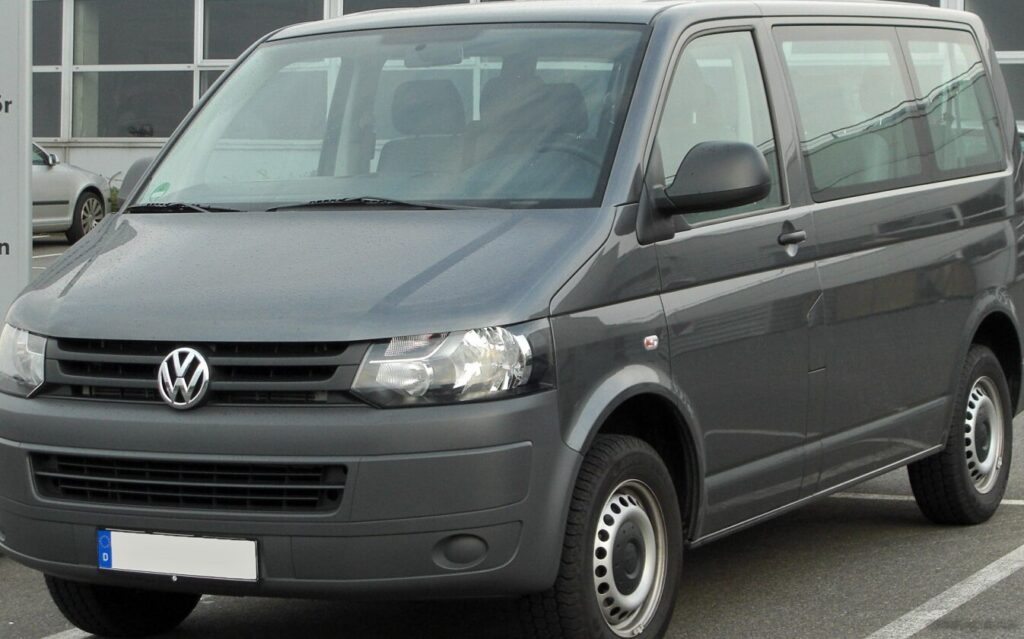
The Volkswagen Transporter (T5) facelift, produced from 2009 to 2015, represented a significant update to the fifth generation of Volkswagen’s popular commercial vehicle. Within the T5 range, the Kombi 2.0 TDI BMT (114 hp) L1H1, manufactured from 2011 to 2015, occupied a position as a practical and economical option, aimed at both commercial users and families needing versatile passenger and cargo space. The “L1H1” designation refers to the vehicle’s body length (L1 – short wheelbase) and roof height (H1 – standard roof). This variant was positioned as a mid-range offering, bridging the gap between the more basic, lower-powered models and the higher-specification, more powerful TDI variants.
Powertrain & Engine Architecture
The heart of the Transporter Kombi 2.0 TDI BMT (114 hp) is the EA189 series 2.0-liter inline four-cylinder diesel engine, specifically the CAAD engine code. This engine is a turbocharged common rail direct injection diesel. The ‘BMT’ designation stands for ‘BlueMotion Technology’, indicating the inclusion of fuel-saving technologies. The engine utilizes a turbocharger with an intercooler to boost power and efficiency. Fuel is delivered via a Bosch common rail system operating at a maximum pressure of 1,600 bar, ensuring precise fuel atomization for cleaner combustion and improved performance. The engine features a double overhead camshaft (DOHC) valvetrain with four valves per cylinder, optimizing gas flow for increased power output.
The 2.0 TDI BMT engine is paired with a five-speed manual transmission, sending power to the front wheels. This transmission was chosen for its robustness and efficiency, contributing to the vehicle’s overall fuel economy. The gear ratios are tailored to provide a balance between acceleration and cruising ability, prioritizing fuel efficiency over outright performance. The transmission’s shift linkage is cable-operated, providing a relatively direct feel.
Fuel Injection and Turbocharging
The common rail direct injection system is a key component of the engine’s efficiency. It allows for multiple injection events per combustion cycle, optimizing the burning process and reducing emissions. The turbocharger, a variable geometry turbo (VGT), adjusts the turbine vanes to optimize airflow across a wider range of engine speeds, minimizing turbo lag and maximizing boost pressure. The intercooler cools the compressed air from the turbocharger, increasing its density and further enhancing engine performance.
Driving Characteristics
The 114 hp and 250 Nm (184 lb-ft) of torque produced by the 2.0 TDI BMT engine provide adequate, though not exhilarating, performance for the Transporter Kombi. Acceleration from 0 to 62 mph (0-100 km/h) takes approximately 15.9 seconds, and the top speed is around 101 mph (163 km/h). In real-world driving, the engine feels most comfortable in the mid-range, providing sufficient power for highway cruising and city driving. The five-speed manual transmission requires frequent shifting when climbing hills or carrying a full load. Compared to the more powerful TDI variants (like the 140 hp or 180 hp versions), the 114 hp model feels noticeably slower, particularly when fully loaded. However, the lower power output also contributes to improved fuel economy.
The front-wheel-drive configuration provides predictable handling, but it can suffer from torque steer under hard acceleration. The suspension is tuned for comfort and practicality, offering a reasonably smooth ride even on uneven surfaces. The steering is hydraulic, providing a weighted feel and decent feedback.
Equipment & Trim Levels
The Transporter Kombi 2.0 TDI BMT (114 hp) L1H1 typically came equipped with a range of standard features designed for both commercial and passenger use. Standard interior features included cloth upholstery, a basic audio system with radio and CD player, and manual air conditioning. Safety features included ABS (Anti-lock Braking System), driver and passenger airbags, and electronic stability control. The Kombi configuration allowed for flexible seating arrangements, with options for multiple rows of seats to accommodate up to nine passengers.
Optional extras included features such as upgraded audio systems with Bluetooth connectivity, parking sensors, alloy wheels, and a multi-function steering wheel. Additional comfort features like heated seats and cruise control were also available. The exterior trim was relatively basic, with black plastic bumpers and side moldings. The vehicle was available in a range of solid and metallic paint colors.
Chassis & Braking
The Transporter T5 utilizes a robust chassis designed to withstand the demands of commercial use. The front suspension consists of independent McPherson struts with coil springs and an anti-roll bar, providing a comfortable ride and stable handling. The rear suspension employs a semi-independent trailing arm setup with coil springs and a transverse stabilizer bar. This configuration offers a good balance between ride comfort and load-carrying capacity.
The braking system features ventilated discs on all four wheels, providing ample stopping power. The front discs measure 308×29.5 mm, while the rear discs are 294×22 mm. ABS (Anti-lock Braking System) is standard, preventing wheel lockup during hard braking and maintaining steering control. The hydraulic power steering provides a weighted feel and responsive steering.
Market Reception & Comparison
The Volkswagen Transporter Kombi 2.0 TDI BMT (114 hp) L1H1 was generally well-received by critics as a practical and economical choice. It was praised for its fuel efficiency, versatility, and reliability. However, some reviewers noted that the engine lacked the power of the higher-specification TDI variants, particularly when carrying a full load or towing a trailer. Compared to the 140 hp TDI model, the 114 hp version offered significantly lower fuel consumption but at the expense of performance. The 1.9 TDI models, while older, were also considered as alternatives, offering similar fuel economy but with a simpler engine design. The 2.0 TDI BMT offered a good balance between cost, fuel economy, and practicality, making it a popular choice for businesses and families alike.
Technical Specifications
| Brand | Volkswagen |
| Model | Transporter |
| Generation | Transporter (T5, facelift 2009) Kombi |
| Type | 2.0 TDI BMT (114 Hp) L1H1 |
| Start of production | 2011 |
| End of production | 2015 |
| Engine Displacement | 1968 cm3 (120.09 cu. in.) |
| Engine Code | CAAD |
| Number of Cylinders | 4 |
| Engine Configuration | Inline |
| Fuel Type | Diesel |
| Power | 114 hp @ 3500 rpm |
| Torque | 250 Nm (184 lb-ft) @ 1500-2750 rpm |
| Transmission | 5-speed manual |
| Drive Wheels | Front |
| Fuel Consumption (Combined) | 6.8 l/100 km (34.6 US mpg, 41.5 UK mpg) |
| CO2 Emissions | 179 g/km |
| Kerb Weight | 1901 kg (4190.99 lbs) |
| Max. Weight | 2600-3200 kg (5732.02 – 7054.79 lbs) |
| Fuel Tank Capacity | 80 l (21.13 US gal, 17.6 UK gal) |
| Length | 4892 mm (192.6 in) |
| Width | 1904 mm (74.96 in) |
| Height | 1990 mm (78.35 in) |
Legacy
The 2.0 TDI BMT engine, while not known for being the most powerful in the Transporter range, has proven to be relatively reliable. Common issues include turbocharger wear, injector problems, and occasional issues with the dual-mass flywheel. However, with regular maintenance and servicing, these engines can cover high mileages. In the used car market, the Transporter Kombi 2.0 TDI BMT (114 hp) L1H1 remains a popular choice due to its affordability, fuel efficiency, and practicality. It represents a good value proposition for buyers seeking a versatile van for both commercial and personal use. The T5 platform, in general, enjoys a strong reputation for durability and longevity, contributing to the continued demand for these vehicles on the used market.