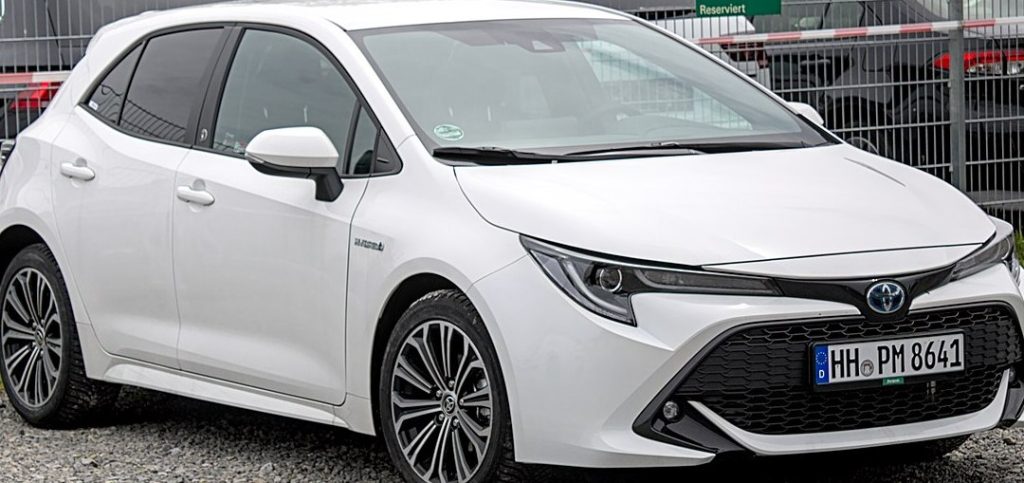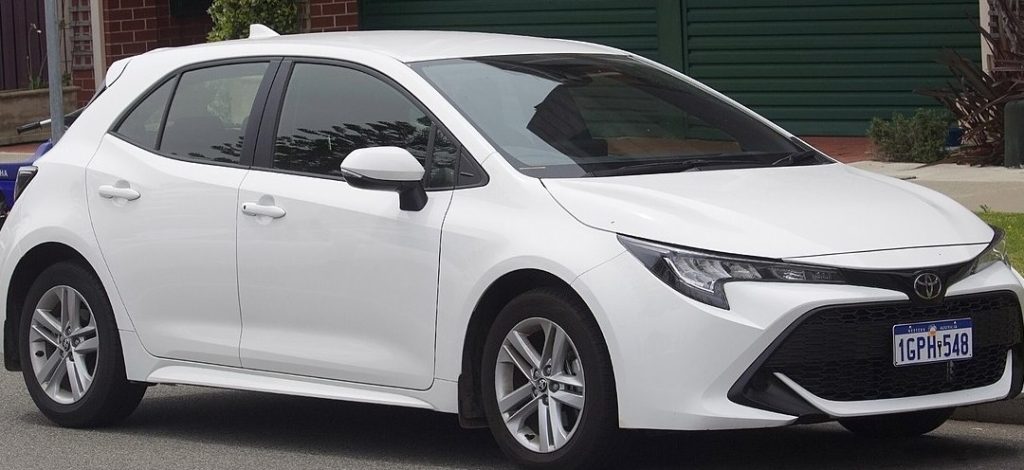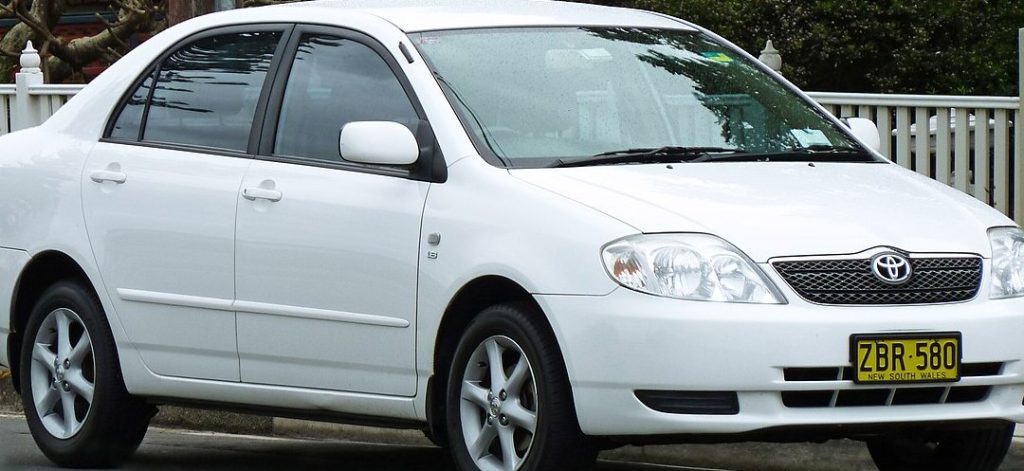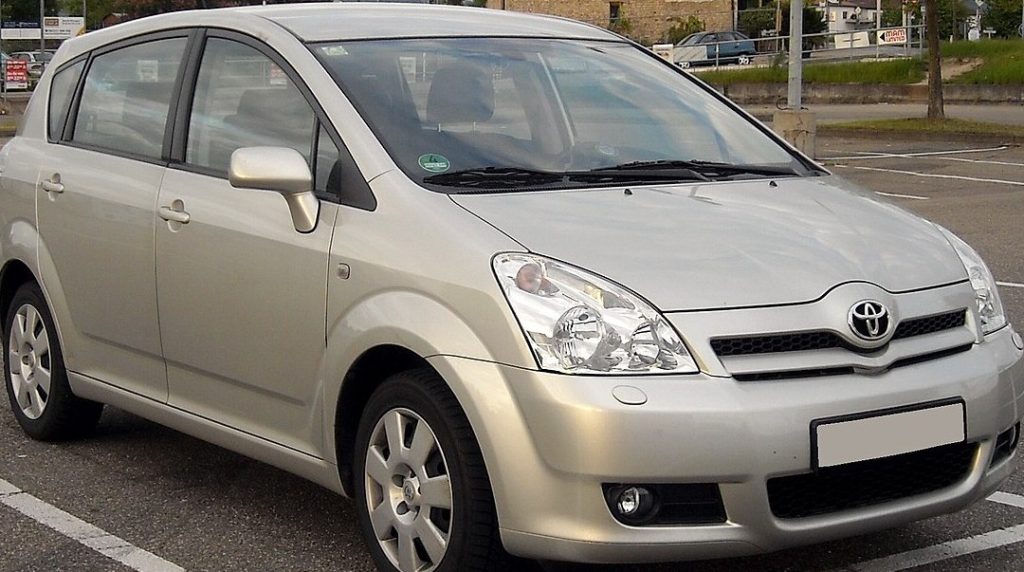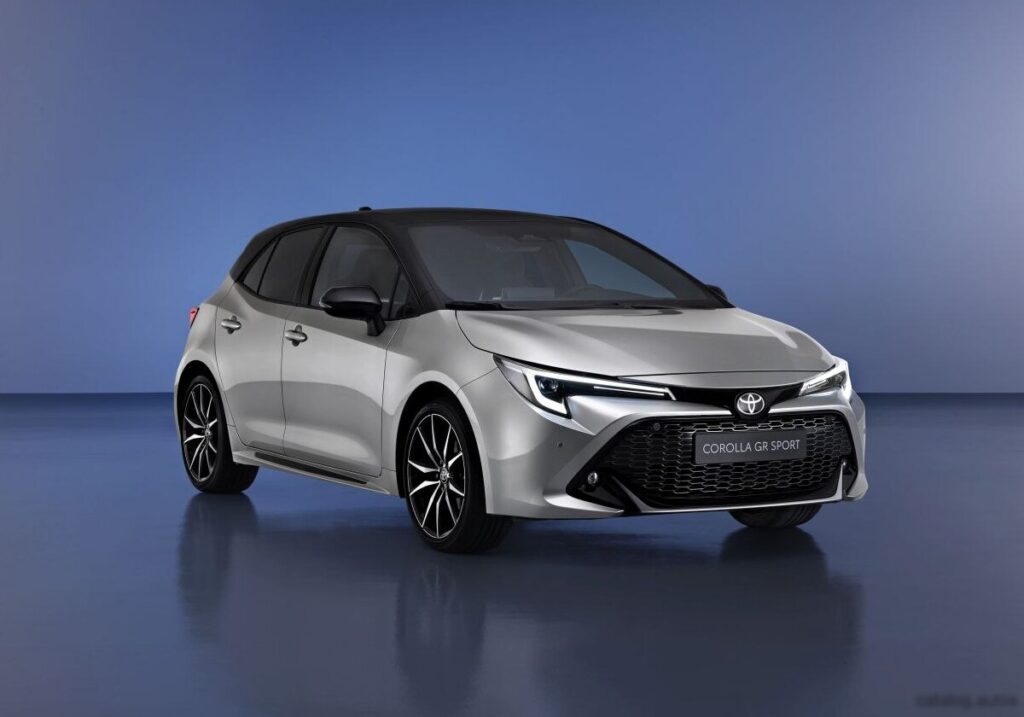
The Toyota Corolla Hatchback XII, specifically the 2.0-liter (169 hp) variant equipped with a Continuously Variable Transmission (CVT), represents a significant iteration of Toyota’s popular compact hatchback. Introduced in June 2022 as part of the E210 facelift, this model aimed to balance fuel efficiency with a more engaging driving experience than the base engine options. It occupied a mid-range position within the Corolla Hatchback lineup, offering a step up in performance from the 1.8-liter engine while remaining more accessible than potential future performance-oriented trims. This generation Corolla Hatchback is built on the TNGA-C (Toyota New Global Architecture – C) platform, known for its improved rigidity and driving dynamics.
Powertrain & Engine Architecture
The heart of this Corolla Hatchback is the M20A-FKS 2.0-liter inline-four cylinder gasoline engine. This engine utilizes a combination of direct injection and multi-port fuel injection, a system Toyota calls D-4S, to optimize combustion efficiency and power delivery. The engine boasts a high compression ratio of 13:1, contributing to its thermal efficiency. The valvetrain employs a Dual VVT-i (Variable Valve Timing – intelligent) system, independently controlling intake and exhaust valve timing for improved performance across the rev range. The engine produces 169 horsepower at 6600 rpm and 205 Nm (151.2 lb-ft) of torque at 4800 rpm. Power per liter is rated at 85.1 hp/l.
Paired with the M20A-FKS engine is a CVT (Continuously Variable Transmission). Unlike traditional automatic transmissions with fixed gear ratios, a CVT utilizes a belt and pulley system to provide a virtually infinite number of gear ratios within its operating range. This allows the engine to operate at its most efficient rpm for any given speed, maximizing fuel economy. The CVT in the Corolla is programmed with simulated shift points to mimic the feel of a conventional automatic, addressing a common complaint about CVTs lacking a natural driving feel. The transmission is front-wheel drive.
Fuel Injection and Valvetrain Details
The D-4S fuel injection system is a key component of the M20A-FKS engine. Direct injection delivers fuel directly into the combustion chamber, allowing for precise fuel control and improved efficiency. Multi-port injection supplements direct injection at lower engine speeds, enhancing throttle response and reducing particulate emissions. The Dual VVT-i system continuously adjusts valve timing based on driving conditions, optimizing engine performance and fuel economy. This system is crucial for balancing power and efficiency.
Driving Characteristics
The 2.0-liter CVT Corolla Hatchback offers a noticeable improvement in acceleration and responsiveness compared to the base 1.8-liter model. While not a sports car, the 169 hp engine provides adequate power for everyday driving situations, including highway merging and passing maneuvers. The CVT, while efficient, can sometimes exhibit a “rubber band” effect, where engine rpm rises quickly without a corresponding increase in vehicle speed. However, Toyota’s programming of the CVT minimizes this sensation by simulating gear changes. The weight-to-power ratio of 8.5 kg/hp provides a reasonable level of performance. The combined fuel economy of 6.7 l/100 km (35.1 US mpg) is a key selling point, making it an attractive option for fuel-conscious buyers.
Compared to a manual transmission equipped Corolla, the CVT prioritizes smoothness and efficiency over driver engagement. The manual transmission, when available, offered a more direct connection to the engine and a more sporty driving experience. However, the CVT’s ease of use and fuel-saving capabilities appealed to a broader range of drivers.
Equipment & Trim Levels
The 2.0-liter CVT Corolla Hatchback typically came well-equipped, though specific features varied depending on the trim level (LE, SE, XSE). Standard features generally included Toyota Safety Sense 3.0, which encompasses a suite of advanced driver-assistance systems such as pre-collision system with pedestrian detection, lane departure alert with lane tracing assist, and dynamic radar cruise control. Interior features typically included an 8-inch touchscreen infotainment system with Apple CarPlay and Android Auto compatibility, automatic climate control, and a rearview camera. Upholstery was typically cloth in the lower trims, with available upgrades to SofTex (Toyota’s synthetic leather) in higher trims. Optional extras included a premium audio system, blind spot monitoring, and a power moonroof.
Chassis & Braking
The Corolla Hatchback utilizes a McPherson strut front suspension with a coil spring and anti-roll bar, providing a comfortable and controlled ride. The rear suspension employs a double wishbone setup, also with coil springs and a transverse stabilizer bar. This configuration helps to minimize body roll and improve handling. The front brakes are ventilated discs measuring 282 mm, while the rear brakes are solid discs measuring 264 mm. ABS (Anti-lock Braking System) is standard. The electric power steering provides light and precise steering feel. Tire sizes varied depending on the trim level, with 205/55 R16 tires being standard on lower trims and 225/40 R18 tires available on higher trims. Wheel rim sizes were correspondingly 7J x 16 and 8J x 18.
Market Reception & Comparison
Critics generally praised the 2.0-liter CVT Corolla Hatchback for its fuel efficiency, comfortable ride, and comprehensive suite of safety features. However, some reviewers noted that the CVT could feel somewhat unrefined under hard acceleration. Compared to other compact hatchbacks in its class, such as the Honda Civic Hatchback and Mazda3 Hatchback, the Corolla offered a competitive combination of value, reliability, and fuel economy. The Mazda3 was often praised for its more engaging driving dynamics, while the Honda Civic offered a more spacious interior. The Corolla’s reputation for reliability and low cost of ownership made it a popular choice among buyers seeking a practical and dependable vehicle.
In terms of fuel economy, the 2.0L CVT Corolla Hatchback consistently achieved figures close to the EPA estimates of 35.1 US mpg combined. Reliability was generally very good, with few reported issues specific to the powertrain. The Corolla’s strong resale value further enhanced its appeal.
Technical Specifications
| Brand | Toyota |
| Model | Corolla Hatchback |
| Generation | Corolla Hatchback XII (E210, facelift 2022) |
| Type (Engine) | 2.0 (169 Hp) CVT |
| Start of production | June, 2022 |
| Powertrain Architecture | Internal Combustion engine |
| Body type | Hatchback |
| Seats | 5 |
| Doors | 5 |
| Fuel consumption (economy) – urban (EPA) | 7.4 l/100 km (31.8 US mpg) |
| Fuel consumption (economy) – extra urban (EPA) | 5.7 l/100 km (41.3 US mpg) |
| Fuel consumption (economy) – combined (EPA) | 6.7 l/100 km (35.1 US mpg) |
| Fuel Type | Petrol (Gasoline) |
| Emission standard | LEV III, SULEV 30 |
| Weight-to-power ratio | 8.5 kg/Hp |
| Weight-to-torque ratio | 7 kg/Nm |
| Power | 169 Hp @ 6600 rpm |
| Torque | 205 Nm @ 4800 rpm (151.2 lb.-ft. @ 4800 rpm) |
| Engine layout | Front, Transverse |
| Engine Model/Code | M20A-FKS |
| Engine displacement | 1987 cm3 (121.25 cu. in.) |
| Number of cylinders | 4 |
| Engine configuration | Inline |
| Cylinder Bore | 80.5 mm (3.17 in.) |
| Piston Stroke | 97.6 mm (3.84 in.) |
| Compression ratio | 13:1 |
| Number of valves per cylinder | 4 |
| Fuel injection system | Direct injection and Multi-port manifold injection |
| Engine aspiration | Naturally aspirated engine |
| Valvetrain | DOHC, Dual VVT-i |
| Engine oil capacity | 4.6 l (4.86 US qt | 4.05 UK qt) |
| Coolant | 6.2 l (6.55 US qt | 5.46 UK qt) |
| Kerb Weight | 1429 kg (3150.41 lbs.) |
| Trunk (boot) space – minimum | 504 l (17.8 cu. ft.) |
| Fuel tank capacity | 50 l (13.21 US gal | 11 UK gal) |
| Length | 4369 mm (172.01 in.) |
| Width | 1791 mm (70.51 in.) |
| Height | 1450 mm (57.09 in.) |
| Wheelbase | 2639 mm (103.9 in.) |
| Drive wheel | Front wheel drive |
| Number of gears and type of gearbox | automatic transmission CVT |
Legacy
The 2.0-liter CVT powertrain in the Corolla Hatchback XII has proven to be a reliable and durable combination. The M20A-FKS engine, while not known for exceptional performance, has a solid reputation for longevity and relatively low maintenance costs. The CVT, while sometimes criticized for its driving feel, has also proven to be dependable. On the used car market, these Corolla Hatchbacks hold their value well, thanks to Toyota’s reputation for reliability and the vehicle’s fuel efficiency. They remain a popular choice for buyers seeking a practical, affordable, and dependable compact hatchback.