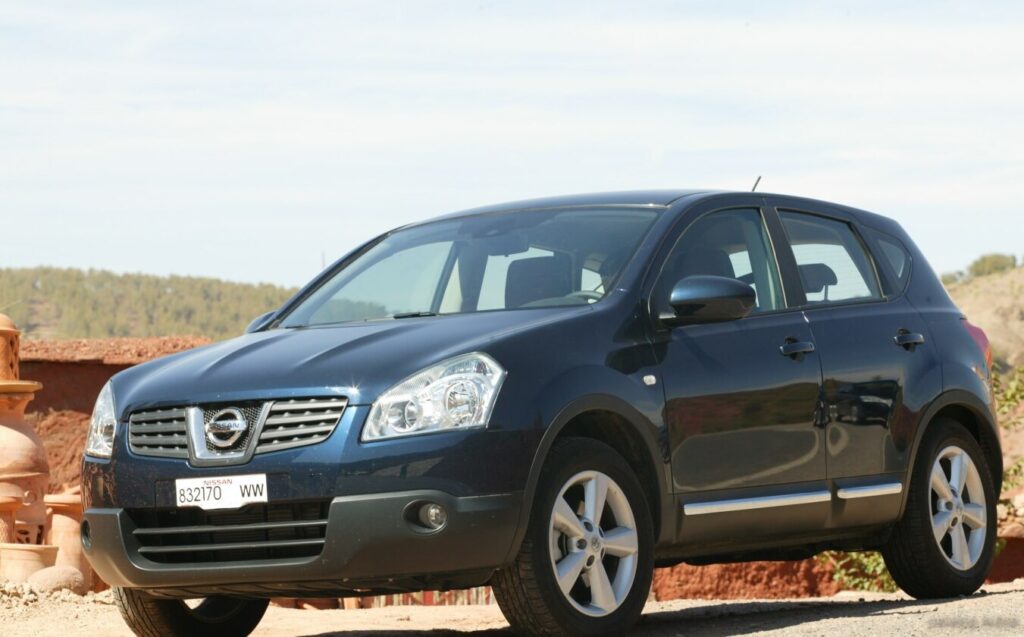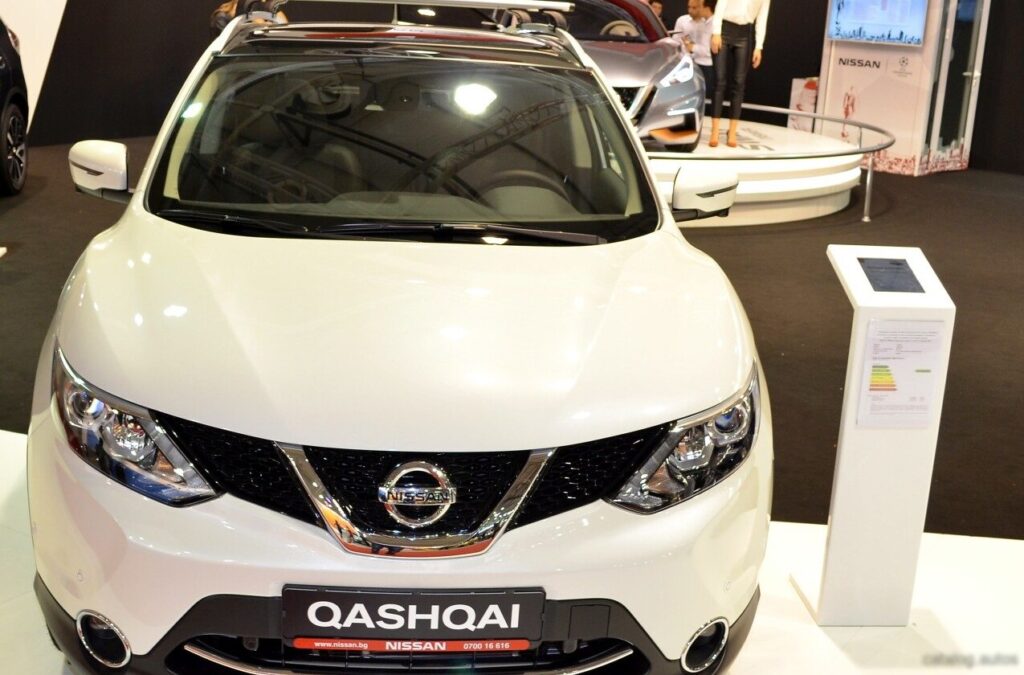
The Nissan Qashqai II (J11) 2.0 (141 Hp) AWD Xtronic was a trim level of the second-generation Qashqai, produced between 2017 and 2019. This variant occupied a mid-to-upper position within the Qashqai II lineup, offering all-wheel drive capability and a continuously variable transmission (CVT) paired with a 2.0-liter gasoline engine. It was designed to appeal to buyers seeking a practical, comfortable, and capable crossover SUV with enhanced traction for varied weather conditions. The J11 Qashqai was built on the Renault-Nissan Common Module Family (CMF) platform, specifically the CMF-C/D architecture.
Powertrain & Engine Architecture
The heart of the Qashqai II 2.0 AWD Xtronic is the MR20DD 2.0-liter inline-four cylinder gasoline engine. This engine produces 141 horsepower at 6000 rpm and 199 Nm (146.77 lb-ft) of torque at 4400 rpm. It features direct fuel injection, contributing to improved fuel efficiency and reduced emissions. The engine utilizes a double overhead camshaft (DOHC) valvetrain with Continuously Variable Valve Timing Control System (CVTCS) to optimize performance across the rev range. The compression ratio is set at 11.2:1. The engine is transversely mounted in the front of the vehicle.
The “Xtronic” designation refers to Nissan’s branded continuously variable transmission (CVT). Unlike traditional automatic transmissions with fixed gear ratios, a CVT utilizes a belt and pulley system to provide a theoretically infinite number of gear ratios within its operating range. This allows the engine to operate at its most efficient rpm for any given speed and load, contributing to improved fuel economy. The AWD system employs an electronically controlled clutch to engage the rear wheels when needed, providing on-demand all-wheel drive capability. This system prioritizes front-wheel drive for normal driving conditions to maximize fuel efficiency, seamlessly engaging the rear wheels when slip is detected.
Fuel Injection and Valvetrain Details
The MR20DD engine employs a multi-point direct fuel injection system. This system injects fuel directly into the combustion chamber, allowing for more precise fuel metering and improved combustion efficiency. The DOHC valvetrain, coupled with the CVTCS, optimizes valve timing for enhanced performance and fuel economy. The CVTCS adjusts the timing of both intake and exhaust valves, adapting to changing engine loads and speeds.
Driving Characteristics
The Qashqai II 2.0 AWD Xtronic offers a comfortable and refined driving experience. The CVT provides smooth, seamless acceleration, although it can sometimes feel less responsive than a traditional automatic transmission, particularly during quick overtaking maneuvers. The all-wheel drive system enhances traction and stability, especially on slippery surfaces. While not a performance-oriented vehicle, the 141 hp engine provides adequate power for everyday driving situations. The CVT is programmed to mimic stepped gear changes under hard acceleration, providing a more familiar feel for drivers accustomed to traditional automatics. The weight of the vehicle, ranging from 1515 to 1559 kg (3340 to 3437.01 lbs), does impact acceleration, but the AWD system helps to maintain grip and control.
Compared to the base 1.2-liter engine option, the 2.0-liter provides noticeably more power and torque, making it better suited for highway driving and carrying a full load of passengers and cargo. Compared to potential diesel options available in other markets, the 2.0L gasoline engine offers a smoother and quieter driving experience, but typically at the expense of fuel economy.
Equipment & Trim Levels
The 2.0 AWD Xtronic trim typically included a generous level of standard equipment. This often included features such as alloy wheels (typically 17 or 19 inch), automatic climate control, a touchscreen infotainment system with navigation, Bluetooth connectivity, rear parking sensors, and a rearview camera. Higher sub-trims within the 2.0 AWD range could add features like leather upholstery, heated front seats, a panoramic sunroof, and advanced driver-assistance systems (ADAS) such as lane departure warning, blind spot monitoring, and automatic emergency braking. Interior upholstery was typically cloth on lower trims, with leather options available on higher-spec models. Dashboard configurations were generally consistent across the Qashqai II range, featuring a modern and functional design.
Chassis & Braking
The Qashqai II 2.0 AWD Xtronic utilizes an independent McPherson strut suspension at the front and an independent multi-link suspension at the rear. This suspension setup provides a comfortable ride and good handling characteristics. Stabilizer bars are fitted to both the front and rear axles to reduce body roll during cornering. The braking system consists of ventilated discs at the front (296×26 mm) and solid discs at the rear (292×16 mm). Anti-lock braking system (ABS) is standard, enhancing braking performance and stability. The electric power steering provides light and precise steering feel.
Market Reception & Comparison
The Nissan Qashqai II 2.0 AWD Xtronic was generally well-received by automotive critics. It was praised for its comfortable ride, spacious interior, and practical features. The all-wheel drive system was seen as a valuable addition for drivers in regions with inclement weather. However, some critics noted that the CVT could feel less engaging than a traditional automatic transmission. Fuel economy was considered average for its class, with combined fuel consumption figures around 8.4 l/100 km (28 US mpg). Compared to other trims in the Qashqai II lineup, the 2.0 AWD Xtronic offered a balance of performance, capability, and comfort. It was positioned as a more premium option than the base models, appealing to buyers willing to pay extra for the added benefits of all-wheel drive and a more powerful engine.
Technical Specifications
| Engine Model/Code | MR20DD |
| Engine Displacement | 1997 cm3 (121.86 cu. in.) |
| Number of Cylinders | 4, Inline |
| Power | 141 Hp @ 6000 rpm |
| Torque | 199 Nm @ 4400 rpm (146.77 lb.-ft. @ 4400 rpm) |
| Compression Ratio | 11.2:1 |
| Fuel Injection System | Direct Injection |
| Valvetrain | DOHC, CVTCS |
| Transmission | Xtronic CVT (Continuously Variable Transmission) |
| Drive Type | All Wheel Drive (AWD) |
| Kerb Weight | 1515-1559 kg (3340 – 3437.01 lbs.) |
| Max. Weight | 2035 kg (4486.41 lbs.) |
| Fuel Tank Capacity | 55 l (14.53 US gal | 12.1 UK gal) |
| Length | 4380 mm (172.44 in.) |
| Width | 1838 mm (72.36 in.) |
| Height | 1607 mm (63.27 in.) |
| Wheelbase | 2646 mm (104.17 in.) |
| Fuel Consumption (Combined) | 8.4 l/100 km (28 US mpg, 33.6 UK mpg, 11.9 km/l) |
Legacy
The MR20DD engine, while not without its quirks, has proven to be a relatively reliable powertrain when properly maintained. Common issues include oil consumption and potential problems with the CVT, although these are not necessarily widespread. In the used car market, the Qashqai II 2.0 AWD Xtronic holds its value reasonably well, particularly examples with a full service history and low mileage. The all-wheel drive system remains a desirable feature for buyers seeking a versatile and capable crossover SUV. The Xtronic CVT, while offering fuel efficiency, requires regular fluid changes to ensure longevity. Overall, the Qashqai II 2.0 AWD Xtronic represents a solid and practical choice for buyers seeking a comfortable, capable, and well-equipped crossover SUV.