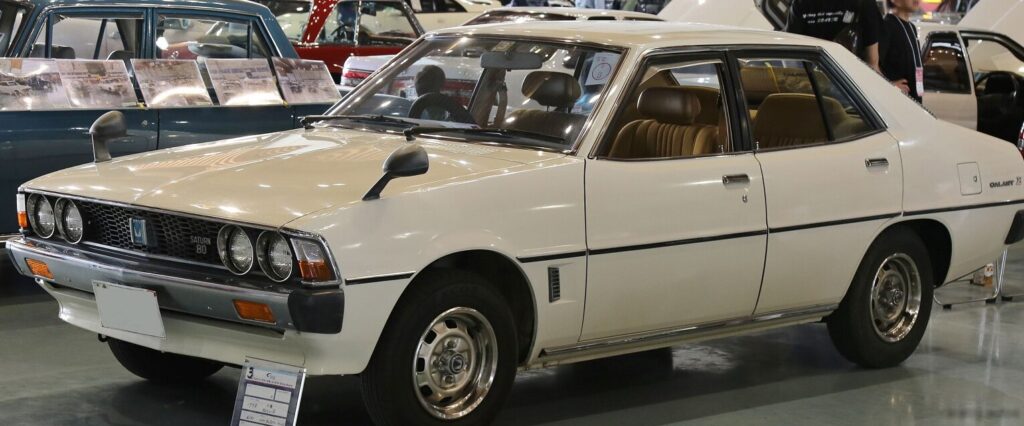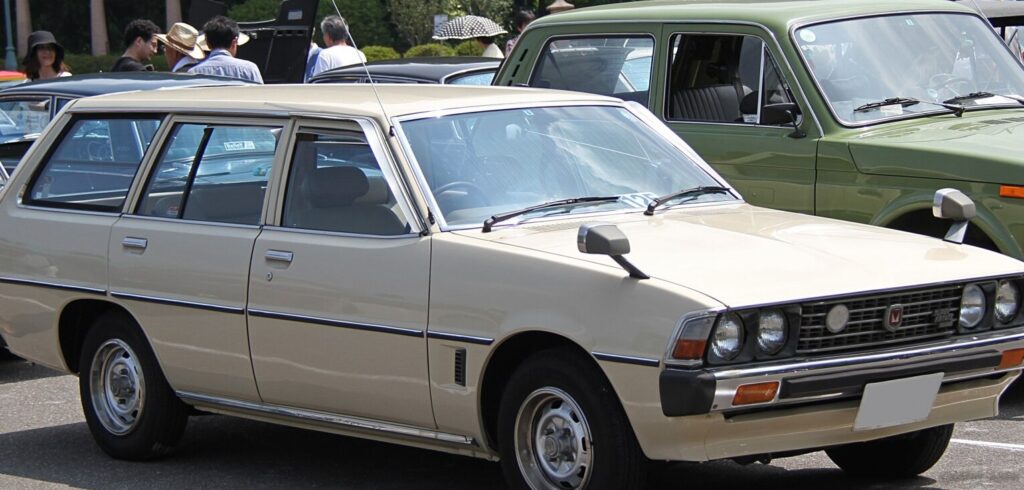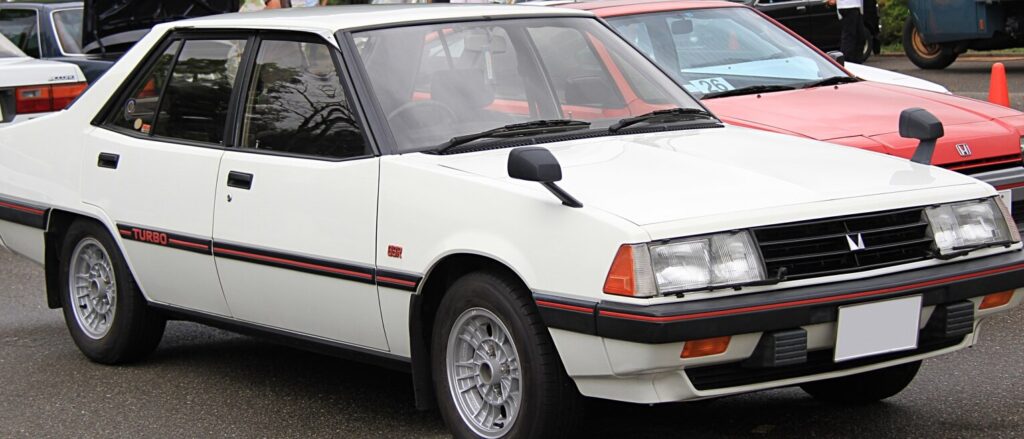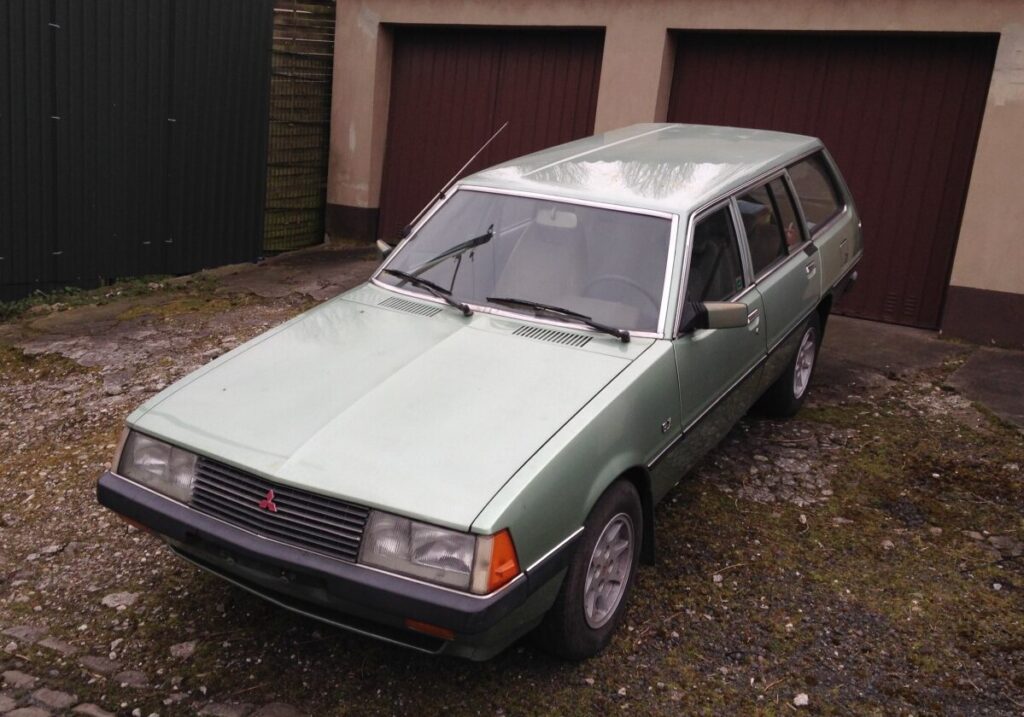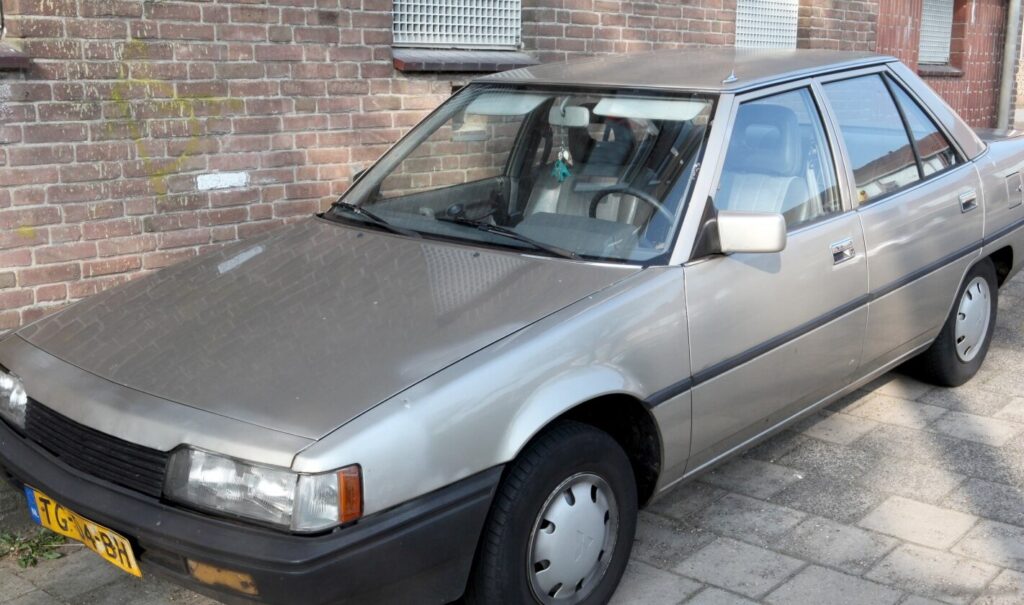
The Mitsubishi Galant V 2.0 GLS (E15A), produced between 1984 and 1987, represented a significant step forward for Mitsubishi in the mid-size sedan segment. Part of the fifth generation of the Galant (E15A chassis), this variant occupied a middle-ground position within the lineup, offering a balance between affordability, comfort, and reasonable performance. It served as a more upscale alternative to the base models while remaining more accessible than the higher-performance trims. The Galant V aimed to compete with established rivals like the Toyota Camry, Honda Accord, and Nissan Stanza, offering a distinctive Japanese aesthetic and a focus on practicality.
The 2.0 GLS Variant: Positioning and Overview
The 2.0 GLS trim level was a popular choice for buyers seeking a well-equipped and comfortable Galant. “GLS” denoted a higher level of standard features compared to the base “GL” model, including upgraded interior trim, additional convenience items, and often, a more refined exterior appearance. The 102 horsepower 2.0-liter engine, while not the most powerful option available in the Galant V range, provided adequate performance for everyday driving and highway cruising. This variant was primarily targeted towards families and commuters who prioritized reliability and fuel efficiency over outright speed. It was a common sight on American roads during its production run, establishing the Galant as a credible contender in the competitive mid-size market.
Powertrain & Engine Architecture
The heart of the Galant V 2.0 GLS was the 4G63 inline-four cylinder engine, displacing 1997cc (approximately 2.0 liters). While later iterations of the 4G63 would become renowned for their turbocharged performance in models like the Mitsubishi Lancer Evolution, the version found in the 2.0 GLS was a naturally aspirated, single overhead camshaft (SOHC) design. Crucially, this engine utilized a carburetor for fuel delivery, a common practice for the time but increasingly replaced by fuel injection in later models. The carburetor, typically a Mikuni or Hitachi unit, managed the air-fuel mixture based on engine demand. The engine featured a cast iron block and an aluminum cylinder head, contributing to its durability. Power output was rated at 102 horsepower at 5,200 rpm, and peak torque of 119 lb-ft was achieved at 3,000 rpm.
The transmission paired with the 2.0 GLS was a three-speed automatic. This automatic, while providing ease of use, was a relatively simple design compared to the electronically controlled automatics that would emerge in subsequent years. It featured a torque converter for smooth engagement and a traditional gear selector. The gear ratios were optimized for fuel economy and comfortable cruising, rather than aggressive acceleration. The front wheels were driven via half-shafts connected to the automatic transmission. The engine’s front-wheel drive configuration was a key element of the Galant V’s design, contributing to improved traction and packaging efficiency.
Driving Characteristics
The driving experience in the Galant V 2.0 GLS was characterized by smooth, predictable handling and adequate, if not exhilarating, performance. The 102 horsepower engine provided sufficient power for merging onto highways and passing slower vehicles, but it wasn’t designed for rapid acceleration. The three-speed automatic transmission contributed to a relaxed driving style, with noticeable shifts between gears. Compared to the available five-speed manual transmission, the automatic resulted in a slight performance deficit, but offered greater convenience for everyday driving. The carburetor, while reliable, could sometimes lead to slightly less precise throttle response compared to fuel-injected engines. The overall feel was one of comfortable, reliable transportation, prioritizing ease of use over sporty dynamics. The car’s weight, around 2,600-2,800 lbs, played a role in its performance characteristics.
Equipment & Trim Levels
The 2.0 GLS trim level included a number of standard features designed to enhance comfort and convenience. Interior appointments typically included cloth upholstery, often in a patterned design. The dashboard featured a straightforward layout with analog gauges for speed, fuel level, coolant temperature, and a clock. Power steering was standard, making maneuvering at low speeds easier. Other common features included an AM/FM radio, a cigarette lighter, and basic interior lighting. Optional extras available for the 2.0 GLS could include air conditioning, a sunroof, upgraded audio systems, and power windows. The exterior of the GLS trim often featured chrome accents, full wheel covers, and a more refined paint finish compared to the base models. The overall interior ambiance was functional and durable, reflecting the car’s focus on practicality.
Chassis & Braking
The Galant V 2.0 GLS utilized an independent McPherson strut suspension system at the front, providing a comfortable ride and predictable handling. The rear suspension also employed a McPherson strut design, although it was simpler in construction. The front brakes were disc brakes, offering superior stopping power compared to drum brakes. However, the rear brakes were drum brakes, a cost-saving measure common in vehicles of this era. The steering system was a rack-and-pinion setup, providing precise and responsive steering feel. Hydraulic power steering was standard, reducing driver effort. Stabilizer bars (anti-roll bars) were fitted to both the front and rear axles, helping to reduce body roll during cornering. The tires were typically 175/80R14 or 185/70R14, providing a balance between ride comfort and handling.
Market Reception & Comparison
The Mitsubishi Galant V 2.0 GLS was generally well-received by automotive critics as a competent and reliable mid-size sedan. It was praised for its comfortable ride, spacious interior, and reasonable fuel economy. However, some reviewers noted that the 102 horsepower engine was somewhat underpowered compared to some of its rivals, particularly the more powerful versions of the Toyota Camry and Honda Accord. Fuel economy was estimated at around 22-26 mpg city and 28-32 mpg highway. Compared to the Galant V 2.6 (which featured a larger, more powerful engine), the 2.0 GLS offered better fuel efficiency but less overall performance. Compared to the base Galant GL, the 2.0 GLS provided a more refined interior and additional convenience features. Reliability was generally considered to be good, although the carburetor required periodic maintenance and adjustment.
Technical Specifications
| Engine Type | Inline-4, Naturally Aspirated |
| Engine Displacement | 1997cc (2.0L) |
| Horsepower | 102 hp @ 5200 rpm |
| Torque | 119 lb-ft @ 3000 rpm |
| Fuel System | Carburetor |
| Transmission | 3-Speed Automatic |
| Drivetrain | Front-Wheel Drive |
| Front Suspension | Independent McPherson Strut |
| Rear Suspension | McPherson Strut |
| Front Brakes | Disc |
| Rear Brakes | Drum |
| Steering | Rack and Pinion, Power Assisted |
| Weight | 2600-2800 lbs (approx.) |
| Fuel Economy (City/Highway) | 22-26 / 28-32 mpg (estimated) |
Legacy
The Mitsubishi Galant V 2.0 GLS, while not a particularly rare or collectible vehicle today, holds a nostalgic appeal for many enthusiasts. The 4G63 engine, even in its carbureted form, is known for its durability and relative simplicity. Well-maintained examples can still provide reliable transportation, although finding parts may become increasingly challenging as the car ages. The automatic transmission, while not known for its performance, is generally reliable if properly serviced. The Galant V 2.0 GLS represents a significant chapter in Mitsubishi’s history, demonstrating the company’s commitment to building practical, affordable, and reliable vehicles for the American market. In the used car market, these Galants are typically found at very affordable prices, making them attractive options for budget-conscious buyers seeking a classic Japanese sedan.