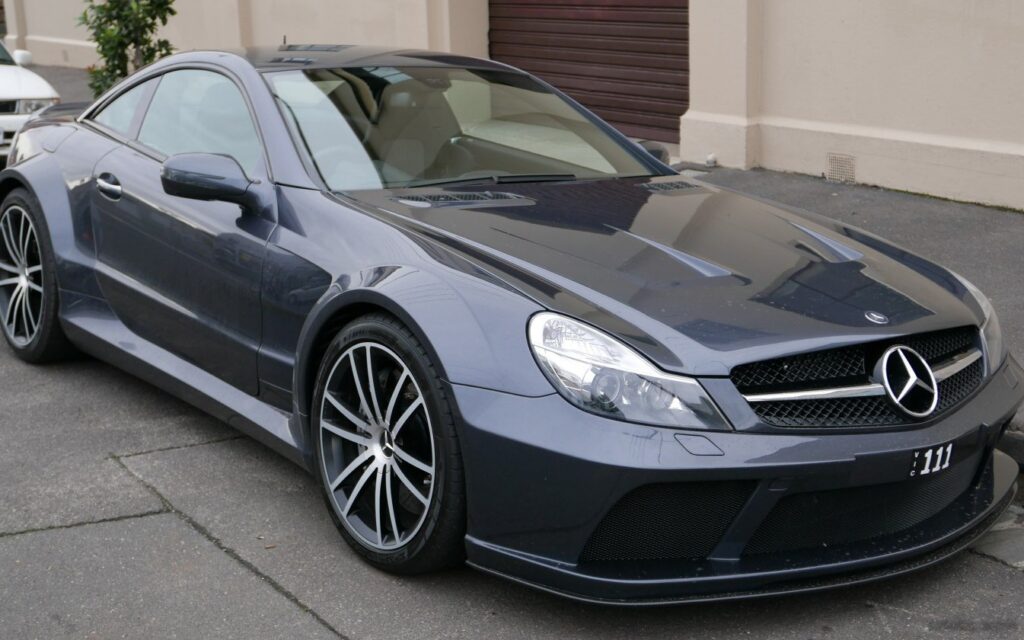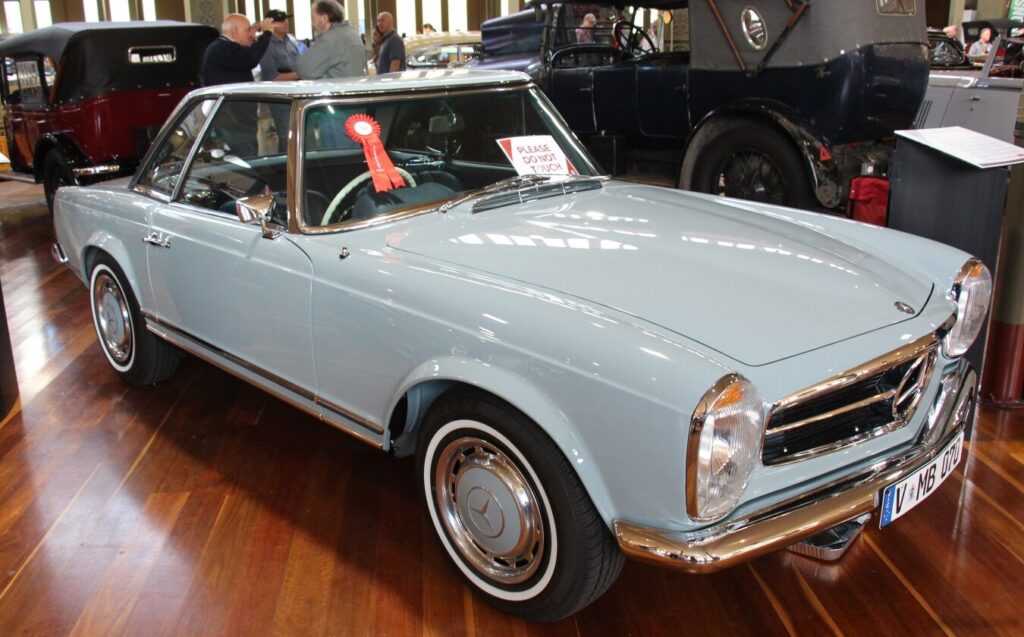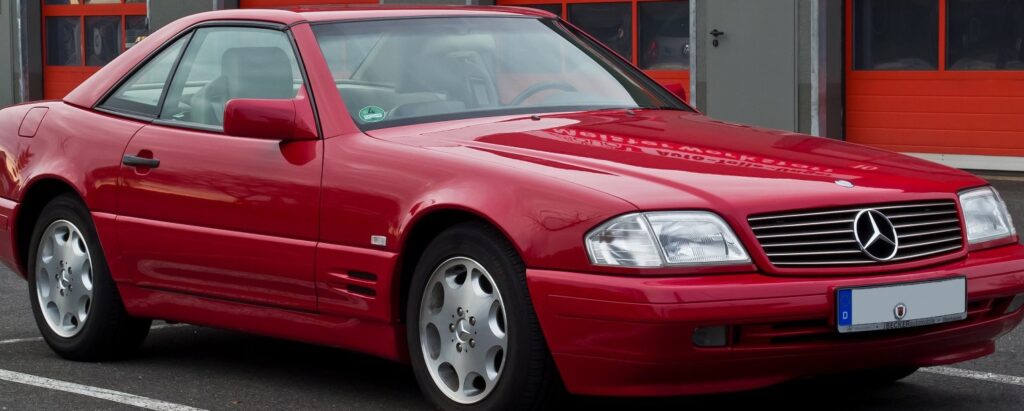
The Mercedes-Benz SL (R129) underwent a significant facelift in 1995, introducing updated styling, improved safety features, and revised engine options. The SL 280, powered by a 2.8-liter inline-six engine producing 193 horsepower, was a key model within this updated range, produced from September 1995 to June 1998. It occupied a middle ground in the R129 lineup, offering a balance between performance and affordability compared to the more powerful SL 320, SL 500, and SL 600 models. The R129 generation, built on the 129 platform, represented a return to the classic roadster layout for Mercedes-Benz, emphasizing luxury and open-air driving enjoyment.
Powertrain & Engine Architecture
The heart of the SL 280 is the M104.943 engine, a 2.8-liter (2799 cc) inline-six cylinder powerplant. This engine is notable for its robust construction and relatively simple design, contributing to its long-term reliability. It features a naturally aspirated configuration, meaning it does not utilize turbocharging or supercharging. The engine employs multi-port fuel injection, delivering fuel directly into the intake ports, and a double overhead camshaft (DOHC) valvetrain with four valves per cylinder. This configuration optimizes airflow and combustion efficiency. The bore measures 89.9 mm (3.54 inches) and the stroke is 73.5 mm (2.89 inches), resulting in a compression ratio of 10:1. The engine produces 193 hp at 5500 rpm and 270 Nm (199.14 lb-ft) of torque at 3750 rpm.
While a five-speed manual transmission was available, the SL 280 was most commonly equipped with a five-speed automatic transmission. This automatic gearbox, a standard feature for many buyers, was designed to provide smooth and comfortable shifting, complementing the car’s luxury character. The automatic transmission’s gear ratios were tuned for a balance of acceleration and fuel efficiency, prioritizing comfortable cruising over outright performance. The transmission was electronically controlled, adapting shift points based on driving conditions and throttle input.
Engine Codes & Variations
The M104 engine family was used in a variety of Mercedes-Benz models during the 1990s. While the core design remained consistent, variations existed in terms of engine management systems and minor component differences. The M104.943 specifically designates the 2.8-liter version used in the SL 280. The engine’s relatively simple design and robust construction made it a popular choice for longevity and ease of maintenance.
Driving Characteristics
The SL 280, with its 193 hp and automatic transmission, offered a refined and comfortable driving experience. Acceleration from 0 to 60 mph was achieved in approximately 9.7 seconds, and 0-100 km/h in 10.2 seconds, making it adequately quick for highway cruising and spirited driving. However, it was noticeably slower than the higher-powered SL variants like the SL 320 or SL 500. The automatic transmission, while smooth, did result in some power loss compared to the available manual gearbox. The engine delivered its peak torque at a relatively low 3750 rpm, providing good responsiveness in everyday driving situations. The car’s weight of 1755 kg (3869.11 lbs) did impact its overall agility, but the well-tuned suspension helped to mitigate this.
Compared to the manual transmission equipped SL 280, the automatic version offered a more relaxed driving experience, particularly in urban environments. However, drivers seeking more engaging performance often preferred the control offered by the manual gearbox. The SL 280’s driving characteristics were geared towards grand touring rather than outright sports car performance, prioritizing comfort and refinement over aggressive handling.
Equipment & Trim Levels
The SL 280 came standard with a comprehensive list of features befitting a luxury roadster. Standard equipment included leather upholstery, power-adjustable seats, automatic climate control, a high-quality sound system, and power windows and locks. The interior design was elegant and understated, reflecting Mercedes-Benz’s commitment to quality and craftsmanship. The dashboard layout was functional and easy to use, with clearly labeled controls.
Optional extras included features such as a premium sound system, heated seats, a sunroof, and various wood trim options. The SL 280 was also available with a range of exterior color options and wheel designs, allowing buyers to personalize their vehicle. The facelifted R129 models also benefited from improved safety features, including enhanced airbags and anti-lock brakes (ABS).
Chassis & Braking
The SL 280 featured a robust chassis designed to provide a comfortable and stable ride. The front suspension utilized coil springs, wishbones, and a transverse stabilizer bar, while the rear suspension employed an independent multi-link setup with coil springs and a transverse stabilizer bar. This suspension configuration effectively absorbed bumps and irregularities in the road surface, providing a smooth and controlled ride. The car’s steering system was a cone worm with recirculation balls, providing precise and responsive steering feel. Hydraulic power steering assisted the driver, making maneuvering easier, especially at low speeds.
The braking system consisted of ventilated discs at the front and solid discs at the rear. ABS (Anti-lock Braking System) was standard, enhancing braking performance and stability, particularly in adverse conditions. The braking system was well-matched to the car’s weight and performance, providing adequate stopping power.
Market Reception & Comparison
The SL 280 was generally well-received by automotive critics as a capable and refined roadster. It was praised for its comfortable ride, luxurious interior, and reliable engine. However, some critics noted that its performance was not as exhilarating as that of the higher-powered SL variants. Fuel economy was reasonable for a vehicle of its class, with combined fuel consumption of 9.9 l/100 km (23.8 US mpg).
Compared to the SL 320, the SL 280 offered a more affordable entry point into the R129 range. The SL 320, with its larger 3.2-liter engine, provided significantly more power and performance, but at a higher price. The SL 280 also offered better fuel economy than the larger-engined models. In terms of reliability, the SL 280’s simpler engine design contributed to its reputation for long-term durability.
Technical Specifications
| Brand | Mercedes-Benz |
| Model | SL |
| Generation | SL (R129, facelift 1995) |
| Type (Engine) | SL 280 (193 Hp) |
| Start of production | September, 1995 |
| End of production | June, 1998 |
| Powertrain Architecture | Internal Combustion engine |
| Body type | Roadster |
| Seats | 2 |
| Doors | 2 |
| Fuel consumption (urban) | 15 l/100 km (15.7 US mpg) |
| Fuel consumption (extra urban) | 8.2 l/100 km (28.7 US mpg) |
| Fuel consumption (combined) | 9.9 l/100 km (23.8 US mpg) |
| Fuel Type | Petrol (Gasoline) |
| Acceleration 0 – 100 km/h | 10.2 sec |
| Acceleration 0 – 62 mph | 10.2 sec |
| Acceleration 0 – 60 mph | 9.7 sec |
| Maximum speed | 230 km/h (142.92 mph) |
| Emission standard | Euro 2 |
| Weight-to-power ratio | 9.1 kg/Hp |
| Weight-to-torque ratio | 6.5 kg/Nm |
| Power | 193 Hp @ 5500 rpm |
| Torque | 270 Nm @ 3750 rpm (199.14 lb.-ft. @ 3750 rpm) |
| Engine layout | Front, Longitudinal |
| Engine Model/Code | M 104.943 |
| Engine displacement | 2799 cm3 (170.81 cu. in.) |
| Number of cylinders | 6 |
| Engine configuration | Inline |
| Cylinder Bore | 89.9 mm (3.54 in.) |
| Piston Stroke | 73.5 mm (2.89 in.) |
| Compression ratio | 10:1 |
| Number of valves per cylinder | 4 |
| Fuel injection system | Multi-port manifold injection |
| Engine aspiration | Naturally aspirated engine |
| Valvetrain | DOHC |
| Engine oil capacity | 7 l (7.4 US qt | 6.16 UK qt) |
| Coolant | 11.75 l (12.42 US qt | 10.34 UK qt) |
| Kerb Weight | 1755 kg (3869.11 lbs.) |
| Max. weight | 2150 kg (4739.94 lbs.) |
| Max load | 395 kg (870.83 lbs.) |
| Trunk (boot) space – minimum | 265 l (9.36 cu. ft.) |
| Fuel tank capacity | 80 l (21.13 US gal | 17.6 UK gal) |
| Length | 4499 mm (177.13 in.) |
| Width | 1812 mm (71.34 in.) |
| Height | 1303 mm (51.3 in.) |
| Wheelbase | 2515 mm (99.02 in.) |
Legacy
The SL 280, while not the most powerful variant of the R129 generation, has proven to be a reliable and enjoyable classic roadster. The M104 engine is known for its durability and relatively low maintenance costs. Today, the SL 280 represents an affordable entry point into the world of Mercedes-Benz R129 ownership. Well-maintained examples are increasingly sought after by enthusiasts who appreciate the car’s classic styling, comfortable ride, and robust engineering. While some maintenance may be required due to the car’s age, the SL 280 remains a compelling option for those seeking a luxurious and reliable open-top experience.