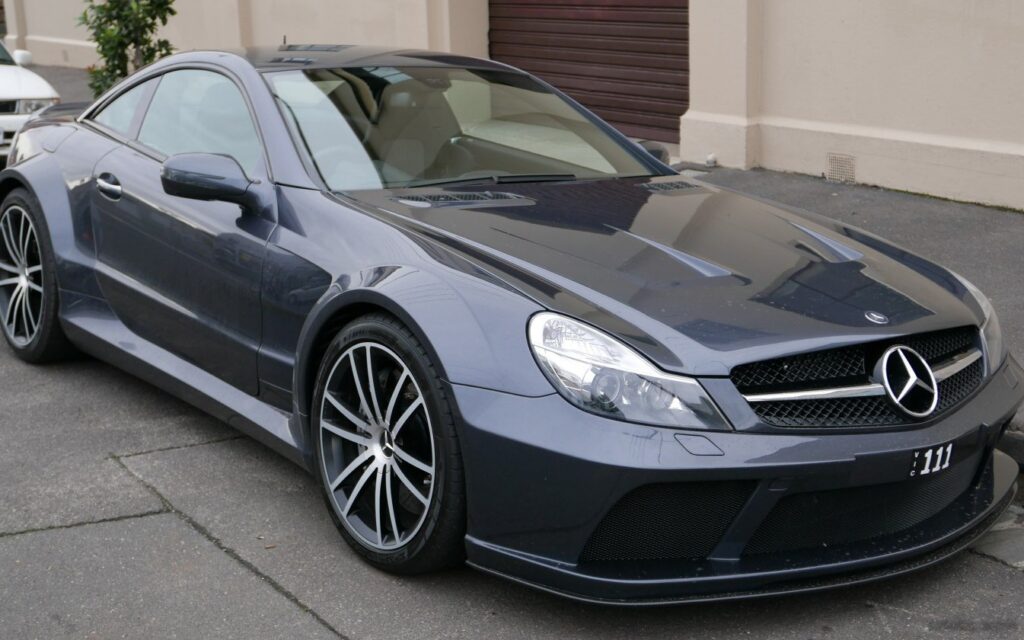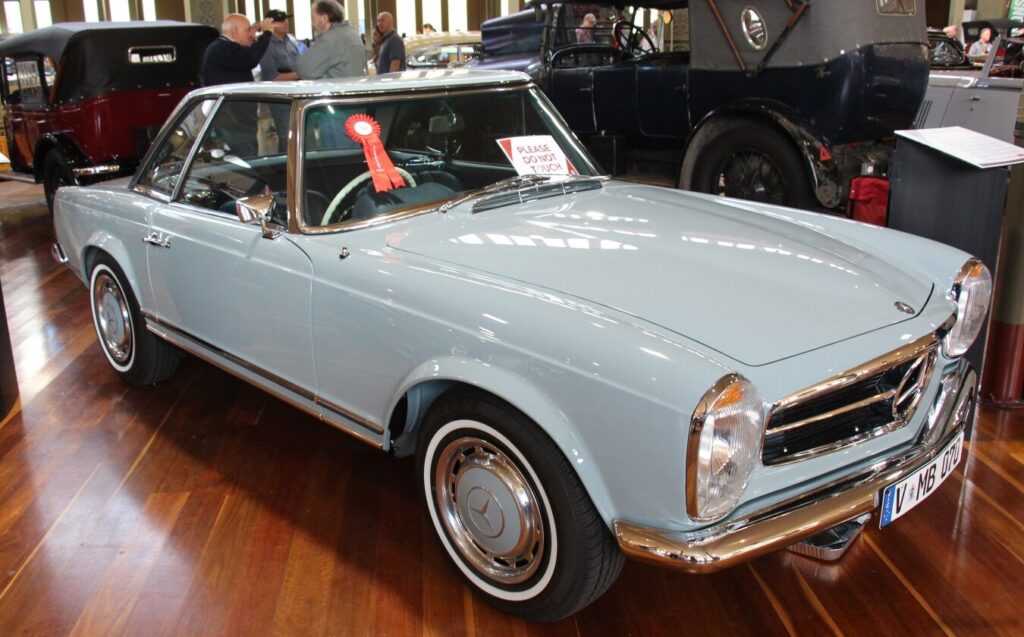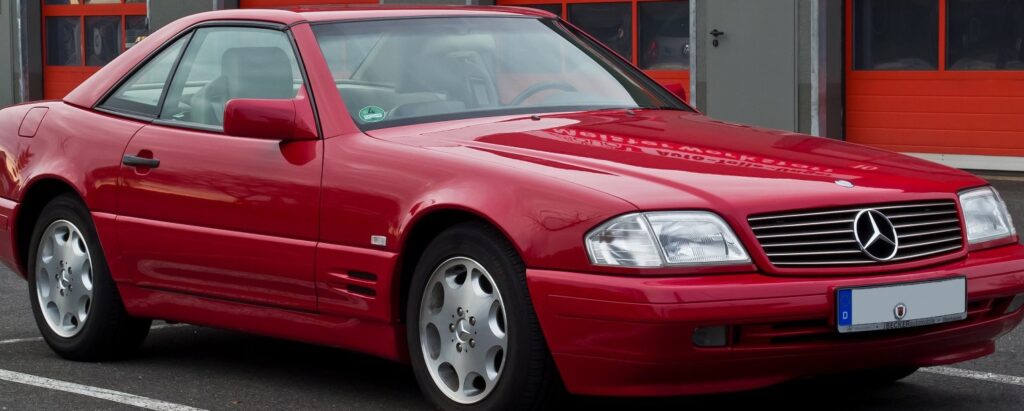
The Mercedes-Benz SL 280 (R129 facelift) was a roadster produced between 1996 and 1998, representing a mid-range offering within the comprehensively revised R129 SL generation. Introduced with the 1996 model year, the facelift brought significant aesthetic and mechanical updates to the R129 platform, which had debuted in 1989. The SL 280, powered by a 2.8-liter inline-six engine paired with a five-speed automatic transmission, aimed to provide a balance of performance, comfort, and relative affordability within the SL lineup, positioned below the more powerful SL 320 and SL 500/600 models. It was designed to appeal to buyers seeking the iconic SL experience without the higher price tag and performance demands of its larger-engined siblings.
The R129 SL Facelift and the SL 280’s Role
The R129 SL underwent a substantial facelift in 1996, addressing some criticisms leveled at the original design and improving overall refinement. Changes included revised bodywork – most notably new headlights and taillights – an updated interior, and improvements to the chassis and suspension. The SL 280 was a key part of this revised lineup, offering a more accessible entry point into the R129 SL world. It filled the gap left by the earlier 280SL models, providing a six-cylinder experience that was both smooth and relatively economical compared to the V8 options. The R129 platform itself, built on a robust chassis, was known for its build quality and luxurious appointments, and the SL 280 inherited these characteristics.
Powertrain & Engine Architecture
The heart of the SL 280 is the M104.943 2.8-liter inline-six engine. This engine is a naturally aspirated, single overhead camshaft (SOHC) per cylinder bank design, featuring multi-port fuel injection. The M104 engine family was renowned for its smoothness and durability. The 2.8-liter version produced 193 horsepower at 5500 rpm and 270 Nm (199.14 lb-ft) of torque at 3750 rpm. The engine’s bore and stroke measured 89.9 mm (3.54 in) and 73.5 mm (2.89 in) respectively, resulting in a displacement of 2799 cm³ (170.81 cu. in). Compression ratio was set at 10:1. The engine utilized a cast iron block with an aluminum cylinder head, contributing to its robust nature.
The SL 280 was exclusively offered with a five-speed automatic transmission (model 722.320). This transmission was a torque converter type, providing smooth and comfortable gear changes. While not known for its sportiness, the transmission was reliable and well-suited to the SL 280’s grand touring character. The gear ratios were optimized for a balance of acceleration and fuel efficiency. First gear was relatively short for brisk acceleration, while higher gears were geared for comfortable cruising at highway speeds. The automatic transmission lacked a manual shift mode, reflecting the focus on ease of use and comfort.
Driving Characteristics
The SL 280’s driving experience is best described as refined and comfortable. Acceleration from 0 to 60 mph took approximately 9.4 seconds, and 0-100 km/h in 9.9 seconds, making it adequately quick for most driving situations, but noticeably slower than the SL 320 or V8-powered models. The inline-six engine delivered smooth, linear power delivery, with peak torque available at relatively low engine speeds. This made it easy to drive in everyday traffic and provided sufficient power for overtaking maneuvers. The automatic transmission contributed to the relaxed driving experience, although it could sometimes feel hesitant when downshifting. The R129 chassis, with its independent suspension, provided a comfortable ride, absorbing bumps and imperfections in the road surface effectively. Handling was secure and predictable, but the SL 280 was not designed to be a particularly sporty car. It excelled as a grand tourer, offering a comfortable and refined experience over long distances.
Equipment & Trim Levels
The SL 280 came well-equipped as standard, reflecting its position as a luxury roadster. Standard features typically included leather upholstery, automatic climate control, power windows and locks, a high-quality sound system, and alloy wheels. The interior design was elegant and understated, with a focus on comfort and usability. Optional extras included heated seats, a sunroof, upgraded sound systems, and various cosmetic enhancements. The SL 280’s interior trim was generally more restrained than that of the higher-spec models, with a focus on classic Mercedes-Benz materials and design. Wood trim was often used on the dashboard and door panels, adding to the luxurious feel.
Chassis & Braking
The R129 SL chassis was a robust monocoque construction, providing a high level of rigidity and safety. The SL 280 featured coil spring suspension with wishbones at the front and an independent multi-link suspension at the rear. Both axles were equipped with transverse stabilizers to reduce body roll during cornering. The braking system consisted of ventilated discs on all four wheels, providing ample stopping power. Anti-lock braking system (ABS) was standard, enhancing safety and control. The steering was a hydraulic power-assisted cone worm system, offering precise and responsive steering feel. The SL 280 typically rode on 225/55 ZR 16 tires mounted on 8J x 16 H2 alloy wheels.
Market Reception & Comparison
The SL 280 was generally well-received by automotive critics as a capable and comfortable roadster. It was praised for its smooth engine, refined ride, and luxurious interior. However, some critics noted that its performance was not as exhilarating as that of the SL 320 or V8-powered models. Fuel economy was reasonable for a vehicle of its class, with combined fuel consumption of around 10.2 l/100 km (23.1 US mpg). In terms of reliability, the M104 engine proved to be very durable, and the five-speed automatic transmission was generally reliable as well. Compared to the SL 320, the SL 280 offered a lower price point but sacrificed some performance. Compared to the V8 models, the SL 280 was significantly more affordable and fuel-efficient, but lacked the sheer power and prestige of those larger-engined cars.
Technical Specifications
| Brand | Mercedes-Benz |
| Model | SL 280 (R129 facelift) |
| Production Years | 1996-1998 |
| Engine Type | Inline-Six, Naturally Aspirated |
| Engine Code | M 104.943 |
| Displacement | 2799 cm³ (170.81 cu. in.) |
| Power | 193 Hp @ 5500 rpm |
| Torque | 270 Nm (199.14 lb-ft) @ 3750 rpm |
| Fuel Injection | Multi-port Fuel Injection |
| Transmission | 5-speed Automatic |
| Drive Type | Rear-Wheel Drive |
| Curb Weight | 1755 kg (3869.11 lbs) |
| Maximum Speed | 225 km/h (139.81 mph) |
| 0-100 km/h | 9.9 sec |
| Fuel Consumption (Combined) | 10.2 l/100 km (23.1 US mpg) |
| Fuel Tank Capacity | 80 l (21.13 US gal) |
Legacy
The Mercedes-Benz SL 280 (R129 facelift) remains a desirable classic car today. The M104 engine is known for its longevity and relatively straightforward maintenance. While not the fastest or most sought-after version of the R129 SL, the 280 offers a compelling combination of style, comfort, and reliability at a more affordable price point than its higher-spec siblings. Well-maintained examples are increasingly sought after by collectors and enthusiasts who appreciate the R129’s timeless design and luxurious character. The availability of parts is generally good, and the M104 engine is relatively easy to work on for experienced mechanics. The SL 280 represents a sweet spot in the R129 lineup, offering a genuine SL experience without the premium price tag of the V8 models.