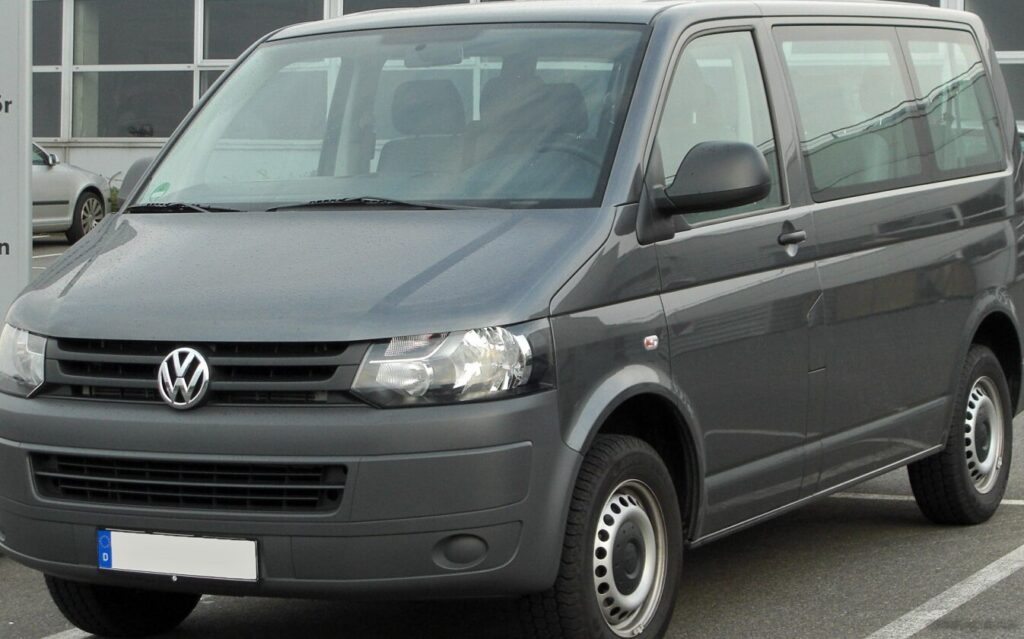
The Volkswagen Transporter (T5) facelift, produced from 2009 to 2015, represented a significant update to the fifth generation of Volkswagen’s popular commercial vehicle. Within the T5 range, the Kombi 2.0 TDI BMT (114 hp) L2H1, manufactured from 2011 to 2015, occupied a position as a practical and economical option, aimed at both commercial users and families needing versatile passenger and cargo space. The “L2H1” designation refers to the vehicle’s body length (L2 – long wheelbase) and roof height (H1 – standard roof). This variant was positioned as a mid-range offering, bridging the gap between the more basic, lower-powered models and the higher-specification, more powerful TDI variants.
Volkswagen Transporter T5 (2011-2015) Kombi 2.0 TDI BMT: An Overview
The T5 facelift brought with it revised styling, improved interior ergonomics, and updated engine options. The 2.0 TDI BMT (BlueMotion Technology) engine was a key component of Volkswagen’s efforts to improve fuel efficiency and reduce emissions. The Kombi body style offered a flexible seating configuration, typically accommodating between four and nine passengers, while retaining a substantial cargo area. This made it a popular choice for shuttle services, tradespeople, and larger families. The BMT designation indicated the inclusion of fuel-saving technologies like start-stop functionality and optimized engine mapping.
Powertrain & Engine Architecture
The heart of the Kombi 2.0 TDI BMT is the EA189 series 2.0-liter four-cylinder diesel engine, specifically the CAAD engine code. This engine is a turbocharged common rail direct injection diesel. It produces 114 horsepower (hp) at 3500 rpm and 250 Newton-meters (184.39 lb-ft) of torque between 1500 and 2750 rpm. The engine utilizes a single overhead camshaft (SOHC) design per cylinder bank (DOHC overall) and features four valves per cylinder. The turbocharger, coupled with an intercooler, provides increased air density for improved combustion and power output. The common rail direct injection system delivers fuel directly into the combustion chamber at extremely high pressure, optimizing fuel atomization and combustion efficiency.
The engine is transversely mounted at the front of the vehicle. The 2.0 TDI BMT was typically paired with a five-speed manual transmission, although a six-speed automatic transmission was available as an option. The automatic transmission was a conventional torque converter type, offering smooth gear changes but slightly impacting fuel economy compared to the manual version. The BMT package included a start-stop system, which automatically shuts off the engine when the vehicle is stationary (e.g., at traffic lights) to reduce fuel consumption and emissions.
Driving Characteristics
The 114 hp 2.0 TDI BMT powertrain in the T5 Kombi delivered adequate, but not exhilarating, performance. Acceleration from 0 to 62 mph (0-100 km/h) took approximately 15.9 seconds. Top speed was limited to 101.28 mph (163 km/h). The engine’s strength lay in its low-end torque, making it well-suited for carrying loads and navigating urban environments. The five-speed manual transmission provided a reasonable spread of gears, allowing the driver to keep the engine in its optimal torque band. The automatic transmission, while convenient, could feel somewhat sluggish, particularly when overtaking or climbing hills. Compared to the more powerful TDI variants (e.g., 140 hp or 180 hp), the 114 hp version offered a more economical driving experience but lacked the same level of performance. The manual transmission offered better fuel economy and a more engaging driving experience.
Equipment & Trim Levels
The Kombi 2.0 TDI BMT L2H1 typically came equipped with a range of standard features, including power windows, central locking, an adjustable steering column, and a basic audio system. Interior upholstery was typically cloth, with durable and practical materials used throughout the cabin. The seating configuration was flexible, with options for multiple rows of seats and various folding arrangements to maximize cargo space. Optional extras included air conditioning, alloy wheels, parking sensors, a more advanced audio system with Bluetooth connectivity, and upgraded interior trim. Higher trim levels offered additional features such as cruise control, heated seats, and a multi-function steering wheel.
Chassis & Braking
The T5 Kombi utilized a front-wheel-drive layout. The front suspension consisted of independent McPherson struts with coil springs and an anti-roll bar. The rear suspension employed a semi-independent trailing arm setup with coil springs and a transverse stabilizer. This suspension configuration provided a reasonable balance between ride comfort and handling. The braking system featured ventilated discs on all four wheels, providing adequate stopping power for the vehicle’s weight. Anti-lock Braking System (ABS) was standard. The curb weight of the Kombi 2.0 TDI BMT L2H1 was approximately 4190.99 lbs (1901 kg). The vehicle’s relatively high center of gravity and front-wheel-drive layout meant that it wasn’t particularly sporty to drive, but it offered predictable and stable handling.
Market Reception & Comparison
The Volkswagen Transporter T5 Kombi 2.0 TDI BMT was generally well-received by critics and buyers alike. It was praised for its practicality, versatility, and fuel efficiency. Fuel economy figures were around 34.6 US mpg (41.5 UK mpg) on the combined cycle, with CO2 emissions of 179 g/km. Compared to the higher-powered TDI variants, the 114 hp version offered a lower purchase price and better fuel economy, making it an attractive option for budget-conscious buyers. However, some critics noted that the engine could feel underpowered when fully loaded or when driving on steep inclines. Reliability was generally good, although some owners reported issues with the diesel particulate filter (DPF) and the dual-mass flywheel. Compared to competitors such as the Ford Transit and Mercedes-Benz Vito, the T5 Kombi was often seen as offering a more refined driving experience and a higher level of build quality.
Technical Specifications
| Brand | Volkswagen |
| Model | Transporter |
| Generation | Transporter (T5, facelift 2009) Kombi |
| Type | 2.0 TDI BMT (114 Hp) L2H1 |
| Start of production | 2011 |
| End of production | 2015 |
| Engine Displacement | 1968 cm3 (120.09 cu. in.) |
| Number of Cylinders | 4, Inline |
| Power | 114 Hp @ 3500 rpm |
| Torque | 250 Nm @ 1500-2750 rpm (184.39 lb.-ft.) |
| Fuel Type | Diesel |
| Fuel Consumption (Combined) | 6.8 l/100 km (34.6 US mpg, 41.5 UK mpg) |
| CO2 Emissions | 179 g/km |
| Acceleration 0-62 mph | 15.9 sec |
| Maximum Speed | 163 km/h (101.28 mph) |
| Kerb Weight | 1901 kg (4190.99 lbs) |
| Max. Load | 899-1299 kg (1981.96 – 2863.8 lbs) |
| Fuel Tank Capacity | 80 l (21.13 US gal, 17.6 UK gal) |
| Transmission | 5-speed manual or 6-speed automatic |
Legacy
The Volkswagen Transporter T5 Kombi 2.0 TDI BMT remains a popular choice in the used car market. Its reputation for reliability, practicality, and fuel efficiency continues to attract buyers. While the EA189 engine has been subject to scrutiny regarding emissions, well-maintained examples can provide many years of reliable service. The 2.0 TDI BMT powertrain is generally considered to be robust and durable, although regular maintenance is essential to prevent issues with the DPF and dual-mass flywheel. The T5 Kombi’s versatile interior and spacious cargo area make it a valuable asset for both commercial and personal use, ensuring its continued relevance in the years to come.