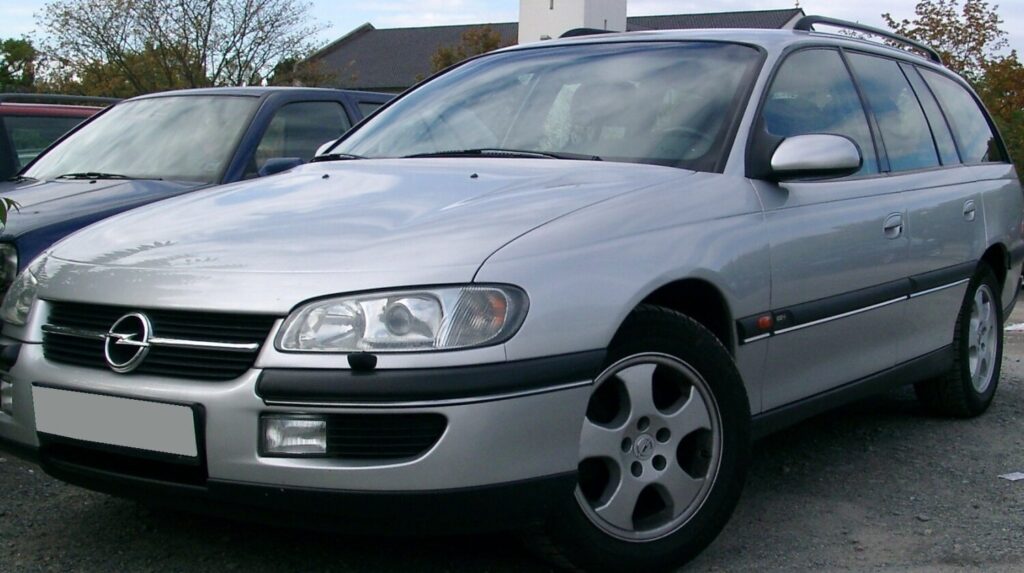
The Opel Omega B Caravan 2.5 TD, produced between January 1994 and July 1999, was a station wagon (estate) variant of the Omega B generation. This model represented a practical, spacious, and relatively economical option within the Omega B lineup, primarily aimed at families and those requiring significant cargo capacity. Powered by a 2.5-liter turbocharged diesel engine producing 131 horsepower, it occupied a middle ground in terms of performance and price, positioned below the more powerful gasoline variants like the 2.6L and 3.0L engines, and above the base 2.0L diesel. The Omega B Caravan, in general, was Opel’s flagship estate car, offering a blend of comfort, technology, and practicality.
Opel Omega B Caravan 2.5 TD: An Overview
The Omega B, launched in 1994, was a significant step forward for Opel, incorporating a more aerodynamic design and improved technology compared to its predecessor. The Caravan (estate) body style was particularly popular, offering a substantial 540-1800 liter cargo area. The 2.5 TD variant was a key component of the range, appealing to buyers who prioritized fuel efficiency and torque for towing or carrying heavy loads. It was a common sight in Europe, particularly in countries where diesel fuel was more affordable and readily available. The Omega B platform was also the basis for several other vehicles, including the Vauxhall Carlton and, briefly, the Isuzu Omega.
Powertrain & Engine Architecture
The heart of the Omega B Caravan 2.5 TD is the 25DT or X25DT inline-six cylinder diesel engine, displacing 2497 cc (152.38 cubic inches). This engine utilized a precombustion chamber injection system, a common technology for diesel engines of the era. This system involved injecting fuel into a small precombustion chamber within the cylinder head, where it partially combusted before igniting the main charge in the cylinder. This design aided in smoother combustion and reduced engine noise. The engine featured a single overhead camshaft (SOHC) valvetrain operating two valves per cylinder. A turbocharger with an intercooler was employed to increase power output and improve efficiency. The turbocharger forces more air into the engine, allowing for more fuel to be burned, resulting in increased horsepower and torque.
The engine produced 131 hp at 4500 rpm and 250 Nm (184.39 lb-ft) of torque at 2200 rpm. This torque output was a significant advantage for the 2.5 TD, providing strong pulling power at lower engine speeds. The engine’s compression ratio was relatively high at 22:1, typical for diesel engines. The engine oil capacity was 6.5 liters (6.87 US quarts / 5.72 UK quarts), and the cooling system held 10.2 liters (10.78 US quarts / 8.97 UK quarts). The engine was mounted longitudinally in the front of the vehicle, driving the rear wheels.
Driving Characteristics
The Omega B Caravan 2.5 TD, while not a performance car, offered a comfortable and capable driving experience. The 131 hp engine provided adequate power for everyday driving and highway cruising. Acceleration from 0-100 km/h (0-62 mph) took approximately 13 seconds, and the top speed was around 195 km/h (121.17 mph). The engine’s strong torque meant that it felt more responsive than its horsepower figure might suggest, particularly when overtaking or climbing hills. The five-speed manual transmission allowed drivers to effectively utilize the engine’s powerband. Compared to the gasoline-powered Omega B variants, the 2.5 TD offered significantly better fuel economy, but at the expense of outright acceleration. The diesel engine also produced a more noticeable engine note, characteristic of diesel engines of that era.
Equipment & Trim Levels
The Omega B Caravan 2.5 TD was typically equipped with a reasonable level of standard features, reflecting its position as a mid-range model. Standard equipment often included power steering, ABS (Anti-lock Braking System), central locking, electric windows, and a basic audio system. Interior upholstery was typically cloth, although leather options were available. Trim levels varied depending on the market, but generally included options for upgraded audio systems, air conditioning, sunroofs, and alloy wheels. The Caravan body style itself added practical features like a large tailgate, tie-down points in the cargo area, and a split-folding rear seat for increased versatility.
Chassis & Braking
The Omega B Caravan 2.5 TD featured a coil spring suspension system at both the front and rear, providing a comfortable ride. The front suspension utilized independent coil springs, while the rear suspension employed a semi-independent coil spring setup. The braking system consisted of ventilated discs at the front and discs at the rear. The ABS system helped to prevent wheel lockup during hard braking, improving stability and control. The steering system was a worm-reduction unit with hydraulic power assistance. The vehicle was equipped with 205/65 R15 tires mounted on 6.5J x 15 inch wheel rims.
Market Reception & Comparison
The Opel Omega B Caravan 2.5 TD was generally well-received by critics and buyers alike. It was praised for its spaciousness, practicality, and fuel efficiency. However, some critics noted that the diesel engine was somewhat noisy and lacked the refinement of the gasoline engines. Compared to the 2.0L diesel Omega B, the 2.5 TD offered a noticeable increase in power and torque, making it a more capable all-around vehicle. Compared to the gasoline-powered Omega B variants, the 2.5 TD offered significantly better fuel economy, but at the expense of performance. Fuel consumption was rated at approximately 11 l/100 km (21.4 US mpg / 25.7 UK mpg) in urban conditions and 6.4 l/100 km (36.8 US mpg / 44.1 UK mpg) on the open road.
Technical Specifications
| Brand | Opel |
| Model | Omega |
| Generation | Omega B Caravan |
| Type (Engine) | 2.5 TD (131 Hp) |
| Start of production | January, 1994 |
| End of production | July, 1999 |
| Engine Model/Code | 25DT, X25DT |
| Engine displacement | 2497 cm3 (152.38 cu. in.) |
| Number of cylinders | 6 |
| Engine configuration | Inline |
| Power | 131 Hp @ 4500 rpm |
| Torque | 250 Nm @ 2200 rpm (184.39 lb.-ft. @ 2200 rpm) |
| Fuel Type | Diesel |
| Acceleration 0 – 100 km/h | 13 sec |
| Acceleration 0 – 62 mph | 13 sec |
| Acceleration 0 – 60 mph | 12.4 sec |
| Maximum speed | 195 km/h (121.17 mph) |
| Kerb Weight | 1665 kg (3670.7 lbs) |
| Max. weight | 2280 kg (5026.54 lbs) |
| Fuel tank capacity | 75 l (19.81 US gal | 16.5 UK gal) |
| Trunk (boot) space – minimum | 540 l (19.07 cu. ft.) |
| Trunk (boot) space – maximum | 1800 l (63.57 cu. ft.) |
Legacy
The Opel Omega B Caravan 2.5 TD, while no longer in production, remains a popular choice among enthusiasts and those seeking a practical and reliable estate car. The 25DT engine, while not known for being particularly high-tech, is generally considered to be durable and relatively easy to maintain. Common issues include wear and tear on the turbocharger and fuel injection system. Today, well-maintained examples of the Omega B Caravan 2.5 TD can be found on the used car market, often at affordable prices. They represent a compelling option for those who value space, practicality, and fuel efficiency over outright performance. The Omega B, in general, is remembered as a comfortable and capable family car that offered a good balance of features and value.