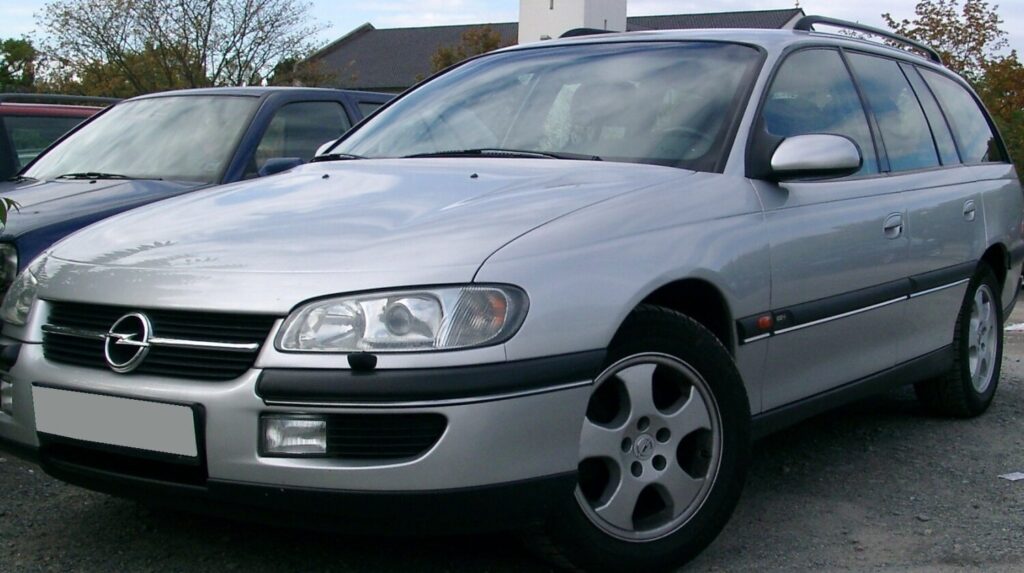
The Opel Omega B Caravan 2.5 TD Automatic, produced between January 1994 and July 1999, represented a practical and relatively luxurious offering within the Omega B range. Positioned as a mid-range variant, it catered to buyers seeking the spaciousness of a station wagon (estate) combined with the fuel efficiency and torque of a turbocharged diesel engine, paired with the convenience of an automatic transmission. This model was part of the larger Omega B generation (1HX0/A3 platform), known for its comfortable ride and generous interior space, aiming to compete with vehicles like the Ford Mondeo Estate and Volvo V70.
Powertrain & Engine Architecture
The heart of the Omega B Caravan 2.5 TD Automatic is the 25DT/X25DT inline-six cylinder diesel engine, displacing 2497 cc (152.38 cubic inches). This engine utilized a precombustion chamber injection system, a common technology for diesel engines of the era, designed to improve combustion efficiency and reduce noise. A turbocharger with an intercooler was employed to boost power output to 131 horsepower at 4500 rpm and 250 Nm (184.39 lb-ft) of torque at 2200 rpm. The engine featured a double overhead camshaft (DOHC) valvetrain with two valves per cylinder.
The automatic transmission was a four-speed unit, chosen to provide ease of driving, particularly appealing to those prioritizing comfort over outright performance. While the specific transmission model varied, it was generally a robust unit designed to handle the engine’s torque output. The engine is longitudinally mounted, driving the rear wheels, a configuration typical of larger European vehicles of this period.
Fuel Injection and Turbocharging
The precombustion chamber injection system involved injecting fuel into a small chamber connected to the main cylinder. This created a richer mixture that ignited more readily, improving cold-starting performance and reducing engine noise. The turbocharger forced more air into the engine, increasing power and torque. The intercooler cooled the compressed air from the turbocharger, further enhancing performance and reducing the risk of detonation.
Driving Characteristics
The 2.5 TD Automatic Omega B Caravan offered a relaxed and comfortable driving experience. Acceleration was not its strong suit, taking approximately 13.5 seconds to reach 100 km/h (62 mph) and 12.8 seconds to 60 mph. However, the engine’s substantial torque, available from relatively low engine speeds, provided ample pulling power for everyday driving and towing. Compared to the manual transmission versions of the 2.5 TD, the automatic resulted in a slight performance decrease due to transmission losses. It also felt less engaging to drive. Compared to the higher-performance gasoline variants, such as the 3.0L V6, the 2.5 TD Automatic was significantly slower but offered considerably better fuel economy.
The automatic transmission’s gear ratios were optimized for fuel efficiency and smooth cruising. While it lacked the responsiveness of a modern automatic, it provided predictable and comfortable gear changes. The rear-wheel-drive configuration contributed to balanced handling, although it wasn’t particularly sporty.
Equipment & Trim Levels
The Omega B Caravan 2.5 TD Automatic typically came equipped with a reasonable level of standard features. These included power windows, central locking, power steering, and an anti-lock braking system (ABS). Interior upholstery was generally cloth, although leather options were available as upgrades. The dashboard layout was functional and straightforward, with clear instrumentation.
Optional extras included a sunroof, upgraded audio systems, climate control, and alloy wheels. Higher trim levels, often denoted by specific packages, added features like wood trim, more luxurious upholstery, and additional convenience items. The Caravan body style itself was a key feature, offering a large and versatile cargo area.
Chassis & Braking
The Omega B Caravan 2.5 TD Automatic utilized a coil spring suspension system at both the front and rear, providing a comfortable ride quality. The front suspension featured ventilated disc brakes, while the rear brakes were typically discs, offering adequate stopping power for the vehicle’s weight. The steering system was a hydraulic power-assisted worm-reduction unit, providing relatively light steering effort.
The vehicle’s kerb weight of 1665 kg (3670.7 lbs) influenced its handling characteristics. Stabilizer bars were fitted to both the front and rear axles to reduce body roll during cornering. Tire size was typically 205/65 R15, mounted on 6.5J x 15 inch wheel rims.
Market Reception & Comparison
The Opel Omega B Caravan 2.5 TD Automatic was generally well-received by critics as a practical and comfortable family vehicle. Its spacious interior, large cargo area, and fuel-efficient diesel engine were praised. However, its relatively slow acceleration and somewhat dated automatic transmission were points of criticism.
Compared to other trims in the Omega B lineup, the 2.5 TD Automatic offered a balance between performance, fuel economy, and price. The gasoline-powered models provided more power but consumed significantly more fuel. The 2.0L diesel offered better fuel economy but lacked the torque and refinement of the 2.5 TD. In terms of reliability, the 2.5 TD engine was generally considered robust, although maintenance costs could be higher than those of smaller engines. Fuel economy figures were around 12.6 l/100 km (18.7 US mpg) in urban conditions and 7.2 l/100 km (32.7 US mpg) on the open road.
Technical Specifications
| Brand | Opel |
| Model | Omega |
| Generation | Omega B Caravan |
| Type (Engine) | 2.5 TD (131 Hp) Automatic |
| Start of production | January, 1994 |
| End of production | July, 1999 |
| Powertrain Architecture | Internal Combustion engine |
| Body type | Station wagon (estate) |
| Seats | 5 |
| Doors | 5 |
| Fuel consumption (urban) | 12.6 l/100 km (18.7 US mpg) |
| Fuel consumption (extra urban) | 7.2 l/100 km (32.7 US mpg) |
| Fuel Type | Diesel |
| Acceleration 0 – 100 km/h | 13.5 sec |
| Acceleration 0 – 62 mph | 13.5 sec |
| Acceleration 0 – 60 mph | 12.8 sec |
| Maximum speed | 190 km/h (118.06 mph) |
| Power | 131 Hp @ 4500 rpm |
| Torque | 250 Nm @ 2200 rpm (184.39 lb.-ft. @ 2200 rpm) |
| Engine layout | Front, Longitudinal |
| Engine Model/Code | 25DT, X25DT |
| Engine displacement | 2497 cm3 (152.38 cu. in.) |
| Number of cylinders | 6 |
| Engine configuration | Inline |
| Cylinder Bore | 80 mm (3.15 in.) |
| Piston Stroke | 82.8 mm (3.26 in.) |
| Compression ratio | 22:1 |
| Number of valves per cylinder | 2 |
| Fuel injection system | Precombustion chamber injection |
| Engine aspiration | Turbocharger, Intercooler |
| Valvetrain | DOHC |
| Engine oil capacity | 6.5 l (6.87 US qt | 5.72 UK qt) |
| Coolant capacity | 10.2 l (10.78 US qt | 8.97 UK qt) |
| Kerb Weight | 1665 kg (3670.7 lbs) |
| Max. weight | 2280 kg (5026.54 lbs) |
| Max load | 615 kg (1355.84 lbs) |
| Trunk (boot) space – minimum | 540 l (19.07 cu. ft.) |
| Trunk (boot) space – maximum | 1800 l (63.57 cu. ft.) |
| Fuel tank capacity | 75 l (19.81 US gal | 16.5 UK gal) |
| Length | 4820 mm (189.76 in.) |
| Width | 1785 mm (70.28 in.) |
| Height | 1500 mm (59.06 in.) |
| Wheelbase | 2730 mm (107.48 in.) |
| Drive wheel | Rear wheel drive |
| Number of gears | 4 |
| Gearbox type | automatic transmission |
Legacy
The Opel Omega B Caravan 2.5 TD Automatic, while not a performance icon, remains a respected vehicle among enthusiasts for its practicality, comfort, and durability. The 25DT engine, when properly maintained, proved to be a reliable unit capable of high mileage. Today, these vehicles are relatively rare, and well-maintained examples are sought after by collectors and those seeking a classic European station wagon. Parts availability can be a challenge, but a dedicated community exists to support Omega B ownership. The automatic transmission, while not the most modern, is generally considered reliable if fluid changes were performed regularly. The Omega B Caravan 2.5 TD Automatic represents a bygone era of spacious, comfortable, and relatively affordable family transportation.