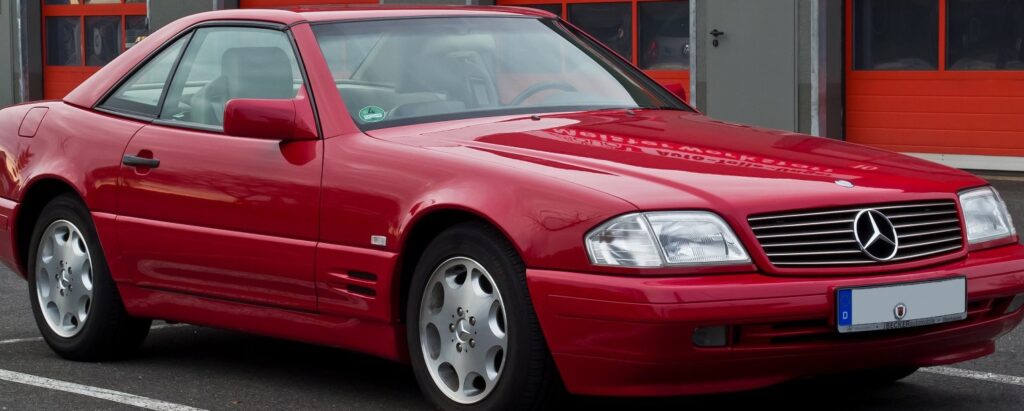
The Mercedes-Benz SL (R129) underwent a significant facelift in 1995, introducing numerous improvements to the already successful roadster. Among the variants offered, the SL 320 with a 3.2-liter inline-six engine and automatic transmission occupied a sweet spot in the lineup, balancing performance with luxury and relative affordability. Produced from September 1995 to June 1998, this model represented a refined evolution of the R129 platform (introduced in 1989), offering a compelling alternative to both the base SL 280 and the more powerful SL 500 and SL 600 models.
SL 320: Positioning and Market Context
The SL 320, equipped with the M104 engine and a five-speed automatic transmission, was positioned as the mid-range offering in the post-facelift R129 series. It aimed to appeal to buyers who desired the prestige and open-air experience of the SL but didn’t necessarily require the outright power of the V8-equipped models. Compared to the entry-level SL 280, the 320 offered a substantial performance upgrade, while remaining more accessible than the flagship SL 600. It targeted buyers who valued a smooth, refined driving experience and were willing to pay a premium for Mercedes-Benz engineering and build quality.
Comparison with Other R129 Variants
The SL 320 differed significantly from its siblings. The SL 280, with its smaller 2.8-liter inline-six, prioritized fuel economy and offered a lower purchase price, but lacked the 320’s effortless acceleration. The SL 500 and SL 600, powered by V8 engines, delivered considerably more horsepower and torque, but came with a higher price tag, increased running costs, and a slightly different driving character. The V8 models were geared towards those prioritizing maximum performance, while the SL 320 offered a more balanced approach. Maintenance on the M104 engine was generally considered less complex and potentially less expensive than that of the V8s, making the SL 320 an attractive option for those concerned about long-term ownership costs.
Powertrain & Engine Architecture
The heart of the SL 320 is the M104.991 3.2-liter inline-six engine. This engine is a naturally aspirated, single overhead camshaft (SOHC) per cylinder head design, featuring four valves per cylinder (DOHC overall). It utilizes multi-port fuel injection and a cast iron block with an aluminum cylinder head. The engine produces 231 horsepower at 5600 rpm and 315 Nm (232.33 lb-ft) of torque at 3750 rpm. The M104 engine was known for its smoothness, reliability, and relatively high specific output (72.2 hp/liter).
The engine is mated to a five-speed automatic transmission (typically the 5G-Tronic). This transmission offered smooth and refined gear changes, contributing to the overall luxurious driving experience. The automatic transmission was electronically controlled, adapting shift points based on driving conditions and throttle input. While not offering the driver engagement of a manual transmission, the automatic provided convenience and ease of use, aligning with the SL’s grand touring character.
Driving Characteristics
The SL 320’s driving experience is characterized by its smooth power delivery and comfortable ride. The 3.2-liter engine provides ample torque throughout the rev range, allowing for effortless cruising and confident overtaking. Acceleration from 0 to 60 mph takes approximately 8 seconds, and the car can reach a top speed of 149.13 mph (240 km/h). While not a sports car in the purest sense, the SL 320 offers a satisfying level of performance for a luxury roadster.
The automatic transmission’s gear ratios are tuned for comfort and efficiency, rather than outright acceleration. The transmission prioritizes smooth transitions and minimizes harsh shifts. Compared to a manual transmission-equipped SL 320 (available in some markets), the automatic version sacrifices some responsiveness but gains in ease of use. The relatively high weight of the R129 (1775 kg / 3913.21 lbs) does impact agility, but the well-tuned suspension helps to mitigate body roll and provide a stable and controlled ride.
Equipment & Trim Levels
The SL 320 came standard with a generous array of features, befitting its luxury status. Standard equipment typically included leather upholstery, power-adjustable seats, automatic climate control, a premium sound system, and alloy wheels. The facelifted R129 models also benefited from improved interior trim materials and a more modern dashboard design.
Optional extras were plentiful, allowing buyers to customize their SL 320 to their preferences. Popular options included a Bose sound system, heated seats, a sunroof, and various wood trim options. The R129 also offered advanced features for its time, such as a retractable roll bar for enhanced safety in the event of a rollover.
Chassis & Braking
The R129 SL featured a robust chassis designed for both comfort and handling. The front suspension utilized coil springs, wishbones, and a transverse stabilizer bar, while the rear suspension employed an independent multi-link setup with coil springs and a transverse stabilizer bar. This suspension configuration provided a comfortable ride while maintaining good control and stability.
Braking duties were handled by ventilated discs at the front and solid discs at the rear. Anti-lock braking system (ABS) was standard, enhancing safety and control during emergency braking. The steering system was a cone worm with recirculation balls, providing a relatively direct and precise steering feel. The tires were typically 225/55 ZR 16, mounted on 8J x 16 H2 alloy wheels.
Market Reception & Comparison
The SL 320 was generally well-received by automotive critics. It was praised for its smooth engine, comfortable ride, and luxurious interior. Critics noted that the SL 320 offered a compelling blend of performance and refinement, making it a strong contender in the luxury roadster segment. Fuel economy was reasonable for a vehicle of its class, with combined fuel consumption of 10 l/100 km (23.5 US mpg, 28.2 UK mpg).
Compared to the SL 280, the 320 offered a noticeable performance advantage. Compared to the SL 500 and SL 600, it provided a more accessible price point and potentially lower running costs. Reliability was generally good, although like any complex vehicle, the R129 SL could be prone to age-related issues, such as hydraulic system leaks and electrical component failures.
Technical Specifications
| Brand | Mercedes-Benz |
| Model | SL |
| Generation | SL (R129, facelift 1995) |
| Type | SL 320 (231 Hp) Automatic |
| Start of production | September, 1995 |
| End of production | June, 1998 |
| Engine Model/Code | M 104.991 |
| Engine displacement | 3199 cm3 (195.21 cu. in.) |
| Number of cylinders | 6 (Inline) |
| Power | 231 Hp @ 5600 rpm |
| Torque | 315 Nm @ 3750 rpm (232.33 lb.-ft. @ 3750 rpm) |
| Fuel Type | Petrol (Gasoline) |
| Acceleration 0 – 100 km/h | 8.4 sec |
| Acceleration 0 – 60 mph | 8 sec |
| Maximum speed | 240 km/h (149.13 mph) |
| Kerb Weight | 1775 kg (3913.21 lbs) |
| Fuel tank capacity | 80 l (21.13 US gal | 17.6 UK gal) |
| Transmission | 5 gears, automatic transmission |
Legacy
The SL 320 (R129) has aged gracefully and remains a desirable classic car. The M104 engine is known for its durability and longevity, and well-maintained examples can still provide years of reliable service. However, as with any vehicle of this age, preventative maintenance is crucial. Common issues include hydraulic system leaks, electrical component failures, and wear and tear on rubber components.
On the used car market, the SL 320 typically commands a premium over the SL 280, reflecting its superior performance and desirability. Prices vary depending on condition, mileage, and options, but well-preserved examples can fetch significant sums. The R129 SL 320 represents a high point in Mercedes-Benz roadster design, offering a blend of luxury, performance, and timeless style that continues to appeal to enthusiasts today.