
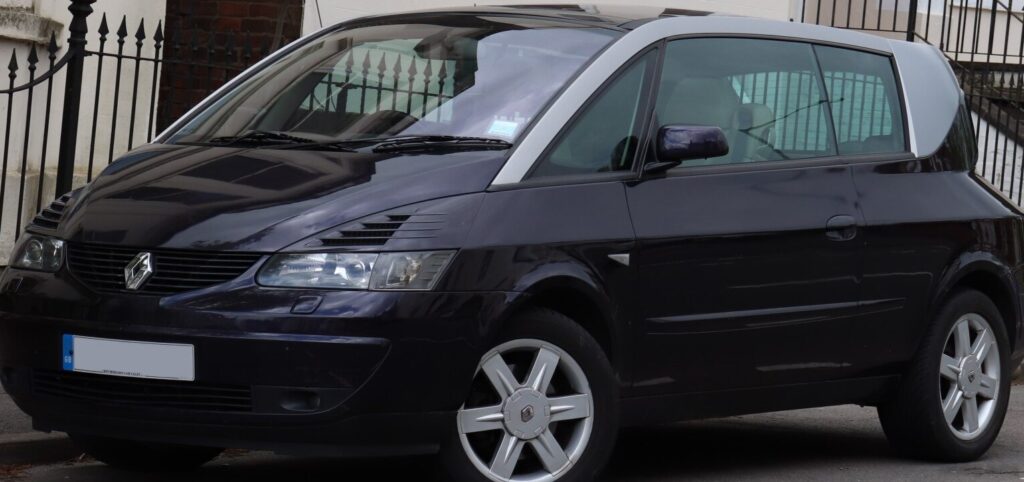
The Renault Avantime 2.2 dCi, produced from May 2002 to February 2003, represents a unique and ambitious attempt by Renault to redefine the minivan segment. Positioned as a premium, coupe-like multi-purpose vehicle (MPV), the Avantime aimed to blend the practicality of a minivan with the style and perceived luxury of a coupe. The 2.2 dCi variant, powered by a 150 horsepower diesel engine, occupied the middle ground of the Avantime lineup, offering a balance between performance, fuel economy, and cost. It was intended to appeal to buyers seeking a distinctive vehicle that stood apart from conventional people carriers. The Avantime was built on a stretched version of Renault’s platform, sharing some underpinnings with the Espace.
Powertrain & Engine Architecture
The heart of the Avantime 2.2 dCi is the G9T engine, a 2.2-liter inline four-cylinder diesel engine. This engine is a turbocharged common rail diesel, representing a significant advancement in diesel technology at the time of its release. The G9T produces 150 horsepower at 4000 rpm and 320 Nm (236 lb-ft) of torque at 1750 rpm. The common rail direct injection system, supplied by Bosch, allowed for precise fuel delivery, contributing to improved combustion efficiency, reduced emissions, and enhanced driveability. The engine features a double overhead camshaft (DOHC) valvetrain with four valves per cylinder, optimizing gas flow for increased power output. An intercooler is integrated into the turbocharger system to further enhance performance by cooling the intake air. The engine oil capacity is 6.3 liters (6.66 US quarts or 5.54 UK quarts), and Renault specified a particular oil grade for optimal performance and longevity.
Transmission
The Avantime 2.2 dCi was exclusively offered with a 6-speed manual transmission. This gearbox was chosen to complement the engine’s torque characteristics and provide drivers with greater control over power delivery. The six forward gears allowed for both relaxed cruising at highway speeds and responsive acceleration. The transmission’s ratios were carefully selected to optimize fuel efficiency and performance across a wide range of driving conditions. There was no automatic transmission option available for this specific engine variant.
Driving Characteristics
The Avantime 2.2 dCi offered a surprisingly engaging driving experience for a vehicle of its size and type. The 150 horsepower engine and 320 Nm of torque provided adequate power for everyday driving and even allowed for brisk acceleration. Acceleration from 0 to 100 km/h (0-62 mph) took approximately 11 seconds, while the 0-60 mph sprint was achieved in around 10.5 seconds. The maximum speed was electronically limited to 195 km/h (121.17 mph). The engine’s strong low-end torque made it particularly well-suited for overtaking maneuvers and navigating hilly terrain. Compared to the petrol-powered Avantime variants, the 2.2 dCi offered superior fuel economy and a more relaxed driving experience, particularly on long journeys. However, it lacked the outright performance of the higher-powered gasoline engines. The 6-speed manual transmission allowed drivers to fully exploit the engine’s powerband, providing a more connected and engaging driving experience than an automatic transmission would have.
Equipment & Trim Levels
The Avantime 2.2 dCi was generously equipped as standard, reflecting its positioning as a premium MPV. Standard features included air conditioning, power windows, central locking, an integrated radio/CD player, and ABS (Anti-lock Braking System). The interior was characterized by its spaciousness and comfortable seating for five passengers. Upholstery was typically a high-quality cloth, with leather options available as an upgrade. The dashboard featured a unique and modern design, with a central information display providing access to various vehicle settings and information. Optional extras included leather upholstery, a sunroof, parking sensors, and a more advanced audio system. The Avantime’s distinctive coupe-like styling extended to the interior, with a focus on creating a luxurious and inviting atmosphere.
Chassis & Braking
The Avantime 2.2 dCi featured a robust chassis designed to handle the vehicle’s weight and provide a comfortable ride. The front suspension utilized a wishbone configuration, while the rear suspension employed a trailing arm setup. This combination provided a good balance between ride comfort and handling stability. The Avantime was equipped with ventilated discs on the front wheels and solid discs on the rear wheels. The ABS system helped to prevent wheel lock-up during braking, enhancing safety and control. Hydraulic power steering provided light and precise steering response. The vehicle rode on 225/55 R16 tires mounted on 16-inch alloy wheels. The kerb weight of the Avantime 2.2 dCi was 1755 kg (3869.11 lbs), with a maximum weight of 2510 kg (5533.6 lbs).
Market Reception & Comparison
The Renault Avantime was a polarizing vehicle upon its release. While praised for its innovative design and spacious interior, it was criticized for its high price and unconventional styling. The 2.2 dCi variant was generally well-received by critics, who appreciated its fuel efficiency and strong torque output. However, some reviewers found the engine to be somewhat noisy compared to its gasoline counterparts. Compared to other MPVs on the market, the Avantime offered a more distinctive and stylish alternative, but it lacked the practicality and versatility of more conventional people carriers. Fuel economy was a strong point for the 2.2 dCi, achieving approximately 9.7 l/100 km (24.2 US mpg) in urban driving and 5.9 l/100 km (39.9 US mpg) on the extra-urban cycle. Reliability was generally good, although some owners reported issues with the electronic systems and the common rail injection system.
Technical Specifications
| Brand | Renault |
| Model | Avantime |
| Generation | Avantime |
| Type (Engine) | 2.2 dCi (150 Hp) |
| Start of production | May, 2002 |
| End of production | February, 2003 |
| Powertrain Architecture | Internal Combustion engine |
| Body type | Minivan |
| Seats | 5 |
| Doors | 2 |
| Fuel consumption (urban) | 9.7 l/100 km (24.2 US mpg) |
| Fuel consumption (extra urban) | 5.9 l/100 km (39.9 US mpg) |
| Fuel Type | Diesel |
| Acceleration 0 – 100 km/h | 11 sec |
| Acceleration 0 – 62 mph | 11 sec |
| Acceleration 0 – 60 mph | 10.5 sec |
| Maximum speed | 195 km/h (121.17 mph) |
| Power | 150 Hp @ 4000 rpm |
| Torque | 320 Nm @ 1750 rpm (236.02 lb.-ft. @ 1750 rpm) |
| Engine layout | Front, Transverse |
| Engine Model/Code | G9T |
| Engine displacement | 2188 cm3 (133.52 cu. in.) |
| Number of cylinders | 4 |
| Engine configuration | Inline |
| Cylinder Bore | 87 mm (3.43 in.) |
| Piston Stroke | 92 mm (3.62 in.) |
| Compression ratio | 18:1 |
| Number of valves per cylinder | 4 |
| Fuel injection system | Diesel Commonrail |
| Engine aspiration | Turbocharger, Intercooler |
| Valvetrain | DOHC |
| Engine oil capacity | 6.3 l (6.66 US qt | 5.54 UK qt) |
| Kerb Weight | 1755 kg (3869.11 lbs.) |
| Max. weight | 2510 kg (5533.6 lbs.) |
| Trunk (boot) space – minimum | 530 l (18.72 cu. ft.) |
| Trunk (boot) space – maximum | 900 l (31.78 cu. ft.) |
| Fuel tank capacity | 80 l (21.13 US gal | 17.6 UK gal) |
| Length | 4642 mm (182.76 in.) |
| Width | 1835 mm (72.24 in.) |
| Height | 1627 mm (64.06 in.) |
| Wheelbase | 2700 mm (106.3 in.) |
| Drive wheel | Front wheel drive |
| Number of gears | 6 gears, manual transmission |
Legacy
The Renault Avantime, despite its short production run, remains a memorable and somewhat controversial vehicle. The 2.2 dCi variant, while not the most powerful version, offered a compelling combination of fuel efficiency, torque, and practicality. Today, the Avantime is a relatively rare sight on the roads, and well-maintained examples are becoming increasingly sought after by collectors and enthusiasts. The G9T engine, while generally reliable, can require maintenance related to the common rail injection system and turbocharger. The Avantime’s unique styling and spacious interior continue to appeal to those seeking a distinctive and unconventional vehicle. Its legacy lies in its bold design and its attempt to redefine the minivan segment, even if it ultimately failed to achieve mainstream success.
