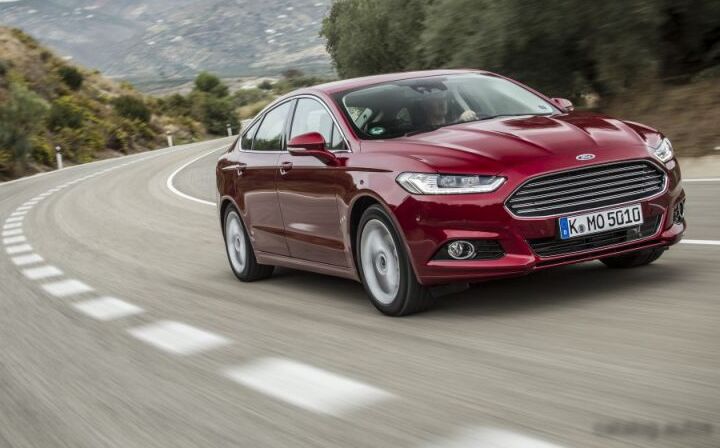
The Ford Mondeo IV Hatchback 2.0 EcoBoost (240 hp) Automatic, produced between 2014 and 2018, represented a performance-oriented variant within the fourth generation of the globally successful Mondeo line. Positioned as a mid-to-premium trim level, it offered a significant step up in power and driving experience compared to the base engine options, while remaining more accessible than the Vignale trim. This model was part of the larger Mondeo IV range (built on the CD390 platform, internally designated as the 1HX0 for hatchbacks), which aimed to provide a spacious, comfortable, and technologically advanced family car. The 2.0 EcoBoost Automatic combined a turbocharged gasoline engine with a six-speed automatic transmission, targeting drivers who desired both performance and convenience.
Powertrain & Engine Architecture
The heart of the Mondeo IV 2.0 EcoBoost Automatic is the Ford EcoBoost 2.0-liter inline-four cylinder engine. Specifically, engine codes R9CB, R9CF, and R9CH were utilized during the production run, with minor variations depending on the specific market and year. This engine is characterized by its direct fuel injection system, which precisely meters fuel into the combustion chambers for improved efficiency and power. The engine also features a twin-scroll turbocharger with an intercooler, enhancing responsiveness and minimizing turbo lag. The valvetrain employs a Double Overhead Camshaft (DOHC) configuration with four valves per cylinder, optimizing airflow for increased performance.
The 2.0 EcoBoost engine produces 240 horsepower at 5400 rpm and 345 Nm (254.46 lb-ft) of torque between 2300 and 4900 rpm. This power output is a substantial increase over the lower-displacement EcoBoost engines offered in the Mondeo IV range. The engine’s displacement is 1999 cm³ (121.99 cubic inches), with a bore of 87.5 mm (3.44 inches) and a stroke of 83.1 mm (3.27 inches). It operates with a compression ratio of 10:1. The engine requires 5.4 liters (5.71 US quarts / 4.75 UK quarts) of engine oil, specified to Ford’s standards, and 8.4 liters (8.88 US quarts / 7.39 UK quarts) of coolant.
The engine is paired with a six-speed automatic transmission, providing smooth and convenient gear changes. This transmission is a conventional torque-converter automatic, designed for durability and ease of use. While not offering the lightning-fast shifts of a dual-clutch transmission, it provides a comfortable driving experience suitable for everyday use. The transmission is calibrated to work in harmony with the engine’s torque curve, delivering responsive acceleration.
Driving Characteristics
The 2.0 EcoBoost Automatic Mondeo delivers a noticeably more engaging driving experience than its lower-powered siblings. Acceleration from 0 to 100 km/h (0-62 mph) takes approximately 7.9 seconds, and 0-60 mph is achieved in around 7.5 seconds. The turbocharger provides a strong mid-range punch, making overtaking maneuvers effortless. The six-speed automatic transmission generally selects the appropriate gear for the driving conditions, although some drivers may prefer the more direct control offered by a manual transmission. The gear ratios are tuned to balance acceleration and fuel economy. First gear is relatively short for quick off-the-line acceleration, while higher gears are geared for comfortable cruising at highway speeds. Compared to the 1.6 EcoBoost models, the 2.0 EcoBoost offers significantly more power and torque, resulting in a more confident and enjoyable driving experience. It doesn’t quite match the performance of the later Mondeo ST models, but provides a compelling blend of performance and practicality.
Equipment & Trim Levels
The 2.0 EcoBoost Automatic trim typically included a generous level of standard equipment. This often included features such as alloy wheels (typically 17- or 18-inch), automatic climate control, a touchscreen infotainment system with navigation, Bluetooth connectivity, and a suite of safety features including ABS, electronic stability control, and multiple airbags. Interior upholstery was typically cloth or a combination of cloth and leather, depending on the specific package. Optional extras included a panoramic sunroof, leather seats, a premium sound system, and advanced driver-assistance systems such as adaptive cruise control and lane-keeping assist. The Mondeo IV offered various trim levels (e.g., Zetec, Titanium, Titanium X) and the 2.0 EcoBoost engine was often available on the higher-spec trims, allowing buyers to customize their vehicle with a range of options.
Chassis & Braking
The Mondeo IV Hatchback 2.0 EcoBoost Automatic utilizes an independent front suspension with McPherson struts and a coil spring and anti-roll bar. The rear suspension is an independent multi-link setup, also with a stabilizer bar. This suspension configuration provides a good balance between ride comfort and handling. The front brakes are ventilated discs, providing strong stopping power, while the rear brakes are discs. The inclusion of ABS (Anti-lock Braking System) and electronic stability control enhances safety and control, particularly in adverse conditions. The steering system is a rack and pinion type, offering precise and responsive steering feel. Typical tire sizes range from 215/60 R16 to 235/40 R19, depending on the wheel size and trim level.
Market Reception & Comparison
The Ford Mondeo IV 2.0 EcoBoost Automatic was generally well-received by automotive critics. It was praised for its strong performance, comfortable ride, spacious interior, and generous equipment levels. Fuel economy was considered reasonable for a car of its size and performance, with combined fuel consumption figures around 7.3 l/100 km (32.2 US mpg / 38.7 UK mpg). Compared to other trims in the Mondeo lineup, the 2.0 EcoBoost Automatic offered a significant performance advantage, but at a slightly higher price point. It competed with other mid-size hatchbacks and sedans, such as the Volkswagen Passat, Opel/Vauxhall Insignia, and Mazda 6. The Mondeo generally offered a more engaging driving experience than some of its competitors, while providing comparable levels of comfort and practicality.
Technical Specifications
| Brand | Ford |
| Model | Mondeo |
| Generation | Mondeo IV Hatchback |
| Type (Engine) | 2.0 EcoBoost (240 Hp) Automatic |
| Start of production | 2014 |
| End of production | 2018 |
| Engine Layout | Front, Transverse |
| Engine Model/Code | R9CB, R9CF, R9CH |
| Engine Displacement | 1999 cm³ (121.99 cu. in.) |
| Number of Cylinders | 4 |
| Engine Configuration | Inline |
| Cylinder Bore | 87.5 mm (3.44 in.) |
| Piston Stroke | 83.1 mm (3.27 in.) |
| Compression Ratio | 10:1 |
| Number of Valves per Cylinder | 4 |
| Fuel Injection System | Direct Injection |
| Engine Aspiration | Turbocharger, Intercooler |
| Valvetrain | DOHC |
| Power | 240 Hp @ 5400 rpm |
| Torque | 345 Nm @ 2300-4900 rpm (254.46 lb.-ft. @ 2300-4900 rpm) |
| Fuel Consumption (Urban) | 10.2 l/100 km (23.1 US mpg / 27.7 UK mpg) |
| Fuel Consumption (Extra Urban) | 5.6 l/100 km (42 US mpg / 50.4 UK mpg) |
| Fuel Consumption (Combined) | 7.3 l/100 km (32.2 US mpg / 38.7 UK mpg) |
| CO2 Emissions | 169 g/km |
| Fuel Type | Petrol (Gasoline) |
| Acceleration 0-100 km/h | 7.9 sec |
| Acceleration 0-62 mph | 7.9 sec |
| Maximum Speed | 240 km/h (149.13 mph) |
| Emission Standard | Euro 5 |
| Kerb Weight | 1564 kg (3448.03 lbs.) |
| Max. Weight | 2230 kg (4916.31 lbs.) |
| Trunk (Boot) Space (Minimum) | 458 l (16.17 cu. ft.) |
| Trunk (Boot) Space (Maximum) | 1356 l (47.89 cu. ft.) |
| Fuel Tank Capacity | 62.5 l (16.51 US gal / 13.75 UK gal) |
| Length | 4871 mm (191.77 in.) |
| Width | 1852 mm (72.91 in.) |
| Height | 1482 mm (58.35 in.) |
| Wheelbase | 2850 mm (112.2 in.) |
| Transmission | 6-speed Automatic |
Legacy
The 2.0 EcoBoost engine proved to be a reliable and durable powertrain when properly maintained. While some early EcoBoost engines experienced issues with carbon buildup on the intake valves, these were generally addressed through software updates and improved fuel quality. The six-speed automatic transmission is also known for its robustness. Today, used Mondeo IV 2.0 EcoBoost Automatic models represent a good value proposition for buyers seeking a spacious, comfortable, and relatively powerful family car. Regular maintenance, including oil changes and timing belt replacements (where applicable), is crucial for ensuring long-term reliability. The Mondeo IV, and particularly the 2.0 EcoBoost variant, remains a popular choice in the used car market due to its blend of practicality, performance, and affordability.