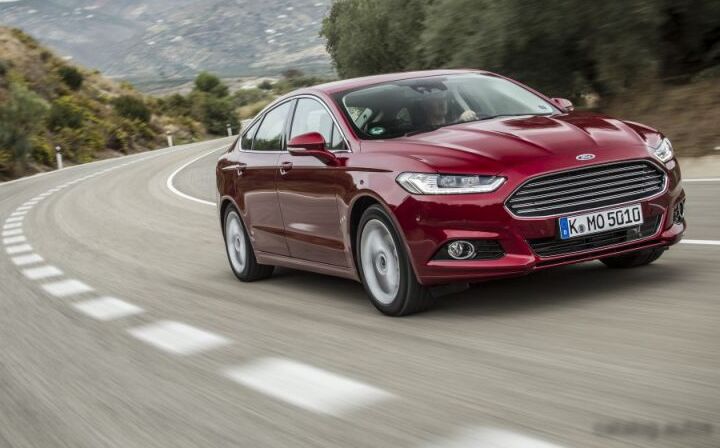
The Ford Mondeo IV Hatchback 2.0 TDCi, producing 150 horsepower, with all-wheel drive (AWD) was a significant variant within the fourth generation of Ford’s globally successful Mondeo line. Produced from 2014 to 2018, this model occupied a mid-range position in the Mondeo IV lineup, offering a balance between performance, fuel efficiency, and all-weather capability. It was built on the Ford C/D platform (internally designated as CD280), shared with other Ford and Mazda vehicles, and represented a step up from the base 1.6-liter EcoBoost models while remaining more accessible than the higher-performance Titanium X trims or those equipped with the larger 2.2-liter diesel engine.
Powertrain & Engine Architecture
The heart of the Mondeo IV 2.0 TDCi 150 AWD is the Ford T7CE diesel engine. This is a 2.0-liter (1997 cc) inline-four cylinder engine utilizing a common-rail direct fuel injection system. The T7CE engine is part of Ford’s Duratorq family, known for its robust construction and relatively good fuel economy. It features a turbocharger with an intercooler to enhance power output and efficiency. The engine produces 150 hp (112 kW) at 3500 rpm and 350 Nm (258.15 lb-ft) of torque between 2000 and 2500 rpm. The engine’s valvetrain employs a double overhead camshaft (DOHC) configuration with four valves per cylinder, optimizing gas flow for improved performance.
Unlike some of its siblings which offered automatic transmission options, the 2.0 TDCi 150 AWD was exclusively paired with a six-speed manual transmission. This transmission was chosen to maximize fuel efficiency and provide drivers with greater control, particularly given the all-wheel-drive system. The gearbox ratios were tuned to provide a balance between acceleration and cruising comfort. The all-wheel-drive system itself is a viscous coupling system, providing on-demand four-wheel drive, enhancing traction in slippery conditions without the complexity and weight of a more sophisticated system.
Fuel Injection and Emissions
The T7CE engine utilizes a Bosch common-rail fuel injection system, operating at extremely high pressures to atomize the fuel for efficient combustion. This system contributes to the engine’s relatively low emissions, meeting Euro 6 standards. A diesel particulate filter (DPF) is also incorporated to further reduce particulate matter emissions. The engine’s compression ratio is 16.7:1, a relatively high figure for a diesel engine, contributing to its thermal efficiency.
Driving Characteristics
The Mondeo IV 2.0 TDCi 150 AWD offers a composed and refined driving experience. While not a sports car, the 150 hp engine and 350 Nm of torque provide ample power for everyday driving and overtaking maneuvers. Acceleration from 0 to 100 km/h (0-62 mph) takes approximately 10.3 seconds, and 0-60 mph is achieved in around 9.8 seconds. The six-speed manual transmission allows for precise gear selection, and the turbocharger provides a noticeable boost in power when accelerating. The all-wheel-drive system significantly improves traction, particularly on wet or loose surfaces, providing a more confident driving experience in adverse weather conditions.
Compared to the lower-powered 1.6 EcoBoost models, the 2.0 TDCi 150 AWD offers considerably more torque, resulting in stronger acceleration and improved towing capacity. However, it doesn’t match the outright performance of the higher-output 2.2-liter TDCi variants. The manual transmission, while engaging for some drivers, may be less convenient than the automatic transmissions offered on other Mondeo trims.
Equipment & Trim Levels
The 2.0 TDCi 150 AWD trim typically came standard with a good level of equipment, positioning it as a well-rounded offering. Standard features generally included air conditioning, a CD/MP3 stereo system with USB connectivity, alloy wheels, front and rear electric windows, and remote central locking. Safety features such as ABS, electronic stability control (ESC), and multiple airbags were also standard. Higher trim levels, such as Titanium, added features like dual-zone climate control, a touchscreen infotainment system, leather upholstery, and parking sensors. Optional extras available for this trim included a panoramic sunroof, heated seats, and a premium sound system.
Interior upholstery was typically cloth on the base models, with leather options available on higher trims. The dashboard layout was functional and well-designed, with clear instrumentation and intuitive controls. The Mondeo IV’s interior was generally praised for its spaciousness and comfortable seating.
Chassis & Braking
The Mondeo IV 2.0 TDCi 150 AWD utilizes an independent suspension system on both the front and rear axles. The front suspension employs a McPherson strut design with coil springs and an anti-roll bar, while the rear suspension features a multi-link setup. This suspension configuration provides a good balance between ride comfort and handling. The front brakes are ventilated discs, while the rear brakes are solid discs, providing adequate stopping power for the vehicle’s weight and performance. The steering system is a rack and pinion type, offering precise and responsive steering feel.
The curb weight of the Mondeo IV 2.0 TDCi 150 AWD is approximately 1581 kg (3485.51 lbs). The vehicle’s weight distribution is relatively balanced, contributing to its stable handling characteristics. Tire sizes varied depending on the trim level, ranging from 215/60 R16 to 235/40 R19.
Market Reception & Comparison
The Ford Mondeo IV 2.0 TDCi 150 AWD was generally well-received by automotive critics. It was praised for its fuel efficiency, comfortable ride, and all-weather capability. Fuel economy figures were typically around 4.8 l/100 km (49 US mpg) on the combined cycle, and CO2 emissions were 124 g/km. Compared to the 1.6 EcoBoost models, the 2.0 TDCi offered better fuel economy and more torque. However, it was slightly more expensive to purchase and maintain due to the complexity of the diesel engine and the DPF system. Compared to the 2.2 TDCi models, the 2.0 TDCi offered a more affordable entry point into the Mondeo range, albeit with slightly less performance.
Technical Specifications
| Engine Model/Code | T7CE |
| Engine Displacement | 1997 cm3 (121.86 cu. in.) |
| Number of Cylinders | 4, Inline |
| Power | 150 Hp @ 3500 rpm |
| Torque | 350 Nm @ 2000-2500 rpm (258.15 lb.-ft.) |
| Fuel Type | Diesel |
| Fuel Consumption (Urban) | 5.5 l/100 km (42.8 US mpg) |
| Fuel Consumption (Extra Urban) | 4.4 l/100 km (53.5 US mpg) |
| Fuel Consumption (Combined) | 4.8 l/100 km (49 US mpg) |
| CO2 Emissions | 124 g/km |
| Acceleration 0-100 km/h | 10.3 sec |
| Maximum Speed | 215 km/h (133.59 mph) |
| Kerb Weight | 1581 kg (3485.51 lbs) |
| Fuel Tank Capacity | 62.5 l (16.51 US gal) |
| Transmission | 6-speed Manual |
| Drive Type | All-Wheel Drive (AWD) |
Legacy
The Ford Mondeo IV 2.0 TDCi 150 AWD has proven to be a relatively reliable vehicle in the used car market. The Duratorq diesel engine is known for its durability, although the DPF system can require maintenance or replacement over time. The all-wheel-drive system is generally robust, but regular servicing is essential to ensure its proper functioning. Today, these models represent a good value proposition for buyers seeking a spacious, comfortable, and fuel-efficient family car with all-weather capability. While newer models offer more advanced technology and features, the Mondeo IV 2.0 TDCi 150 AWD remains a competent and practical choice.