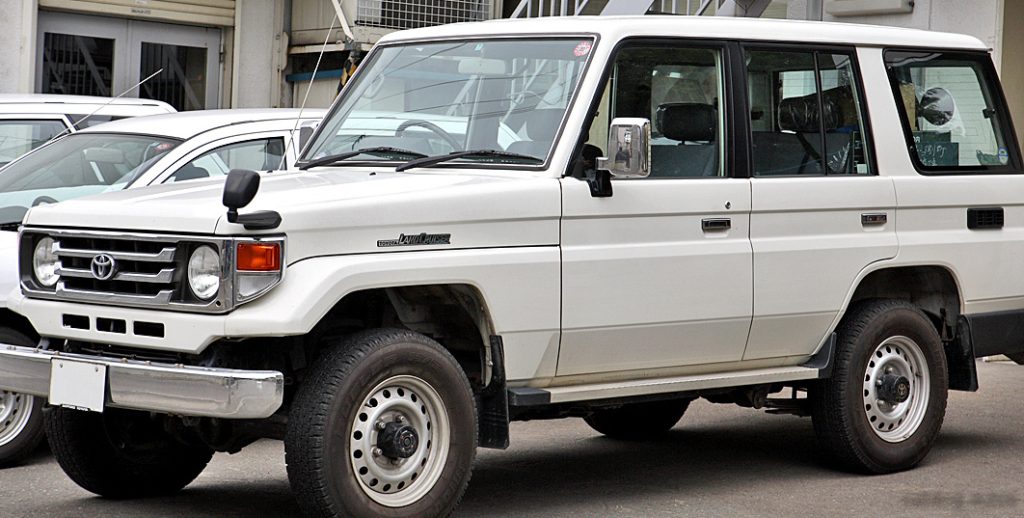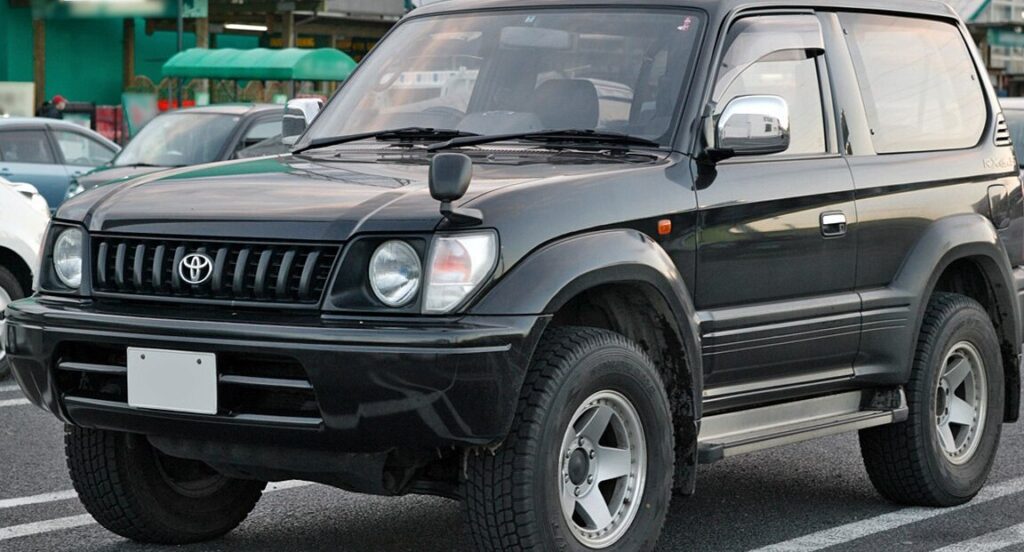
The Toyota Land Cruiser Prado J90, produced between 1996 and 1999, represented a significant evolution in Toyota’s long-standing lineage of capable off-road vehicles. This generation Prado, available in both 3-door and 5-door configurations, aimed to blend rugged durability with increased refinement and on-road comfort. The 3-door model, particularly when equipped with the 3.4-liter V6 engine producing 178 horsepower, occupied a unique position in the lineup, appealing to buyers seeking a more compact and agile off-roader than the larger, more luxurious 5-door variant. It was positioned as a robust, capable vehicle for enthusiasts and those needing a versatile vehicle for both work and leisure, rather than a family-focused luxury SUV.
The 3.4L V6 Prado: A Detailed Overview
The J90 Prado 3-door with the 3.4L V6 engine (designated 5VZ-FE) was a relatively short-lived offering, primarily sold between 1996 and 1999. It served as a bridge between the more basic, utilitarian Land Cruisers of the past and the increasingly sophisticated SUVs that would follow. This variant was particularly popular in markets where a smaller, more maneuverable 4×4 was preferred, and where the larger Prado 5-door was considered excessive in size or price.
Powertrain & Engine Architecture
At the heart of this Prado variant lies the 5VZ-FE 3.4-liter V6 engine. This naturally aspirated engine, a member of Toyota’s VZ series, is known for its reliability and durability. It features a 60-degree V-angle, four valves per cylinder (DOHC), and multi-port fuel injection. The engine displaces 3378 cm³ (206.14 cubic inches) and produces 178 horsepower at 4600 rpm and 303 Nm (223.48 lb-ft) of torque at 3600 rpm. The engine’s robust construction and relatively simple design contributed to its longevity. The 5VZ-FE utilizes a cast iron block and aluminum cylinder heads, a common configuration for Toyota engines of this era.
The transmission paired with the 3.4L V6 in this Prado was typically a 5-speed manual transmission. While an automatic transmission was available in some markets, the manual was favored by many enthusiasts for its greater control and responsiveness, especially in off-road situations. The manual transmission featured a traditional gear layout, designed for both on-road cruising and low-speed rock crawling. The gear ratios were optimized to provide a balance between acceleration and fuel efficiency, although fuel economy was not a primary design consideration for this vehicle.
Driving Characteristics
The 3.4L V6 Prado 3-door offered a driving experience that prioritized capability over outright speed. Acceleration to 60 mph was achieved in approximately 9.9 seconds, and the top speed was limited to 111.85 mph (180 km/h). While not particularly quick, the engine’s torque output provided sufficient power for tackling challenging terrain and hauling loads. The 3-door configuration, combined with the V6 engine, resulted in a relatively nimble vehicle for its class.
Compared to the later 3.0L diesel versions of the J90 Prado, the 3.4L V6 offered more immediate power delivery and a smoother, quieter operation. However, the diesel variants generally provided superior fuel economy and low-end torque, making them more suitable for long-distance highway driving and heavy towing. The manual transmission allowed for precise gear selection, enhancing control in off-road scenarios. The 5-speed manual provided a good spread of ratios, allowing the engine to operate efficiently at various speeds.
Equipment & Trim Levels
The 3-door Prado 3.4L V6 typically came with a relatively basic level of equipment, reflecting its positioning as a more utilitarian vehicle. Standard features generally included air conditioning, power steering, and a basic audio system. Interior upholstery was typically cloth, although leather options were available as upgrades. The dashboard layout was functional and straightforward, prioritizing ease of use over aesthetic flair.
Optional extras included power windows, power door locks, a sunroof, and upgraded audio systems. Some models also featured limited-slip differentials and heavy-duty suspension components for enhanced off-road performance. The level of equipment varied depending on the specific market and trim level. The focus was on providing a durable and reliable vehicle rather than a luxurious one.
Chassis & Braking
The Prado J90 utilized a body-on-frame construction, providing a robust and durable platform for off-road use. The front suspension consisted of a double wishbone setup with coil springs and a transverse stabilizer bar, while the rear suspension employed a rigid axle with coil springs. This suspension configuration provided a good balance between ride comfort and off-road articulation.
Braking duties were handled by ventilated disc brakes on all four wheels, providing adequate stopping power for the vehicle’s weight and performance. An Anti-lock Braking System (ABS) was typically included as standard equipment, enhancing safety and control during emergency braking situations. The steering system utilized a rack and pinion setup with hydraulic power assistance, providing precise and responsive steering feel.
Market Reception & Comparison
The 3.4L V6 Prado 3-door received generally positive reviews from automotive critics. It was praised for its robust construction, reliable engine, and capable off-road performance. However, some critics noted its relatively high fuel consumption and lack of refinement compared to more modern SUVs. Compared to the 5-door Prado, the 3-door model was seen as a more focused off-road vehicle, appealing to a niche market of enthusiasts. Fuel consumption was rated at 17.6 l/100 km (13.4 US mpg) in urban conditions and 11.1 l/100 km (21.2 US mpg) in extra-urban conditions.
Technical Specifications
| Engine Model/Code | 5VZ-FE |
| Engine Displacement | 3378 cm³ (206.14 cu. in.) |
| Number of Cylinders | 6 |
| Engine Configuration | V-engine |
| Cylinder Bore | 93.5 mm (3.68 in.) |
| Piston Stroke | 82 mm (3.23 in.) |
| Compression Ratio | 9.6:1 |
| Fuel Injection System | Multi-port manifold injection |
| Maximum Power | 178 Hp @ 4600 rpm |
| Maximum Torque | 303 Nm @ 3600 rpm (223.48 lb.-ft. @ 3600 rpm) |
| Fuel Type | Petrol (Gasoline) |
| Acceleration 0-100 km/h | 10.4 sec |
| Acceleration 0-60 mph | 9.9 sec |
| Maximum Speed | 180 km/h (111.85 mph) |
| Kerb Weight | 1755 kg (3869.11 lbs.) |
| Max. Weight | 2510 kg (5533.6 lbs.) |
| Fuel Tank Capacity | 90 l (23.78 US gal | 19.8 UK gal) |
| Trunk (boot) space – minimum | 450 l (15.89 cu. ft.) |
| Trunk (boot) space – maximum | 836 l (29.52 cu. ft.) |
| Transmission | 5-speed manual |
Legacy
The 3.4L V6 Prado J90 remains a popular choice among off-road enthusiasts and collectors. The 5VZ-FE engine is renowned for its reliability and longevity, and well-maintained examples can still provide years of dependable service. The 3-door configuration, combined with the V6 engine, offers a unique blend of capability and agility. In the used car market, these Prados command a premium due to their reputation for durability and their appeal to a dedicated following. While fuel economy is not its strong suit, the 3.4L V6 Prado 3-door continues to be a highly regarded and sought-after vehicle for those seeking a rugged and reliable off-road companion.