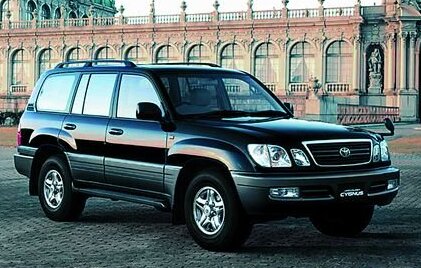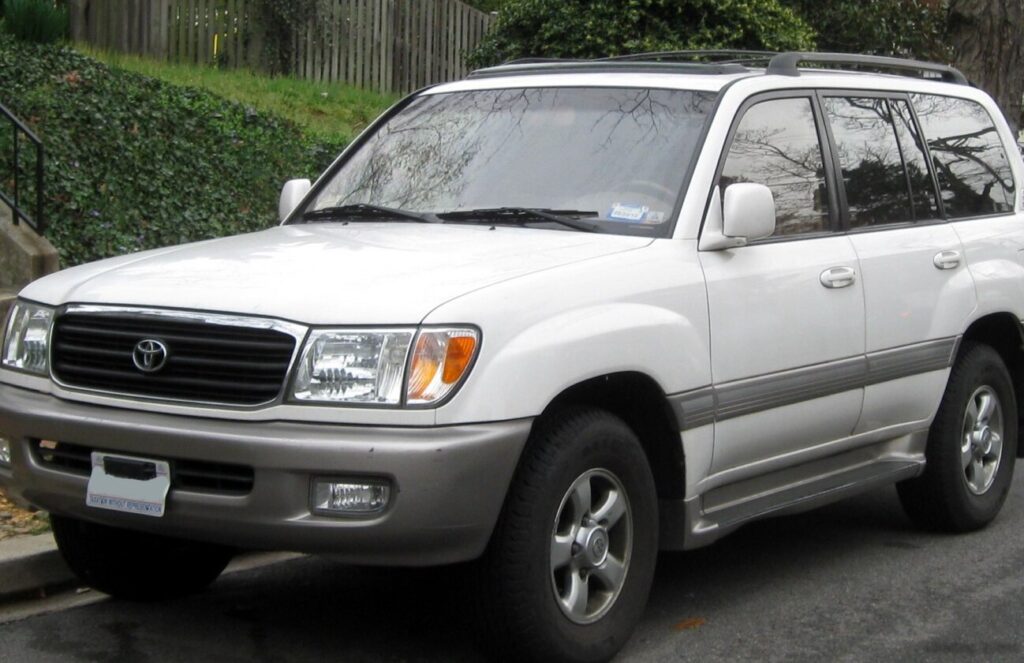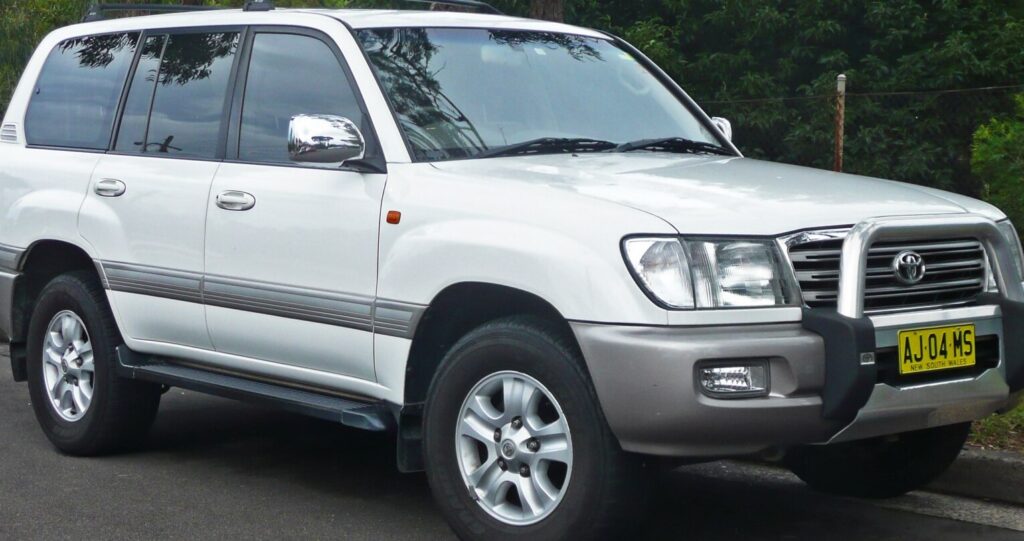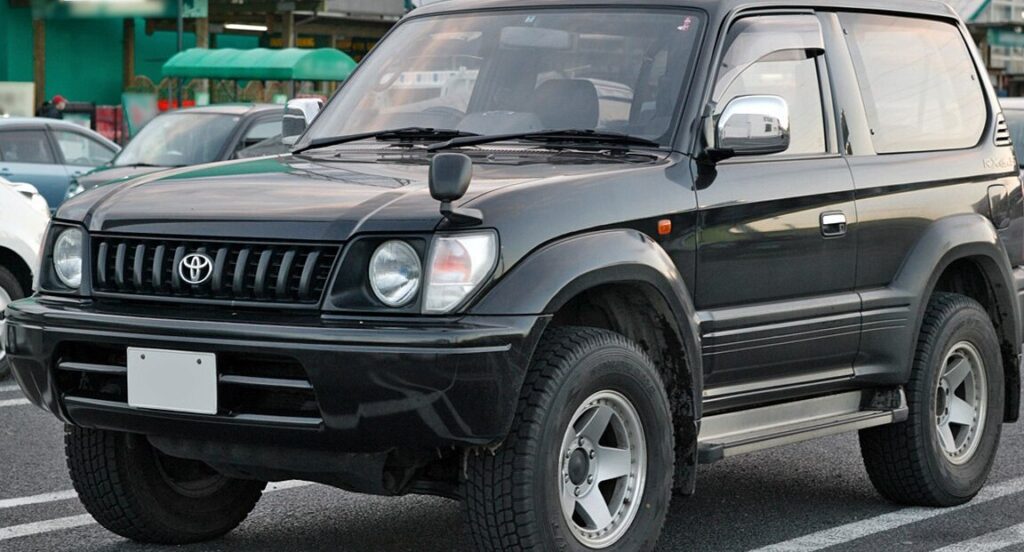
The Toyota Land Cruiser Prado J90, produced between 1996 and 1999, represented a significant evolution in Toyota’s long-running Land Cruiser lineage. This generation, known for its blend of off-road capability and increasing on-road refinement, was offered in both 3-door and 5-door configurations. The 3-door model, particularly when equipped with the 3.4-liter V6 engine and four-speed automatic transmission (ECT – Electronically Controlled Transmission), occupied a unique position in the Prado lineup, appealing to buyers seeking a more compact and agile off-roader without sacrificing the Land Cruiser’s renowned durability. This variant was positioned as a mid-range offering, bridging the gap between more basic, four-cylinder models and the more luxurious, larger-engined Prados.
The 3.4L V6 24V Automatic Prado: A Detailed Overview
The 3.4-liter V6 engine, designated the 5VZ-FE, was a cornerstone of Toyota’s engine family during the late 1990s. It was known for its robust construction and relatively smooth power delivery. When paired with the four-speed automatic transmission, this combination offered a balance between usability and capability, making it a popular choice for both on and off-road driving. The ECT transmission was designed to provide smoother shifts and improved fuel efficiency compared to earlier automatic transmissions.
Powertrain & Engine Architecture
The 5VZ-FE is a 3.4-liter (3378 cc / 206.14 cu. in.) naturally aspirated V6 engine. It features a 90-degree V-angle, four valves per cylinder (24V), and a double overhead camshaft (DOHC) valvetrain. The engine utilizes a multi-port fuel injection system, delivering fuel directly to each intake port for optimized combustion. Bore and stroke dimensions are 93.5 mm (3.68 in) and 82 mm (3.23 in) respectively, resulting in a compression ratio of 9.6:1. The engine’s robust internal components, including forged connecting rods and a cast iron block, contributed to its reputation for longevity. Engine oil capacity is 5.2 liters (5.49 US qt / 4.58 UK qt) and requires a specification adhering to Toyota standards. The cooling system holds 8 liters (8.45 US qt / 7.04 UK qt) of coolant.
The four-speed automatic transmission (ECT) was a conventional hydraulic automatic, offering a relatively simple and reliable design. While not as technologically advanced as some contemporary transmissions, it was well-suited to the engine’s torque characteristics and the Prado’s intended use. The transmission’s gear ratios were optimized for a balance of acceleration and fuel economy, though the focus remained on providing sufficient torque for off-road situations. Specific gear ratios varied slightly depending on the final drive ratio fitted to the vehicle.
Driving Characteristics
The 3.4L V6 automatic Prado delivered a respectable, if not exhilarating, driving experience. Acceleration from 0-60 mph was achieved in approximately 9.9 seconds, and 0-100 km/h in 10.4 seconds, with a top speed of 111.85 mph (180 km/h). The automatic transmission provided smooth shifts, but could feel somewhat sluggish during quick acceleration or when attempting to downshift for overtaking. The engine produced 178 hp at 4600 rpm and 303 Nm (223.48 lb-ft) of torque at 3600 rpm. This torque output, while adequate, was noticeably less than that offered by the later 3.4-liter turbocharged diesel variants or the larger 4.7-liter V8 engines available in the Prado range. The weight-to-power ratio of 9.9 kg/hp and weight-to-torque ratio of 5.8 kg/Nm reflected the vehicle’s substantial weight (1755 kg / 3869.11 lbs) and the engine’s moderate output.
Off-road, the combination of the V6 engine, automatic transmission, and the Prado’s full-time four-wheel-drive system proved capable. The automatic transmission simplified operation in challenging terrain, while the engine’s torque provided sufficient power to overcome obstacles. However, the lack of a low-range transfer case in some models limited its extreme off-road capabilities compared to versions equipped with this feature.
Equipment & Trim Levels
The 3.4L V6 automatic Prado typically came equipped with a reasonable level of standard features. These included power windows, power locks, air conditioning, and a basic audio system. Interior upholstery was typically cloth, although leather options were available as upgrades. Dashboard configuration was relatively straightforward, with clearly labeled controls and a functional layout. Optional extras included a sunroof, upgraded audio systems, and alloy wheels. The level of equipment varied depending on the specific market and trim package.
Chassis & Braking
The Prado J90 featured a robust body-on-frame construction, providing excellent durability and off-road capability. Front suspension consisted of a coil spring, double wishbone setup with a transverse stabilizer bar. The rear suspension utilized a rigid axle with coil springs. This configuration provided a comfortable ride on paved roads while maintaining good articulation for off-road use. Braking was handled by ventilated discs on all four wheels, providing adequate stopping power for the vehicle’s weight. An Anti-lock Braking System (ABS) was standard equipment, enhancing safety and control during emergency braking situations. Steering was rack and pinion with hydraulic power assistance.
Market Reception & Comparison
The 3.4L V6 automatic Prado received generally positive reviews from automotive critics. It was praised for its reliability, comfortable ride, and off-road capability. However, some critics noted that the engine’s performance was somewhat underwhelming, particularly when compared to larger-engined rivals. Fuel economy was also a concern, with combined fuel consumption figures of around 14.5 l/100km (16.1 UK mpg / 5.7 km/l). Compared to the 3.4-liter turbocharged diesel variants, the V6 offered less torque and lower fuel economy. Compared to the 5-door models, the 3-door was considered more nimble and easier to maneuver in tight spaces, but offered less interior space and practicality.
Technical Specifications
| Engine Type | 3.4L V6 24V |
| Engine Code | 5VZ-FE |
| Displacement | 3378 cm3 / 206.14 cu. in. |
| Power | 178 hp @ 4600 rpm |
| Torque | 303 Nm @ 3600 rpm / 223.48 lb-ft @ 3600 rpm |
| Fuel Type | Petrol (Gasoline) |
| Transmission | 4-speed Automatic (ECT) |
| Drivetrain | Full-time 4WD |
| Kerb Weight | 1755 kg / 3869.11 lbs |
| Max Weight | 2510 kg / 5533.6 lbs |
| Fuel Consumption (Urban) | 17.6 l/100 km / 13.4 US mpg / 16.1 UK mpg |
| Fuel Consumption (Extra Urban) | 11.1 l/100 km / 21.2 US mpg / 25.4 UK mpg |
| Fuel Tank Capacity | 90 l / 23.78 US gal / 19.8 UK gal |
| 0-60 mph | 9.9 sec |
| 0-100 km/h | 10.4 sec |
| Maximum Speed | 180 km/h / 111.85 mph |
Legacy
The 3.4L V6 automatic Prado J90 has proven to be a remarkably durable and reliable vehicle. The 5VZ-FE engine is known for its longevity, and with proper maintenance, can easily exceed 200,000 miles. The automatic transmission, while not the most sophisticated, is also generally reliable. In the used car market, these Prados are highly sought after for their reputation for dependability and off-road capability. While fuel economy is a concern, the vehicle’s overall robustness and relatively low maintenance costs make it an attractive option for buyers seeking a capable and long-lasting SUV. Parts availability remains good, further contributing to its appeal in the used market. The 3-door configuration, in particular, has gained a following among enthusiasts who appreciate its compact size and nimble handling.