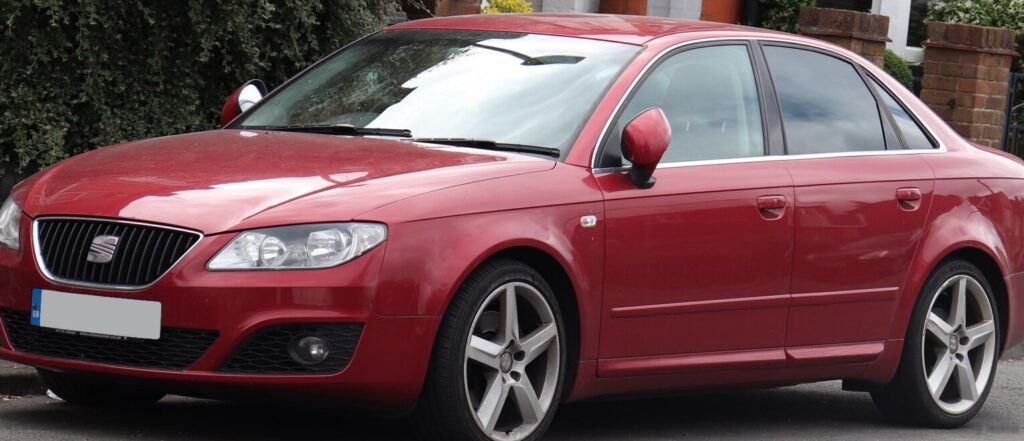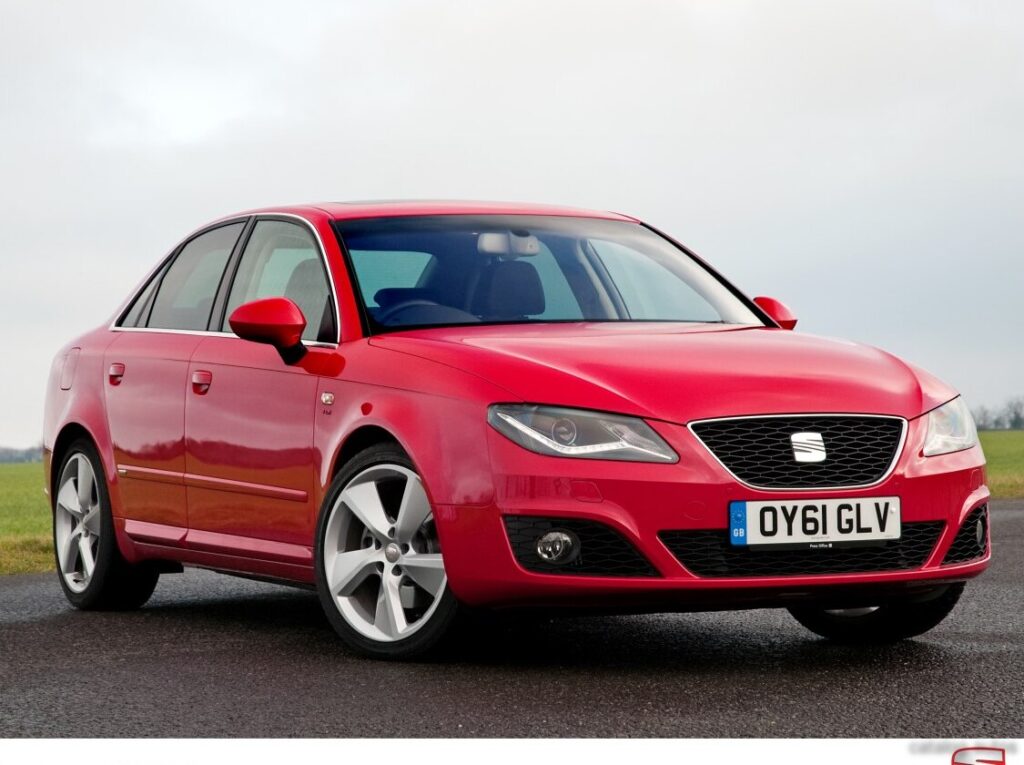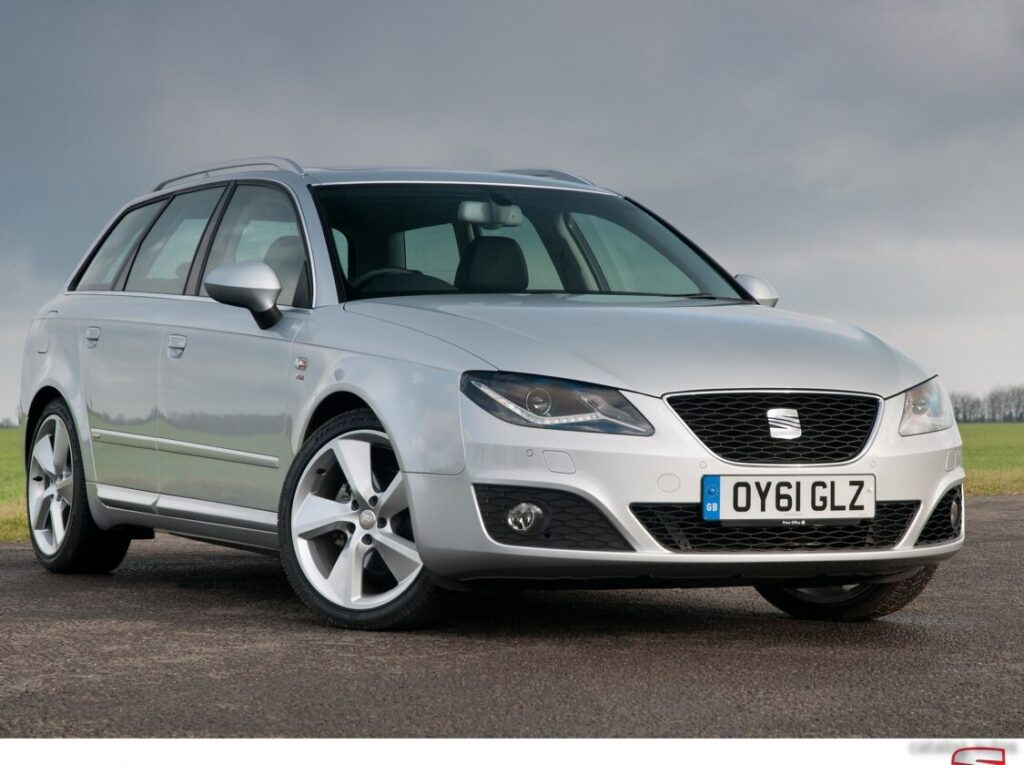
The Seat Exeo ST 2.0 TDI Ecomotive, produced from September 2011 to May 2013, was a station wagon (estate) variant of the Exeo model line. Positioned as a fuel-efficient option within the Exeo range, it aimed to provide practicality and reasonable performance with a focus on lower running costs. The Exeo itself was a significant vehicle for SEAT, representing their first foray into the mid-size executive car segment, built upon the Volkswagen Group’s B7 platform (also known as the 1HX0/A3 platform, shared with the Audi A4 and Volkswagen Passat of the same era). The ST designation denoted the “Sport Tourer” or station wagon body style, offering increased cargo capacity compared to the sedan.
Powertrain & Engine Architecture
The 2.0 TDI Ecomotive variant was powered by the EA189 series of diesel engines, specifically the CJCC engine code. This 1968 cc (120.09 cu. in.) inline-four cylinder engine utilized a common rail direct injection system, delivering 120 horsepower (Hp) at 4000 rpm and 290 Nm (213.89 lb.-ft.) of torque between 1750 and 2500 rpm. The engine featured a turbocharger with an intercooler to enhance performance and efficiency. The valvetrain employed a Double Overhead Camshaft (DOHC) configuration with four valves per cylinder. A key feature of the Ecomotive models was the inclusion of a Start & Stop system, designed to reduce fuel consumption in urban driving conditions by automatically shutting off the engine when the vehicle was stationary.
The engine was longitudinally mounted in the front of the vehicle, driving the front wheels. The fuel injection system was a Bosch common rail system, known for its precision and efficiency. The compression ratio was relatively high at 16.5:1, typical for diesel engines, contributing to thermal efficiency. The engine also incorporated a diesel particulate filter (DPF) to reduce harmful emissions, meeting Euro 5 emission standards.
Transmission
The 2.0 TDI Ecomotive was exclusively offered with a 6-speed manual transmission. While an automatic transmission was available on other Exeo models, it was not paired with the Ecomotive variant, prioritizing fuel economy. The manual gearbox provided precise control and allowed drivers to maximize the engine’s torque output. Gear ratios were tuned for a balance between acceleration and fuel efficiency, with a relatively long final drive ratio to aid in highway cruising.
Driving Characteristics
The Seat Exeo ST 2.0 TDI Ecomotive offered a comfortable and refined driving experience, prioritizing fuel efficiency over outright performance. Acceleration from 0 to 100 km/h (0-62 mph) took approximately 10.9 seconds, and 0-60 mph was achieved in around 10.4 seconds. While not a particularly sporty vehicle, the 290 Nm of torque provided ample pulling power for everyday driving and overtaking maneuvers. The long gearing contributed to relaxed cruising at highway speeds. Compared to the more powerful 2.0 TDI variants (typically producing 170 hp), the 120 hp version felt less responsive, particularly at higher engine speeds. However, the difference in fuel economy was significant, making the Ecomotive a more attractive option for drivers prioritizing running costs.
The steering was light and precise, providing good feedback. The suspension, tuned for comfort, absorbed bumps and imperfections in the road well, although it wasn’t as engaging as some of its rivals. The front-wheel-drive configuration provided predictable handling, but could exhibit some torque steer under hard acceleration.
Equipment & Trim Levels
The Exeo ST 2.0 TDI Ecomotive typically came with a reasonable level of standard equipment, reflecting its position as a well-equipped mid-range model. Standard features included air conditioning, electric front windows, central locking, a CD stereo system, and alloy wheels. Safety features such as ABS (Anti-lock Braking System), traction control, and front and side airbags were also standard. Interior upholstery was typically cloth, with options for leather upgrades. Dashboard trim was generally functional and straightforward, with a focus on usability rather than luxury. Optional extras included a navigation system, parking sensors, a sunroof, and upgraded audio systems. The Ecomotive trim often included specific aerodynamic enhancements to improve fuel efficiency, such as a lower ride height and optimized wheel designs.
Chassis & Braking
The Exeo ST featured an independent suspension system on both the front and rear axles. The front suspension utilized a multi-link setup with a transverse stabilizer bar, while the rear suspension employed a trapezoidal lever design, also with a stabilizer bar. This configuration provided a good balance between ride comfort and handling. The braking system consisted of ventilated discs on the front wheels (288×25 mm) and solid discs on the rear wheels (245×10 mm). The hydraulic power steering provided light and precise steering feel. Tire sizes varied depending on the trim level, with common options including 205/55 R16 and 225/45 R17.
Market Reception & Comparison
The Seat Exeo ST 2.0 TDI Ecomotive was generally well-received by automotive critics as a practical and fuel-efficient estate car. It was praised for its spacious interior, comfortable ride, and low running costs. However, some critics noted that it lacked the brand prestige of its German rivals (Audi, BMW, Mercedes-Benz) and that its driving experience wasn’t as engaging as some other cars in its class. Compared to the higher-output 2.0 TDI variants, the Ecomotive offered significantly better fuel economy – achieving approximately 4.5 l/100 km (52.3 US mpg) on the combined cycle – but at the expense of performance. Against competitors like the Ford Mondeo Estate, Volkswagen Passat Estate, and Skoda Octavia Estate, the Exeo ST Ecomotive offered a competitive package, particularly for buyers seeking a value-for-money option.
Technical Specifications
| Brand | Seat |
| Model | Exeo ST |
| Generation | Exeo ST (facelift 2011) |
| Type (Engine) | 2.0 TDI (120 Hp) Ecomotive |
| Start of production | September, 2011 |
| End of production | May, 2013 |
| Powertrain Architecture | Internal Combustion engine |
| Body type | Station wagon (estate) |
| Seats | 5 |
| Doors | 5 |
| Fuel consumption (urban) | 5.6 l/100 km (42 US mpg) |
| Fuel consumption (extra urban) | 3.9 l/100 km (60.3 US mpg) |
| Fuel consumption (combined) | 4.5 l/100 km (52.3 US mpg) |
| CO2 emissions | 119 g/km |
| Fuel Type | Diesel |
| Acceleration 0 – 100 km/h | 10.9 sec |
| Acceleration 0 – 62 mph | 10.9 sec |
| Acceleration 0 – 60 mph | 10.4 sec |
| Maximum speed | 197 km/h (122.41 mph) |
| Emission standard | Euro 5 |
| Weight-to-power ratio | 12.4 kg/Hp |
| Weight-to-torque ratio | 5.1 kg/Nm |
| Power | 120 Hp @ 4000 rpm |
| Torque | 290 Nm @ 1750-2500 rpm (213.89 lb.-ft.) |
| Engine layout | Front, Longitudinal |
| Engine Model/Code | EA189 / CJCC |
| Engine displacement | 1968 cm3 (120.09 cu. in.) |
| Number of cylinders | 4 |
| Engine configuration | Inline |
| Cylinder Bore | 81 mm (3.19 in.) |
| Piston Stroke | 95.5 mm (3.76 in.) |
| Compression ratio | 16.5:1 |
| Number of valves per cylinder | 4 |
| Fuel injection system | Diesel Commonrail |
| Engine aspiration | Turbocharger, Intercooler |
| Valvetrain | DOHC |
| Engine oil capacity | 4.6 l (4.86 US qt | 4.05 UK qt) |
| Coolant | 7.5 l (7.93 US qt | 6.6 UK qt) |
| Kerb Weight | 1490 kg (3284.89 lbs.) |
| Max. weight | 2050 kg (4519.48 lbs.) |
| Max load | 560 kg (1234.59 lbs.) |
| Trunk (boot) space – minimum | 422 l (14.9 cu. ft.) |
| Trunk (boot) space – maximum | 1354 l (47.82 cu. ft.) |
| Fuel tank capacity | 70 l (18.49 US gal | 15.4 UK gal) |
Legacy
The Seat Exeo ST 2.0 TDI Ecomotive, while not a high-volume seller, has proven to be a relatively reliable vehicle in the used car market. The EA189 engine, while subject to some scrutiny regarding emissions (particularly in earlier iterations), is generally robust when properly maintained. Common issues include DPF clogging (especially with frequent short journeys) and potential problems with the turbocharger. However, these are not uncommon for diesel engines of this era. Today, the Exeo ST Ecomotive represents a relatively affordable and practical option for buyers seeking a spacious and fuel-efficient estate car. Its understated styling and comfortable ride continue to appeal to those who prioritize practicality and value over brand prestige.