
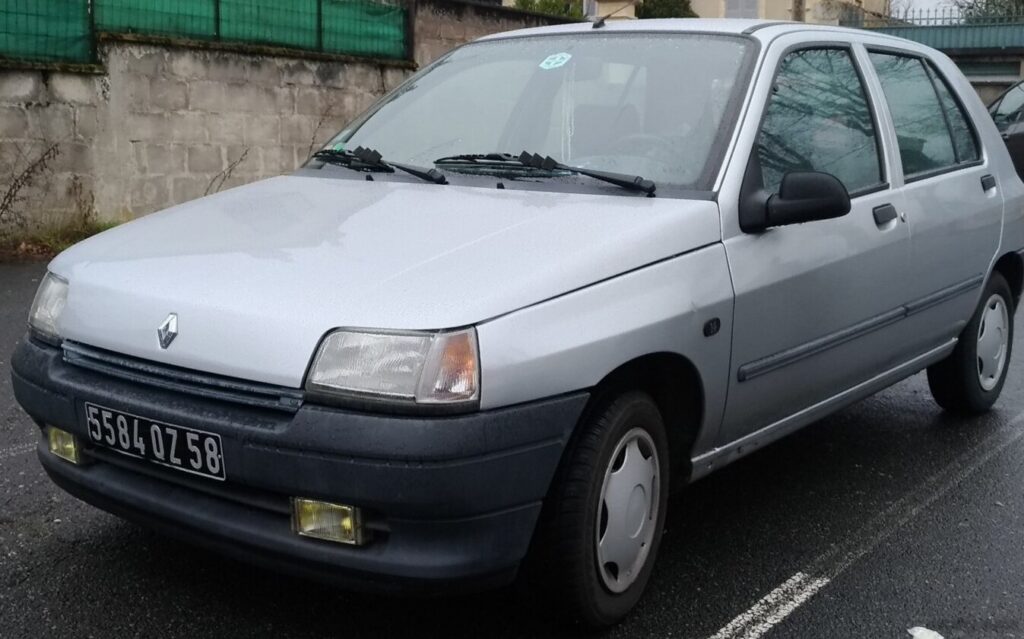
The Renault Clio I (Phase I) 1.2, producing 55 horsepower, was an entry-level variant of the first-generation Clio, produced from 1990 to 1997. This model represented Renault’s foray into the supermini segment, aiming to replace the aging Renault 5. The Phase I models, built between 1990 and 1993, were characterized by their simple, functional design and affordability. The 1.2L engine and five-speed manual transmission combination was positioned as the most economical and accessible option within the Clio I range, targeting budget-conscious buyers and those seeking a practical city car. It was built on the Renault 800 series platform, later known as the B0 platform.
Powertrain & Engine Architecture
The heart of the Clio I 1.2 was the Renault E5F engine, a 1.2-liter (1171 cc) inline-four cylinder petrol engine. This engine featured a single overhead camshaft (OHC) valvetrain with two valves per cylinder. The E5F was a relatively simple design, prioritizing fuel efficiency and reliability over outright performance. Fuel delivery was managed by a single-point fuel injection system, a common feature for engines of this era, which contributed to its lower cost but also limited its power output compared to multi-point injection systems. The engine’s bore and stroke measured 75.8 mm (2.98 in) and 64.9 mm (2.56 in) respectively, resulting in a compression ratio of 9.5:1. The engine was transversely mounted at the front of the vehicle, driving the front wheels. The engine oil capacity was 4 liters (4.23 US quarts / 3.52 UK quarts), and the coolant capacity was 5.2 liters (5.49 US quarts / 4.58 UK quarts).
Transmission
The standard transmission for the Clio I 1.2 was a five-speed manual gearbox. This transmission was chosen to maximize fuel economy and provide adequate performance for the engine’s power output. The gear ratios were tuned for city driving and low-speed acceleration, reflecting the car’s intended use case. An automatic transmission was offered as an option, but it was less common and generally resulted in reduced fuel efficiency and slightly slower acceleration.
Driving Characteristics
The Clio I 1.2 offered modest performance, reflecting its entry-level positioning. Acceleration from 0 to 100 km/h (0-62 mph) took approximately 15 seconds, and the top speed was around 160 km/h (99 mph). The engine produced 55 hp at 6000 rpm and 84 Nm (61.96 lb-ft) of torque at 3500 rpm. The power delivery was relatively linear, but the engine felt strained at higher speeds or when carrying a full load. The five-speed manual transmission allowed drivers to keep the engine in its optimal power band, but the overall driving experience was focused on practicality and economy rather than sporty handling. Compared to the later 1.4 and 1.6-liter versions of the Clio I, the 1.2 felt noticeably slower, particularly when overtaking or climbing hills. The weight-to-power ratio of 16.6 kg/hp further emphasized its focus on efficiency over performance.
Equipment & Trim Levels
The Clio I 1.2 was typically equipped with basic but functional features. Standard equipment generally included cloth upholstery, a basic dashboard with analog gauges, and manual windows and door locks. Power steering was often an optional extra, as were features like central locking and a radio. Trim levels were relatively simple, with the base model offering minimal frills. Higher trim levels, such as the “RN” or “RT” variants, added features like upgraded upholstery, a more comprehensive instrument cluster, and potentially alloy wheels. The interior was designed with practicality in mind, offering reasonable space for passengers and luggage, especially considering the car’s compact dimensions. The trunk space ranged from 265 liters (9.36 cu ft) with the rear seats up to 1055 liters (37.26 cu ft) with the rear seats folded down.
Chassis & Braking
The Clio I featured a relatively simple chassis design. The front suspension utilized a MacPherson strut setup, while the rear suspension employed a torsion beam. This configuration provided a comfortable ride quality, suitable for everyday driving. The steering was a rack and pinion system, offering reasonable precision. Brakes were disc brakes on the front wheels and drum brakes on the rear wheels. This combination was adequate for the car’s weight and performance, but lacked the stopping power of fully disc brake setups found on higher-spec models. The tires were typically 155/70 R13, mounted on 13-inch steel wheels. The curb weight of the Clio I 1.2 was approximately 915 kg (2017.23 lbs), contributing to its relatively nimble handling.
Market Reception & Comparison
The Renault Clio I 1.2 was generally well-received as an affordable and practical supermini. Critics praised its fuel efficiency, comfortable ride, and ease of driving. However, it was also criticized for its lack of power and somewhat basic interior. Compared to rivals like the Peugeot 205 and the Citroën Saxo, the Clio I 1.2 offered a similar level of practicality and affordability, but often lagged behind in terms of performance and driving engagement. Fuel economy figures were competitive for the time, with combined fuel consumption averaging around 6.4 l/100 km (36.8 US mpg / 44.1 UK mpg). Reliability was generally good, although the single-point fuel injection system could be prone to issues over time. The 1.4 and 1.6-liter Clio I models offered significantly more performance, but at a higher price point. The 1.9 diesel variant provided excellent fuel economy but lacked the refinement of the petrol engines.
Technical Specifications
| Engine Type | Inline-4, Petrol |
| Engine Displacement | 1171 cc (71.46 cu in) |
| Engine Code | E5F |
| Power Output | 55 hp @ 6000 rpm |
| Torque Output | 84 Nm (61.96 lb-ft) @ 3500 rpm |
| Compression Ratio | 9.5:1 |
| Fuel Injection | Single-point |
| Transmission | 5-speed Manual (Optional Automatic) |
| Drive Wheels | Front |
| Curb Weight | 915 kg (2017.23 lbs) |
| Maximum Weight | 1275 kg (2810.89 lbs) |
| Fuel Consumption (Urban) | 7.3 l/100 km (32.2 US mpg) |
| Fuel Consumption (Extra Urban) | 4.8 l/100 km (49 US mpg) |
| Fuel Consumption (Combined) | 6.4 l/100 km (36.8 US mpg) |
| 0-100 km/h | 15 seconds |
| Top Speed | 160 km/h (99.42 mph) |
| Fuel Tank Capacity | 43 liters (11.36 US gal) |
Legacy
The Renault Clio I 1.2, while not the most powerful or exciting variant of the first-generation Clio, played a crucial role in establishing the model as a popular and affordable supermini. The E5F engine, while simple, proved to be relatively reliable, and many examples are still on the road today. In the used car market, the Clio I 1.2 remains an attractive option for those seeking a cheap and cheerful classic car. Maintenance costs are generally low, and parts availability is still reasonable. However, potential buyers should be aware of the age-related issues common to cars of this era, such as rust and wear and tear on suspension components. The Clio I 1.2 represents a significant milestone in Renault’s history, marking the beginning of a successful lineage of superminis that continues to this day.
