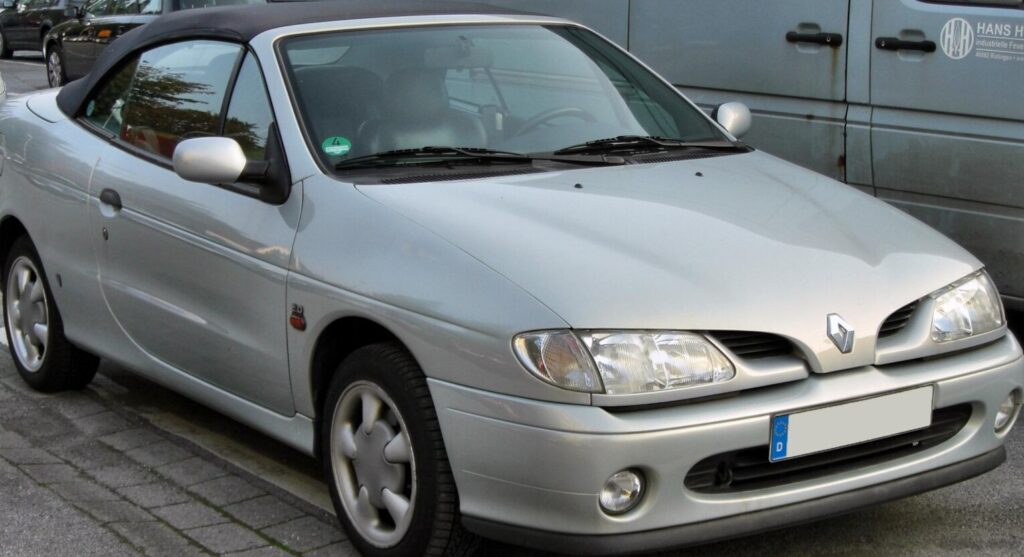
The Renault Megane I Cabriolet (EA) 1.6 e, producing 90 horsepower, was a popular entry-level variant of Renault’s first-generation Megane convertible, produced between 1997 and 1998. Positioned as the most accessible version of the Cabriolet, it offered open-top motoring to a wider audience. This model was built on the 1HX0/A3 platform, shared with other Renault and Nissan vehicles of the era, and represented Renault’s attempt to capture a larger share of the burgeoning affordable convertible market. It served as a gateway into the Megane Cabriolet range, with more powerful and better-equipped versions available for buyers seeking a more premium experience.
Powertrain & Engine Architecture
The heart of the Megane I Cabriolet 1.6 e is the Renault K7M engine, a 1.6-liter inline-four cylinder gasoline engine. This engine, a mainstay of Renault’s lineup during the 1990s, is known for its relative simplicity and durability. The K7M features a naturally aspirated configuration, meaning it relies solely on atmospheric pressure to draw air into the cylinders, rather than forced induction like a turbocharger. It utilizes a multi-port fuel injection system, delivering fuel directly into the intake ports just before the intake valves. This system, common for its time, provided a balance between fuel efficiency and performance. The engine’s valvetrain consists of a double overhead camshaft (DOHC) design, operating two valves per cylinder (two intake and two exhaust). This configuration allows for improved breathing and higher engine speeds compared to older single overhead cam designs.
While a five-speed manual transmission was the standard offering, the 1.6 e was also available with a four-speed automatic transmission. This automatic, a Renault-sourced unit, was geared towards providing comfortable and effortless driving, particularly in urban environments. However, it came at the cost of some performance and fuel economy compared to the manual version. The automatic transmission’s gear ratios were optimized for smooth acceleration and cruising, but it lacked the responsiveness and driver engagement of a manual gearbox. The engine produces 90 hp at 5000 rpm and 137 Nm (101.05 lb-ft) of torque at 4000 rpm.
Engine Specifications (K7M)
- Displacement: 1598 cm³ (97.52 cu. in.)
- Configuration: Inline-4
- Valvetrain: DOHC, 2 valves per cylinder
- Fuel Injection: Multi-port
- Compression Ratio: 10:1
Driving Characteristics
The 1.6 e automatic version of the Megane Cabriolet offered a relaxed and comfortable driving experience. Acceleration was adequate for everyday driving, with a 0-62 mph (0-100 km/h) time of approximately 11.7 seconds. Top speed was rated at 187 km/h (116.2 mph). However, it was noticeably slower than the manual transmission versions and the higher-powered 2.0-liter models. The automatic transmission, while convenient, contributed to a slight sluggishness, particularly during overtaking maneuvers. The engine’s torque output, while sufficient for cruising, required the transmission to downshift frequently when climbing hills or accelerating quickly. The power delivery was relatively linear, with a peak torque available at 4000 rpm. The Cabriolet’s weight, at approximately 1105 kg (2436.11 lbs), further impacted performance, making it feel less nimble than lighter competitors.
Compared to the more powerful Megane Cabriolet variants, the 1.6 e prioritized fuel economy and affordability over outright performance. The manual transmission version offered a more engaging driving experience and slightly better fuel consumption, while the 2.0-liter models provided significantly more power and quicker acceleration.
Equipment & Trim Levels
The 1.6 e Cabriolet typically came with a fairly basic level of equipment, reflecting its position as the entry-level model. Standard features generally included power steering, central locking, and an AM/FM radio. Interior upholstery was typically cloth, with a simple dashboard layout. Safety features were limited by the standards of the time, generally including only an anti-lock braking system (ABS) as an optional extra.
Optional extras available for the 1.6 e included alloy wheels, electric windows, a more sophisticated audio system, and a leather-wrapped steering wheel. Some models also featured a wind deflector, designed to reduce wind turbulence in the cabin when the roof was lowered. The trim level was generally consistent, with minor variations depending on the specific market.
Chassis & Braking
The Megane I Cabriolet 1.6 e utilized an independent coil spring suspension at the front, providing a reasonable level of ride comfort and handling. The rear suspension employed a torsion beam setup, which was a cost-effective solution but offered less sophisticated handling characteristics compared to a fully independent rear suspension.
Braking consisted of ventilated discs at the front and drum brakes at the rear. The ABS system, when equipped, provided improved braking performance and stability, particularly on slippery surfaces. The steering was a rack and pinion system with hydraulic power assistance, offering a reasonable level of steering feel and responsiveness. Tire size was typically 175/65 R14, mounted on 14-inch steel or alloy wheels.
Market Reception & Comparison
The Renault Megane I Cabriolet 1.6 e was generally well-received as an affordable and stylish open-top car. Critics praised its attractive design and comfortable ride, but noted its relatively modest performance. Fuel economy was considered reasonable for its class, with combined fuel consumption figures around 7.3 l/100 km (32.2 US mpg).
Compared to other trims in the Megane Cabriolet lineup, the 1.6 e offered the best value for money. However, it lacked the performance and refinement of the higher-powered models. Competitors in the affordable convertible market included the Peugeot 306 Cabriolet and the Fiat Punto Cabriolet. The Megane offered a slightly more spacious interior and a more modern design compared to some of its rivals.
Technical Specifications
| Body Type | Cabriolet, 2 Doors, 4 Seats |
| Engine | 1.6 l, Inline-4, Gasoline |
| Engine Code | K7M |
| Power Output | 90 Hp @ 5000 rpm |
| Torque | 137 Nm @ 4000 rpm (101.05 lb.-ft.) |
| Transmission | 4-speed Automatic (Optional 5-speed Manual) |
| Fuel Consumption (Urban) | 9.8 l/100 km (24 US mpg) |
| Fuel Consumption (Extra Urban) | 5.9 l/100 km (39.9 US mpg) |
| Fuel Consumption (Combined) | 7.3 l/100 km (32.2 US mpg) |
| CO2 Emissions | 174 g/km |
| Kerb Weight | 1105 kg (2436.11 lbs) |
| Maximum Speed | 187 km/h (116.2 mph) |
| 0-100 km/h | 11.7 sec |
| Fuel Tank Capacity | 60 l (15.85 US gal) |
| Trunk Space | 281 l (9.92 cu. ft.) |
Legacy
The Renault Megane I Cabriolet 1.6 e, while not the most powerful or refined version of the model, remains a popular choice among classic car enthusiasts and those seeking an affordable entry into the world of open-top motoring. The K7M engine is known for its reliability and relatively low maintenance costs. However, like any older vehicle, it is susceptible to age-related issues such as corrosion and wear and tear on rubber components.
In the used car market, the 1.6 e Cabriolet typically commands lower prices than the higher-powered models. Well-maintained examples are becoming increasingly sought after by collectors and enthusiasts. The automatic transmission version, while less desirable to some, offers a more relaxed and user-friendly driving experience, making it a good option for those who prioritize comfort over performance. The Megane I Cabriolet 1.6 e represents a significant milestone in Renault’s history, marking the company’s successful entry into the competitive convertible market.