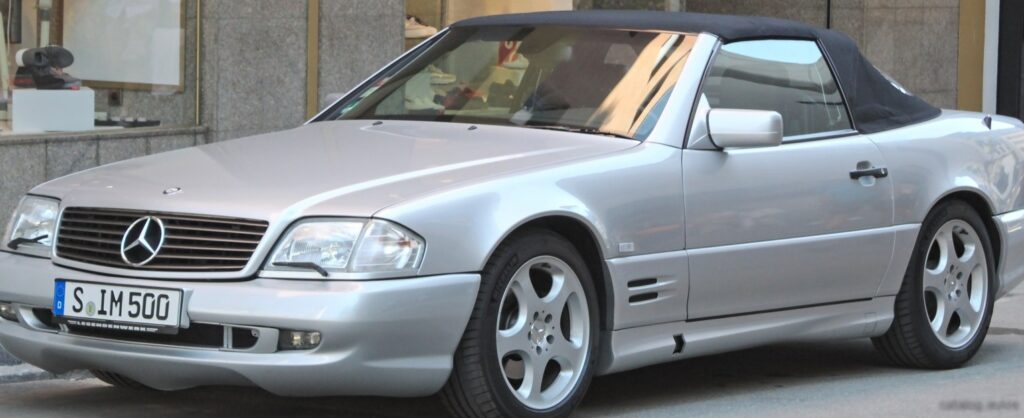
The Mercedes-Benz SL (R129) underwent a significant facelift in 1998, introducing updated styling, improved safety features, and revised engine options. Among these, the SL 320 V6 with a 3.2-liter engine paired to an automatic transmission represented a sweet spot in the lineup, offering a balance of performance and luxury. Produced from June 1998 to July 2001, this variant aimed to provide a more accessible entry point into the R129 SL experience compared to the higher-performance SL 500 and SL 600 models. It was positioned as a comfortable grand tourer, prioritizing refinement over outright speed.
SL 320 V6: Powertrain & Engine Architecture
The heart of the SL 320 is the M112.943 V6 engine, a 3.2-liter (3199 cc / 195.21 cu. in.) naturally aspirated powerplant. This engine featured a 60-degree V-angle, three valves per cylinder (two intake, one exhaust), and a single overhead camshaft (SOHC) design. The M112 engine family was a significant departure for Mercedes-Benz, representing their first all-new V6 engine in decades. It utilized a multi-port fuel injection system, delivering fuel directly into the intake ports. The engine produced 224 horsepower (hp) at 5600 rpm and 315 Newton-meters (232.33 lb-ft) of torque between 3000 and 4800 rpm. The compression ratio was set at 10:1.
The engine was mated to a 5-speed automatic transmission, a robust unit designed to handle the V6’s torque output. This transmission was electronically controlled, offering smooth shifts and adaptive shift patterns. While not as sporty as the available manual transmission in some other SL variants, the automatic prioritized comfort and ease of use, aligning with the SL 320’s grand touring character. The drivetrain configuration was rear-wheel drive, typical for the SL series.
Engine Specifications
Key engine specifications include a cylinder bore of 89.9 mm (3.54 in.) and a piston stroke of 84 mm (3.31 in.). Engine oil capacity was 8 liters (8.45 US qt / 7.04 UK qt), and the recommended coolant capacity was 11.8 liters (12.47 US qt / 10.38 UK qt). The engine’s longitudinal front-engine layout contributed to the car’s balanced handling characteristics.
Driving Characteristics
The SL 320 Automatic offered a refined and comfortable driving experience. Acceleration from 0 to 100 km/h (0-62 mph) took approximately 8.4 seconds, while 0-60 mph was calculated at 8 seconds. Top speed was electronically limited to 238 km/h (147.89 mph). Compared to the more powerful SL 500 and SL 600, the SL 320 felt less urgent in its acceleration. However, the V6 provided ample torque for relaxed cruising and effortless overtaking. The automatic transmission, while smooth, wasn’t particularly quick to downshift, and lacked the responsiveness of a manual gearbox. The gear ratios were optimized for fuel efficiency and comfortable highway driving rather than aggressive performance. The weight-to-power ratio of 7.8 kg/hp and weight-to-torque ratio of 5.6 kg/Nm indicated a reasonable balance between power and weight, though not as impressive as the higher-performance models.
Equipment & Trim Levels
The SL 320 came standard with a generous array of features, reflecting its luxury positioning. Standard equipment typically included leather upholstery, automatic climate control, power-adjustable seats, a premium sound system, and alloy wheels. The interior dashboard configuration was consistent across the R129 facelift models, featuring a clean and elegant design. Optional extras included features like a Bose sound system, heated seats, a sunroof, and various wood trim options. The SL 320 was often specified with the Sport package, which added features like sport seats, a sport suspension, and unique alloy wheel designs. The exterior paint options were extensive, allowing buyers to personalize their vehicles.
Chassis & Braking
The R129 SL chassis was renowned for its rigidity and refinement. The SL 320 utilized a coil spring and wishbone suspension setup at the front, with a transverse stabilizer to reduce body roll. The rear suspension was an independent multi-link design, also incorporating a transverse stabilizer and coil springs. This suspension setup provided a comfortable ride while maintaining good handling characteristics. The braking system consisted of ventilated discs at the front and solid discs at the rear. Anti-lock braking system (ABS) was standard, enhancing safety and control. The steering system was a cone worm with recirculation balls, providing a precise and weighted feel. The SL 320 typically rode on 245/45 R 17 W tires mounted on 8.25 J x 17 H 2 alloy wheels.
Market Reception & Comparison
The SL 320 V6 Automatic was generally well-received by automotive critics. It was praised for its comfortable ride, refined engine, and luxurious interior. However, some reviewers noted that the V6 engine lacked the punch of the larger V8 engines available in other SL models. Fuel economy was a mixed bag, with combined consumption figures around 11.5 l/100 km (20.5 US mpg / 24.6 UK mpg). CO2 emissions were rated at 274 g/km, placing it in a relatively high emissions bracket. Compared to the SL 500, the SL 320 offered better fuel economy but less performance. Compared to the SL 280 (a smaller inline-6 model), the SL 320 provided a significant power upgrade and a more luxurious experience. The SL 320’s target audience was buyers who prioritized comfort and refinement over outright speed, and who appreciated the prestige of the SL brand.
Technical Specifications
| Brand | Mercedes-Benz |
| Model | SL |
| Generation | SL (R129, facelift 1998) |
| Type (Engine) | SL 320 V6 (224 Hp) Automatic |
| Start of production | June, 1998 |
| End of production | July, 2001 |
| Powertrain Architecture | Internal Combustion engine |
| Body type | Roadster |
| Seats | 2 |
| Doors | 2 |
| Fuel consumption (economy) – urban (NEDC) | 16.3 l/100 km (14.4 US mpg / 17.3 UK mpg) |
| Fuel consumption (economy) – extra urban (NEDC) | 8.8 l/100 km (26.7 US mpg / 32.1 UK mpg) |
| Fuel consumption (economy) – combined (NEDC) | 11.5 l/100 km (20.5 US mpg / 24.6 UK mpg) |
| CO2 emissions (NEDC) | 274 g/km |
| Fuel Type | Petrol (Gasoline) |
| Acceleration 0 – 100 km/h | 8.4 sec |
| Acceleration 0 – 62 mph | 8.4 sec |
| Acceleration 0 – 60 mph | 8 sec (Calculated) |
| Maximum speed | 238 km/h (147.89 mph) |
| Emission standard | Euro 3 |
| Weight-to-power ratio | 7.8 kg/Hp |
| Weight-to-torque ratio | 5.6 kg/Nm |
| Power | 224 Hp @ 5600 rpm |
| Torque | 315 Nm @ 3000-4800 rpm (232.33 lb.-ft.) |
| Engine layout | Front, Longitudinal |
| Engine Model/Code | M 112.943 |
| Engine displacement | 3199 cm3 (195.21 cu. in.) |
| Number of cylinders | 6 |
| Engine configuration | V-engine |
| Cylinder Bore | 89.9 mm (3.54 in.) |
| Piston Stroke | 84 mm (3.31 in.) |
| Compression ratio | 10:1 |
| Number of valves per cylinder | 3 |
| Fuel injection system | Multi-port manifold injection |
| Engine aspiration | Naturally aspirated engine |
| Valvetrain | SOHC |
| Engine oil capacity | 8 l (8.45 US qt / 7.04 UK qt) |
| Coolant | 11.8 l (12.47 US qt / 10.38 UK qt) |
| Kerb Weight | 1755 kg (3869.11 lbs.) |
| Max. weight | 2130 kg (4695.85 lbs.) |
| Max load | 375 kg (826.73 lbs.) |
| Trunk (boot) space – minimum | 265 l (9.36 cu. ft.) |
| Fuel tank capacity | 80 l (21.13 US gal / 17.6 UK gal) |
| Length | 4499 mm (177.13 in.) |
| Width | 1812 mm (71.34 in.) |
| Height | 1300 mm (51.18 in.) |
| Wheelbase | 2515 mm (99.02 in.) |
Legacy
The M112 engine family, including the 3.2-liter variant found in the SL 320, proved to be remarkably reliable. While maintenance costs for a Mercedes-Benz are generally higher than for more mainstream brands, the M112 is not known for any widespread or catastrophic failures. The automatic transmission, when properly maintained, is also considered durable. Today, the R129 SL 320 represents a relatively affordable entry point into classic Mercedes-Benz ownership. Well-maintained examples are sought after by enthusiasts who appreciate the car’s combination of luxury, style, and reliability. However, potential buyers should be aware of the age-related issues common to all R129 SLs, such as hydraulic system leaks, wear and tear on the soft top, and potential electrical gremlins. The SL 320 remains a desirable and rewarding classic roadster, offering a taste of Mercedes-Benz luxury at a reasonable price.