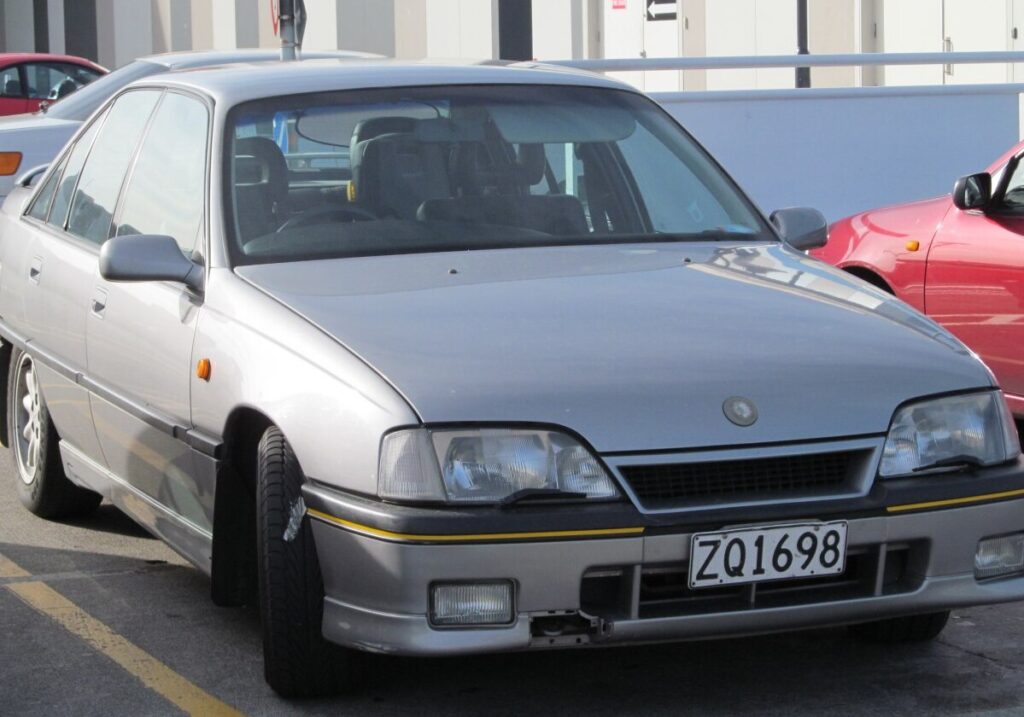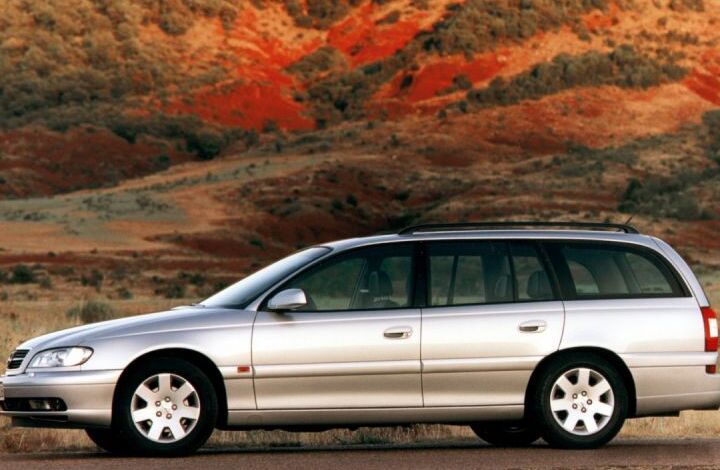
The Opel Omega B Caravan (facelift, 1999) 2.2i Automatic represents a refined iteration of Opel’s flagship executive car, positioned as a comfortable and practical choice within the Omega B range. Produced from October 1999 to 2000, this variant combined a 2.2-liter inline-four engine with a four-speed automatic transmission, offering a balance between performance and convenience. It sat in the mid-range of the Omega B lineup, offering more power than the base 1.8L models but remaining more accessible than the higher-performance V6 options. The Omega B itself was built on the GM Epsilon platform (internally designated 1HX0/A3), sharing components with other General Motors vehicles of the era, including the Saab 9-5 and the Vectra.
Powertrain & Engine Architecture
The heart of the 1999-2000 Opel Omega B Caravan 2.2i Automatic is the Y22XE engine, a 2.2-liter (2198 cm3 or 134.13 cu. in.) inline-four cylinder gasoline engine. This engine is a naturally aspirated design, producing 144 horsepower (Hp) at 5400 rpm and 205 Newton-meters (151.2 lb.-ft.) of torque at 4000 rpm. The engine features a compression ratio of 10.5:1 and utilizes a dual overhead camshaft (DOHC) valvetrain with four valves per cylinder. Fuel delivery is managed by a multi-port manifold injection system, providing precise fuel atomization for efficient combustion.
The Y22XE engine is known for its relative durability and straightforward design. It’s a non-interference engine, meaning that even if the timing belt breaks, the valves and pistons are unlikely to collide, preventing catastrophic engine damage. However, regular timing belt replacement is still crucial for preventative maintenance. The engine’s longitudinal front-engine layout contributes to balanced weight distribution, enhancing handling characteristics.
Paired with the Y22XE engine is a four-speed automatic transmission. While not the most modern transmission by today’s standards, it was a reliable unit designed to provide smooth and comfortable gear changes. The transmission’s gear ratios are tuned for a balance of acceleration and fuel efficiency, prioritizing comfortable cruising over outright performance. Specific gear ratios are not widely published but are geared towards maximizing the engine’s torque output for everyday driving conditions.
Engine Oil and Coolant
The Y22XE engine requires 4.5 liters (4.76 US qt | 3.96 UK qt) of engine oil, with a specific oil specification recommended by Opel. The cooling system holds 9.4 liters (9.93 US qt | 8.27 UK qt) of coolant, essential for maintaining optimal engine operating temperatures.
Driving Characteristics
The Omega B Caravan 2.2i Automatic delivers a comfortable and composed driving experience. Acceleration from 0 to 100 km/h (0-62 mph) takes approximately 12.5 seconds, while 0-60 mph is achieved in around 11.9 seconds. Top speed is rated at 198 km/h (123.03 mph). Compared to the manual transmission versions of the 2.2i, the automatic suffers a slight performance penalty due to the inherent efficiency losses within the torque converter and transmission itself. However, the automatic transmission provides a more relaxed driving experience, particularly in urban traffic.
The power delivery is linear and predictable, with the engine providing adequate torque for overtaking maneuvers and maintaining highway speeds. The four-speed automatic transmission, while not offering the responsiveness of a modern six or eight-speed unit, shifts smoothly and contributes to a refined driving experience. The rear-wheel-drive configuration provides a balanced feel, although it doesn’t offer the all-weather traction of all-wheel-drive systems found in some competitors.
Equipment & Trim Levels
The 1999-2000 Opel Omega B Caravan 2.2i Automatic typically came equipped with a respectable level of standard features. These included power windows, central locking, power steering, and an anti-lock braking system (ABS). Interior upholstery was typically cloth, although leather options were available as upgrades. The dashboard layout was functional and ergonomically designed, with clear instrumentation and intuitive controls.
Optional extras included features such as a sunroof, upgraded audio systems, climate control, and heated seats. The Caravan body style (estate/station wagon) itself offered a significant advantage in terms of cargo capacity, making it a practical choice for families and those requiring ample space for luggage or equipment. The rear seats could be folded down to further expand the cargo area.
Chassis & Braking
The Omega B Caravan 2.2i Automatic utilizes a coil spring suspension system at both the front and rear, providing a comfortable ride quality. The front suspension features independent coil springs, while the rear suspension employs a semi-independent coil spring setup. The car’s kerb weight of 1595 kg (3516.37 lbs) influences the suspension tuning, prioritizing comfort over sporty handling.
Braking duties are handled by disc brakes on all four wheels, providing adequate stopping power. The ABS system helps to prevent wheel lockup during hard braking, enhancing stability and control. The steering system is a hydraulic power steering setup, offering a light and responsive feel. The vehicle is equipped with 195/65 R15 tires mounted on 6.5J x 15 inch wheel rims.
Market Reception & Comparison
The Opel Omega B Caravan 2.2i Automatic was generally well-received by automotive critics as a comfortable, practical, and well-equipped family car. It offered a good balance of performance, fuel economy (14.5 l/100 km urban, 7.9 l/100 km extra urban), and affordability. However, some critics noted that the four-speed automatic transmission felt dated compared to the newer automatic transmissions offered by competitors.
Compared to the higher-performance Omega B V6 models, the 2.2i Automatic offered a more economical and accessible option. The V6 models provided significantly more power and a sportier driving experience, but at a higher price point and with increased fuel consumption. Compared to the base 1.8L models, the 2.2i Automatic offered a noticeable improvement in performance and refinement.
Technical Specifications
| Brand | Opel |
| Model | Omega |
| Generation | Omega B Caravan (facelift 1999) |
| Type (Engine) | 2.2i (144 Hp) Automatic |
| Start of production | October, 1999 |
| End of production | 2000 |
| Powertrain Architecture | Internal Combustion engine |
| Body type | Station wagon (estate) |
| Seats | 5 |
| Doors | 5 |
| Fuel consumption (urban) | 14.5 l/100 km (16.2 US mpg, 19.5 UK mpg) |
| Fuel consumption (extra urban) | 7.9 l/100 km (29.8 US mpg, 35.8 UK mpg) |
| Fuel Type | Petrol (Gasoline) |
| Acceleration 0 – 100 km/h | 12.5 sec |
| Acceleration 0 – 62 mph | 12.5 sec |
| Acceleration 0 – 60 mph | 11.9 sec |
| Maximum speed | 198 km/h (123.03 mph) |
| Weight-to-power ratio | 11.1 kg/Hp |
| Power | 144 Hp @ 5400 rpm |
| Torque | 205 Nm @ 4000 rpm (151.2 lb.-ft. @ 4000 rpm) |
| Engine layout | Front, Longitudinal |
| Engine Model/Code | Y22XE |
| Engine displacement | 2198 cm3 (134.13 cu. in.) |
| Number of cylinders | 4 |
| Engine configuration | Inline |
| Compression ratio | 10.5:1 |
| Fuel injection system | Multi-port manifold injection |
| Engine oil capacity | 4.5 l (4.76 US qt | 3.96 UK qt) |
| Coolant capacity | 9.4 l (9.93 US qt | 8.27 UK qt) |
| Kerb Weight | 1595 kg (3516.37 lbs) |
| Max. weight | 2205 kg (4861.19 lbs) |
| Trunk (boot) space – minimum | 540 l (19.07 cu. ft.) |
| Trunk (boot) space – maximum | 1800 l (63.57 cu. ft.) |
| Fuel tank capacity | 75 l (19.81 US gal | 16.5 UK gal) |
| Length | 4898 mm (192.83 in) |
| Width | 1776 mm (69.92 in) |
| Height | 1455 mm (57.28 in) |
| Wheelbase | 2730 mm (107.48 in) |
| Drive wheel | Rear wheel drive |
| Number of gears | 4 |
| Gearbox type | Automatic transmission |
Legacy
The Opel Omega B Caravan 2.2i Automatic, while not a particularly rare or collectible vehicle, remains a reasonably reliable and affordable option in the used car market. The Y22XE engine is known for its durability, and the four-speed automatic transmission, while not the most sophisticated, is generally dependable. Common issues include age-related wear and tear on suspension components, corrosion (particularly in regions with harsh winters), and potential for oil leaks. Regular maintenance, including timely timing belt replacement, is crucial for ensuring long-term reliability. Today, these Omegas are appreciated by enthusiasts for their spaciousness, comfort, and understated elegance, representing a bygone era of large, practical European family cars.