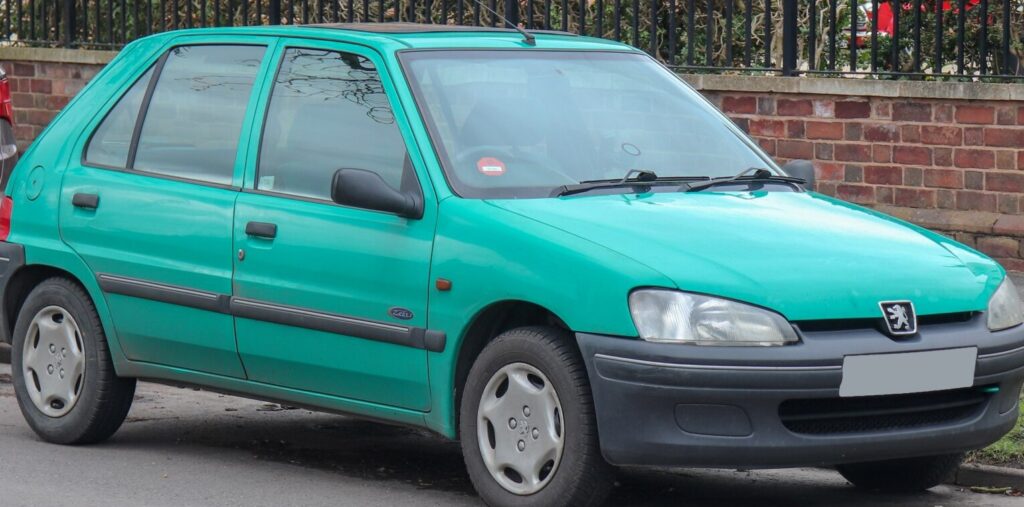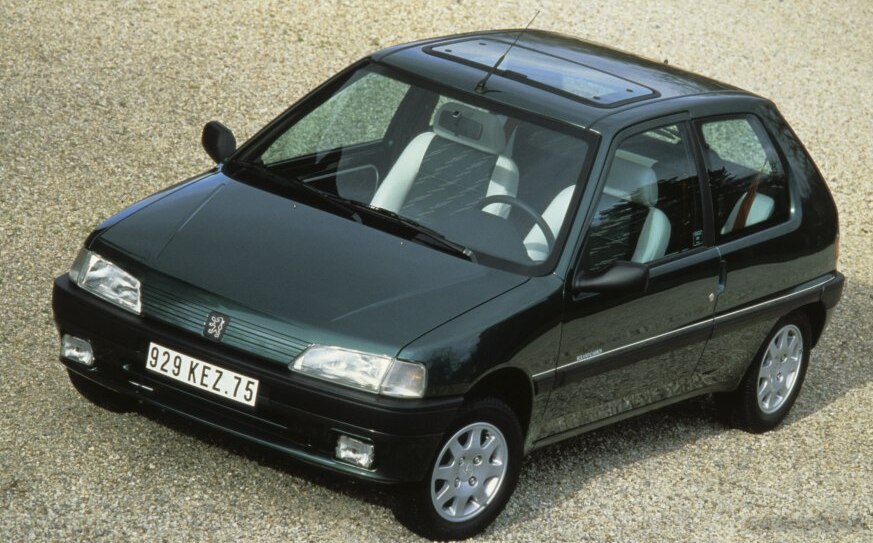
The Peugeot 106 I (1A/C) 1.0, producing 45 horsepower, was an entry-level variant of the popular Peugeot 106 supermini, manufactured between 1991 and 1996. Positioned as the most affordable model in the 106 range, it served as a practical and economical city car, appealing to first-time buyers, students, and those seeking low running costs. The 106 I series, based on the shared Peugeot-Citroën platform, aimed to provide a modern and efficient alternative in the competitive small car segment. This particular 1.0-liter version represented the base engine option, offering a balance between affordability and usability.
Powertrain & Engine Architecture
The heart of the Peugeot 106 I 1.0 was the CDY (and sometimes TU9M) engine code, a 954cc inline-four cylinder petrol engine. This engine featured a relatively simple design, utilizing a single overhead camshaft (SOHC) and two valves per cylinder. Crucially, this base model was equipped with a carburetor fuel injection system – a cost-saving measure compared to the multi-point fuel injection found in higher-spec 106 models. The carburetor, while less efficient than modern fuel injection, contributed to the car’s lower purchase price and relative simplicity for maintenance. The engine produced a maximum power output of 45 hp at 5200 rpm and 73 Nm (53.84 lb-ft) of torque at 2400 rpm. The engine was transversely mounted at the front of the vehicle, driving the front wheels.
Transmission
The 106 1.0 was exclusively offered with a five-speed manual transmission. An automatic transmission was *not* available for this specific engine/trim combination. The gearbox was designed for durability and ease of use, with gear ratios optimized for maximizing fuel economy and providing adequate acceleration in urban environments. The gear ratios were relatively long, prioritizing fuel efficiency over outright performance.
Driving Characteristics
The driving experience in the Peugeot 106 I 1.0 was characterized by its light weight and nimble handling. However, the 45 hp output and relatively low torque meant that performance was modest. Acceleration from 0 to 62 mph (0-100 km/h) took approximately 19.2 seconds, and the top speed was around 93 mph (150 km/h). In real-world driving, the engine felt strained when attempting to accelerate quickly, particularly when carrying passengers or luggage. The long gearing contributed to a relaxed cruising experience on motorways, but overtaking required careful planning. Compared to the more powerful 1.4 and 1.6-liter versions of the 106, the 1.0 felt significantly slower. The manual transmission, while not particularly sporty, allowed drivers to make the most of the available power.
Equipment & Trim Levels
The 106 I 1.0 was deliberately stripped down to offer the lowest possible price point. Standard equipment was basic, typically including cloth upholstery, a simple dashboard layout, and manual windows and door locks. Safety features were also minimal, with only a driver’s airbag being standard in later years of production. Optional extras were limited, but could include power steering, central locking, and a basic radio/cassette player. Interior trim was typically a durable, but unremarkable, grey or blue cloth. The dashboard was constructed from hard plastics, reflecting the car’s budget-oriented nature. The 3 or 5-door body style was available, with the 5-door version offering increased practicality.
Chassis & Braking
The Peugeot 106 I 1.0 featured a simple but effective chassis design. The front suspension utilized independent wishbones, providing a reasonable level of ride comfort and handling. The rear suspension employed a torsion beam setup, which was cost-effective and space-efficient. Braking was provided by disc brakes on the front wheels and drum brakes on the rear wheels. The braking system was adequate for the car’s performance, but lacked the stopping power of more sophisticated setups found on higher-spec models. The steering was a rack and pinion system, offering light and precise control. The 106 1.0 rode on 145/70 R13 tires, which contributed to its comfortable ride quality.
Market Reception & Comparison
The Peugeot 106 I 1.0 was generally well-received as an affordable and reliable city car. Critics praised its nimble handling, low running costs, and practicality. However, the engine’s lack of power was a common criticism. Compared to rivals such as the Renault Clio, Fiat Punto, and Volkswagen Polo, the 106 1.0 offered a competitive price point and a slightly more engaging driving experience. Fuel economy was a strong point, averaging around 37.3 US mpg (6.3 l/100km). Reliability was generally good, although the carburetor-equipped engine required more frequent maintenance than fuel-injected alternatives. The 1.4-liter and 1.6-liter 106 models offered significantly improved performance, but at a higher price. The 1.9 TDI diesel version provided excellent fuel economy but lacked the refinement of the petrol engines.
Technical Specifications
| Brand | Peugeot |
| Model | 106 |
| Generation | 106 I (1A/C) |
| Type (Engine) | 1.0 (45 Hp) |
| Start of production | 1991 |
| End of production | 1996 |
| Powertrain Architecture | Internal Combustion Engine |
| Body type | Hatchback |
| Seats | 5 |
| Doors | 3-5 |
| Fuel consumption (combined) | 6.3 l/100 km (37.3 US mpg, 44.8 UK mpg, 15.9 km/l) |
| Fuel Type | Petrol (Gasoline) |
| Acceleration 0 – 100 km/h | 19.2 sec |
| Acceleration 0 – 62 mph | 19.2 sec |
| Acceleration 0 – 60 mph | 18.2 sec |
| Maximum speed | 150 km/h (93.21 mph) |
| Weight-to-power ratio | 16.9 kg/Hp |
| Weight-to-torque ratio | 10.4 kg/Nm |
| Power | 45 Hp @ 5200 rpm |
| Torque | 73 Nm @ 2400 rpm (53.84 lb.-ft. @ 2400 rpm) |
| Engine layout | Front, Transverse |
| Engine Model/Code | CDY TU9M |
| Engine displacement | 954 cm3 (58.22 cu. in.) |
| Number of cylinders | 4 |
| Engine configuration | Inline |
| Cylinder Bore | 70 mm (2.76 in.) |
| Piston Stroke | 62 mm (2.44 in.) |
| Compression ratio | 9.4:1 |
| Number of valves per cylinder | 2 |
| Fuel injection system | Carburettor |
| Engine oil capacity | 3.2 l (3.38 US qt | 2.82 UK qt) |
| Coolant capacity | 6 l (6.34 US qt | 5.28 UK qt) |
| Kerb Weight | 760 kg (1675.51 lbs.) |
| Max. weight | 1200 kg (2645.55 lbs.) |
| Max load | 440 kg (970.03 lbs.) |
| Trunk (boot) space – minimum | 215 l (7.59 cu. ft.) |
| Trunk (boot) space – maximum | 564 l (19.92 cu. ft.) |
| Fuel tank capacity | 45 l (11.89 US gal | 9.9 UK gal) |
| Length | 3564 mm (140.31 in.) |
| Width | 1590 mm (62.6 in.) |
| Height | 1369 mm (53.9 in.) |
| Wheelbase | 2385 mm (93.9 in.) |
| Front track | 1380 mm (54.33 in.) |
| Rear track | 1300 mm (51.18 in.) |
| Drivetrain | Front wheel drive |
| Number of gears | 5 |
| Gearbox type | Manual |
Legacy
The Peugeot 106 I 1.0, while not a performance icon, remains a fondly remembered example of affordable and practical motoring from the early 1990s. The CDY engine, while simple, proved to be relatively durable, and many examples are still on the road today. However, the carburetor requires regular maintenance to ensure optimal performance. On the used car market, these 106s are typically very affordable, making them attractive to those seeking a cheap and cheerful runaround. Their simplicity also makes them appealing to enthusiasts looking for a straightforward project car. The 106 I 1.0 represents a significant chapter in Peugeot’s history, demonstrating their ability to produce a well-engineered and reliable small car at a competitive price.