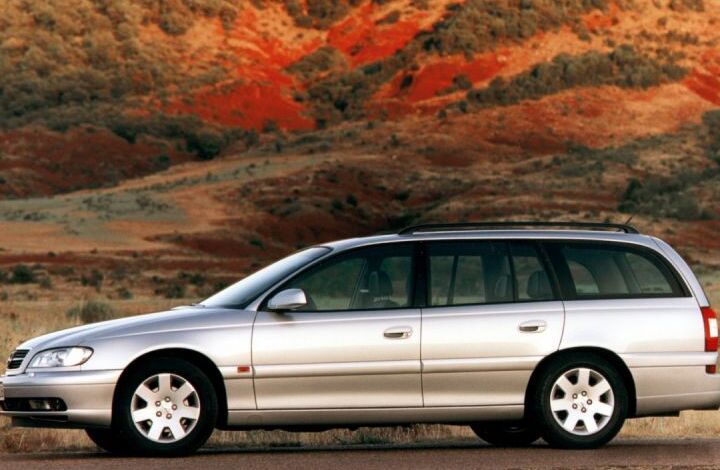
The Opel Omega B Caravan (facelift, 1999) 2.5 TD represents a refined iteration of Opel’s flagship executive wagon, produced between October 1999 and November 2000. This variant, powered by a 2.5-liter turbocharged diesel engine producing 131 horsepower, occupied a middle ground within the Omega B range, offering a balance between performance, fuel economy, and practicality. It was positioned as a more economical alternative to the gasoline-powered models, while providing more power and refinement than the lower-specification diesel options. The Omega B series, built on the GM Epsilon platform (internally designated 1HX0/A3), aimed to compete with established European executive cars like the Ford Mondeo, Volkswagen Passat, and BMW 5 Series.
Powertrain & Engine Architecture
The heart of the 1999 Opel Omega B Caravan 2.5 TD is the X25DT engine, a 2.5-liter inline-six cylinder diesel. This engine utilizes a precombustion chamber injection system, a technology common in European diesels of the era. This system involves injecting fuel into a small precombustion chamber within the cylinder head, where it ignites and then ignites the main fuel charge in the cylinder. This design promotes more complete combustion and reduces engine noise compared to direct injection systems of the time. The X25DT features a single overhead camshaft (SOHC) valvetrain operating two valves per cylinder. A turbocharger with an intercooler is employed to increase power output and improve torque delivery. The engine displaces 2497 cm³ (152.38 cubic inches) and boasts a compression ratio of 22:1. Bore and stroke dimensions are 80mm (3.15 inches) and 82.8mm (3.26 inches) respectively. The engine requires 6.5 liters (6.87 US quarts) of engine oil, specified to meet Opel’s standards for diesel engines.
Transmission
The 2.5 TD model was primarily equipped with a 5-speed manual transmission. While an automatic transmission was offered on some Omega B models, it was less common with the 2.5 TD engine due to the torque characteristics of the diesel. The manual gearbox is designed to handle the engine’s 250 Nm (184.39 lb-ft) of torque at 2200 rpm. The transmission’s gear ratios are tuned for a balance of acceleration and fuel efficiency, prioritizing mid-range pull for comfortable highway cruising and overtaking.
Driving Characteristics
The Omega B Caravan 2.5 TD delivers a driving experience focused on comfort and practicality. Acceleration from 0 to 100 km/h (0-62 mph) takes approximately 13 seconds, and 0 to 60 mph is achieved in around 12.4 seconds. While not a performance-oriented vehicle, the turbocharger provides a noticeable boost in power, making overtaking at highway speeds relatively effortless. The engine’s torque curve is relatively flat, providing good pulling power across a wide range of engine speeds. Compared to the gasoline-powered Omega B variants, the 2.5 TD offers superior fuel economy, but lacks the responsiveness and higher top speed of the petrol engines. Compared to the lower-powered 2.0-liter diesel, the 2.5 TD provides a significant increase in performance and refinement. The rear-wheel-drive configuration contributes to balanced handling, although it can be less forgiving in slippery conditions compared to front-wheel-drive alternatives.
Equipment & Trim Levels
The 1999 Opel Omega B Caravan 2.5 TD typically came with a respectable level of standard equipment, reflecting its position as an executive car. Standard features generally included central locking, electric windows, power steering, ABS (Anti-lock Braking System), and a basic audio system. Interior upholstery was typically cloth, although leather options were available as upgrades. The dashboard layout is functional and ergonomically designed, with clear instrumentation and easy-to-use controls. Optional extras included a sunroof, upgraded audio systems, climate control, heated seats, and alloy wheels. Trim levels varied depending on the market, but generally offered progressively more luxurious features and cosmetic enhancements.
Chassis & Braking
The Omega B Caravan features a coil spring suspension system at both the front and rear, designed to provide a comfortable ride. The front suspension utilizes independent coil springs, while the rear suspension employs a semi-independent coil spring setup. The car’s kerb weight of 1665 kg (3670.7 lbs) influences the suspension tuning, prioritizing ride comfort over sporty handling. The braking system consists of ventilated discs at the front and solid discs at the rear. The ABS system helps to maintain steering control during emergency braking situations. Steering is provided by a hydraulic power steering system, offering a light and responsive feel. The vehicle is equipped with 205/65 R15 tires mounted on 6.5J x 15 inch wheel rims.
Market Reception & Comparison
The Opel Omega B Caravan 2.5 TD was generally well-received by automotive critics as a practical and comfortable family car. It was praised for its spacious interior, large cargo capacity, and fuel-efficient diesel engine. However, some critics noted that the styling was somewhat conservative compared to its rivals. In terms of fuel economy, the 2.5 TD offered a significant advantage over the gasoline-powered Omega B models, achieving approximately 11 l/100 km (21.4 US mpg) in urban driving and 6.4 l/100 km (36.8 US mpg) on the extra-urban cycle. Reliability was generally considered good, although diesel engines of this era could be susceptible to issues with the fuel injection system and turbocharger. Compared to other trims in the Omega B lineup, the 2.5 TD offered a compelling balance of performance and economy, making it a popular choice for drivers who frequently cover long distances.
Technical Specifications
| Brand | Opel |
| Model | Omega |
| Generation | Omega B Caravan (facelift 1999) |
| Type (Engine) | 2.5 TD (131 Hp) |
| Start of production | October, 1999 |
| End of production | November, 2000 |
| Powertrain Architecture | Internal Combustion engine |
| Body type | Station wagon (estate) |
| Seats | 5 |
| Doors | 5 |
| Fuel consumption (urban) | 11 l/100 km (21.4 US mpg) |
| Fuel consumption (extra urban) | 6.4 l/100 km (36.8 US mpg) |
| Fuel Type | Diesel |
| Acceleration 0 – 100 km/h | 13 sec |
| Acceleration 0 – 62 mph | 13 sec |
| Acceleration 0 – 60 mph | 12.4 sec |
| Maximum speed | 195 km/h (121.17 mph) |
| Power | 131 Hp @ 4500 rpm |
| Torque | 250 Nm @ 2200 rpm (184.39 lb.-ft. @ 2200 rpm) |
| Engine layout | Front, Longitudinal |
| Engine Model/Code | X25DT |
| Engine displacement | 2497 cm3 (152.38 cu. in.) |
| Number of cylinders | 6 |
| Engine configuration | Inline |
| Cylinder Bore | 80 mm (3.15 in.) |
| Piston Stroke | 82.8 mm (3.26 in.) |
| Compression ratio | 22:1 |
| Number of valves per cylinder | 2 |
| Fuel injection system | Precombustion chamber injection |
| Engine aspiration | Turbocharger, Intercooler |
| Valvetrain | DOHC |
| Engine oil capacity | 6.5 l (6.87 US qt | 5.72 UK qt) |
| Coolant | 10.2 l (10.78 US qt | 8.97 UK qt) |
| Kerb Weight | 1665 kg (3670.7 lbs.) |
| Max. weight | 2280 kg (5026.54 lbs.) |
| Max load | 615 kg (1355.84 lbs.) |
| Trunk (boot) space – minimum | 540 l (19.07 cu. ft.) |
| Trunk (boot) space – maximum | 1800 l (63.57 cu. ft.) |
| Fuel tank capacity | 75 l (19.81 US gal | 16.5 UK gal) |
| Length | 4898 mm (192.83 in.) |
| Width | 1776 mm (69.92 in.) |
| Height | 1540 mm (60.63 in.) |
| Wheelbase | 2730 mm (107.48 in.) |
| Front track | 1510 mm (59.45 in.) |
| Rear (Back) track | 1530 mm (60.24 in.) |
| Drivetrain Architecture | Rear wheel drive |
| Number of gears and type of gearbox | 5 gears, manual transmission |
Legacy
The Opel Omega B Caravan 2.5 TD, while no longer in production, maintains a following among enthusiasts who appreciate its practicality, comfort, and relatively robust diesel engine. The X25DT engine, when properly maintained, is known for its longevity and reliability. However, age-related issues such as wear and tear on the fuel injection system and turbocharger are common. In the used car market, these Omegas are typically available at affordable prices, making them an attractive option for those seeking a spacious and economical estate car. Parts availability can be a concern, but many components are still available through Opel dealerships and aftermarket suppliers. The Omega B Caravan 2.5 TD represents a final chapter in Opel’s long history of producing large, comfortable, and capable family cars.