
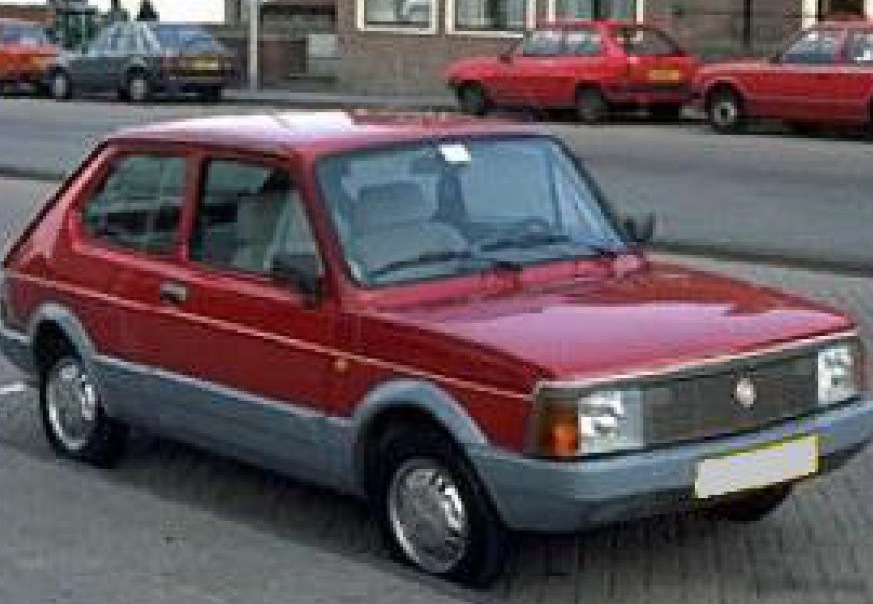
The Seat Fura (025A) 0.9, produced between March 1984 and June 1986, was the entry-level variant of the Fura hatchback, a Spanish-built vehicle based on the Fiat 127. Positioned as the most affordable option in the Fura range, it aimed to provide basic, economical transportation for the Spanish market. The Fura itself was a significant model for SEAT, representing a modernization of their product line and a move towards more contemporary automotive design. The 0.9-liter engine and four-speed manual transmission combination defined this particular trim level, making it a popular choice for budget-conscious buyers.
The 0.9-Liter Fura: A Focus on Economy
The 0.9-liter Fura represented SEAT’s commitment to offering a practical and affordable vehicle. It was designed to appeal to a broad customer base, particularly those seeking a small, fuel-efficient car for urban driving. While not offering the performance of higher-spec Fura models, the 0.9-liter version provided reliable transportation and served as a gateway into the SEAT brand. Its simplicity and low running costs were key selling points in a market increasingly sensitive to fuel prices.
Powertrain & Engine Architecture
At the heart of the Fura 0.9 lay a 903 cc (55.1 cu. in.) inline-four cylinder engine, designated internally by SEAT as a variation within their early engine family. This engine produced 40 horsepower (hp) at 5800 rpm and 63 Nm (46.47 lb.-ft.) of torque at 3000 rpm. The engine featured a relatively low 7.8:1 compression ratio and utilized an overhead valve (OHV) valvetrain with two valves per cylinder. Fuel delivery was managed by a carburetor, a common feature for vehicles of this era and price point. The engine was transversely mounted at the front of the vehicle, driving the front wheels.
The Fura 0.9 was exclusively equipped with a four-speed manual transmission. This gearbox was chosen for its simplicity and cost-effectiveness, aligning with the overall budget-focused nature of the vehicle. The gear ratios were optimized for fuel economy and acceptable acceleration in urban environments, rather than outright performance. The transmission was mechanically operated, lacking any form of electronic assistance.
Driving Characteristics
The driving experience in the Fura 0.9 was characterized by its modest performance. Acceleration from 0 to 100 km/h (0-62 mph) took approximately 19.6 seconds, and 0 to 60 mph required around 18.6 seconds. The top speed was limited to 130 km/h (80.78 mph). While these figures were not impressive by contemporary standards, they were adequate for its intended purpose – providing basic transportation. The engine felt strained at higher speeds, and overtaking required careful planning. The four-speed manual transmission demanded frequent shifting to maintain optimal engine speed. The car’s light weight (720 kg / 1587.33 lbs) helped to mitigate the lack of power to some extent.
Compared to other Fura variants, such as those equipped with larger engines, the 0.9-liter model felt significantly slower. The larger engines offered a more relaxed driving experience, particularly on highways and during overtaking maneuvers. However, the 0.9-liter version excelled in fuel economy, making it a more attractive option for drivers primarily concerned with minimizing running costs.
Equipment & Trim Levels
The Fura 0.9 was offered with a very basic level of equipment, reflecting its position as the entry-level model. Standard features typically included cloth upholstery, vinyl floor covering, and basic instrumentation consisting of a speedometer, fuel gauge, and temperature gauge. Power steering, air conditioning, and electric windows were not available, even as optional extras. The interior was functional and durable, prioritizing practicality over luxury. The exterior featured steel wheels, basic bumpers, and minimal chrome trim. The focus was on providing a reliable and affordable vehicle, rather than a feature-rich one.
Chassis & Braking
The Fura 0.9 utilized a relatively simple chassis design. The front suspension consisted of independent McPherson struts, while the rear suspension employed a combination of independent coil springs and a leaf spring setup. This configuration provided a reasonable level of ride comfort, although it was not particularly sophisticated. The braking system featured disc brakes at the front and drum brakes at the rear. The steering was a rack and pinion system, providing adequate precision and feedback. The car’s light weight contributed to its relatively short stopping distances.
Market Reception & Comparison
The Seat Fura 0.9 was generally well-received in the Spanish market as an affordable and economical option. Critics praised its fuel efficiency and reliability, but noted its lack of performance and basic equipment levels. Compared to other small cars available at the time, such as the Renault 5 and the Citroën 2CV, the Fura 0.9 offered a more modern design and a slightly more refined driving experience. However, it lacked the established reputation and widespread availability of its competitors. Fuel consumption was rated at 8.5 l/100 km (27.7 US mpg) in urban conditions and 6.1 l/100 km (38.6 US mpg) on the open road.
Technical Specifications
| Body Type | Hatchback, 3 Doors, 5 Seats |
| Engine Displacement | 903 cm3 / 55.1 cu. in. |
| Engine Configuration | Inline-4 |
| Fuel Type | Petrol (Gasoline) |
| Power Output | 40 hp @ 5800 rpm |
| Torque | 63 Nm @ 3000 rpm / 46.47 lb.-ft. @ 3000 rpm |
| Compression Ratio | 7.8:1 |
| Valvetrain | OHV, 2 valves per cylinder |
| Fuel Injection | Carburetor |
| Transmission | 4-speed Manual |
| Drive Wheels | Front Wheel Drive |
| Kerb Weight | 720 kg / 1587.33 lbs |
| Maximum Weight | 1130 kg / 2491.22 lbs |
| Maximum Speed | 130 km/h / 80.78 mph |
| 0-100 km/h | 19.6 sec |
| Fuel Consumption (Urban) | 8.5 l/100 km / 27.7 US mpg |
| Fuel Consumption (Extra Urban) | 6.1 l/100 km / 38.6 US mpg |
| Fuel Tank Capacity | 30 l / 7.93 US gal |
| Length | 3711 mm / 146.1 in |
| Width | 1536 mm / 60.47 in |
| Height | 1370 mm / 53.94 in |
Legacy
The Seat Fura 0.9, while not a particularly groundbreaking vehicle, played an important role in SEAT’s history. It provided affordable transportation to a wide range of Spanish drivers and helped to establish SEAT as a credible automotive manufacturer. The 0.9-liter engine proved to be relatively reliable, and many examples of the Fura 0.9 remain on the road today, often cherished by enthusiasts for their simplicity and affordability. In the used car market, these vehicles are typically valued for their historical significance and low running costs. While maintenance can be challenging due to the age of the vehicles and the limited availability of parts, the Fura 0.9 remains a popular choice for classic car collectors and those seeking a nostalgic driving experience.
