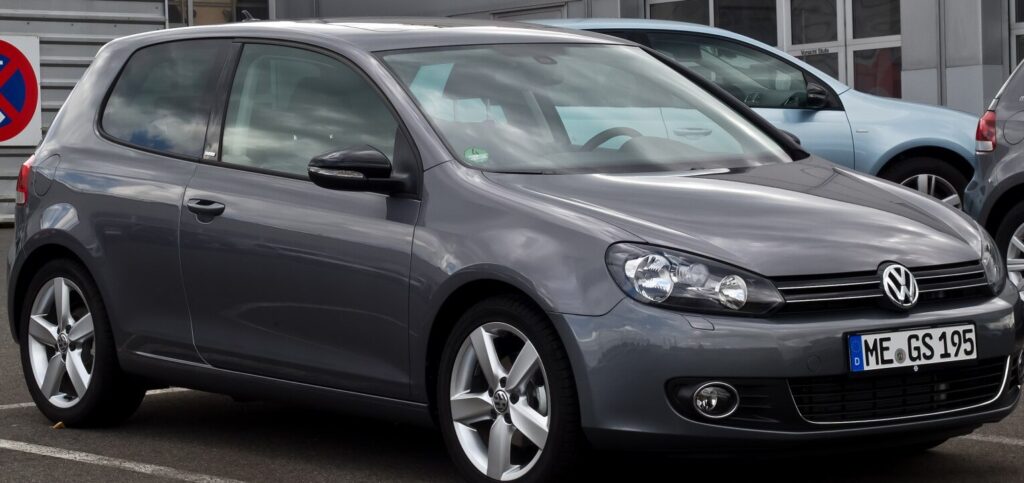
The Volkswagen Golf VI, produced from 2008 to 2012, represented a significant evolution of the iconic Golf lineage. While numerous engine and trim configurations were available, the 3-door 2.0 TDI variant with 140 horsepower occupied a key position in the lineup, appealing to buyers seeking a balance of fuel efficiency, performance, and practicality. This model was part of the Mk6 Golf generation (internal codes 1K1 for the 3-door and 5K1 for the 5-door), built on the A6 platform shared with other Volkswagen Group vehicles like the Scirocco and Audi A3.
The 2.0 TDI (140 hp) in the Golf VI Lineup
The 2.0 TDI 140 hp model was positioned as a mid-range offering within the Golf VI range. It sat above the entry-level 1.6-liter gasoline and diesel engines, and below the more powerful 2.0 TDI 170 hp and the performance-oriented GTI. This positioning aimed to attract drivers who desired more than basic transportation but weren’t necessarily seeking the highest levels of performance or luxury. The 3-door body style further emphasized a sportier, more youthful appeal compared to the more family-oriented 5-door version.
Powertrain & Engine Architecture
The heart of the Golf VI 2.0 TDI was the Volkswagen Group’s common rail diesel engine, specifically the CBAB or CFFB engine code depending on the production year and market. This 1968 cc (120.09 cubic inches) inline-four cylinder engine featured a turbocharger with an intercooler, enhancing both power and efficiency. The engine utilized a 16-valve configuration (four valves per cylinder) and a compression ratio of 18.5:1. The common rail direct injection system, supplied by Bosch, delivered fuel directly into the combustion chamber at extremely high pressure, optimizing combustion and reducing emissions. The engine produced 140 hp (103 kW) at 4000 rpm and a substantial 320 Nm (236.02 lb-ft) of torque at 1750 rpm. This torque output was a key characteristic, providing strong pulling power from low engine speeds.
The engine’s lubrication system required 4 liters (4.23 US quarts / 3.52 UK quarts) of oil meeting Volkswagen’s specified standards. The cooling system held 8 liters (8.45 US quarts / 7.04 UK quarts) of coolant. The engine was transversely mounted in the front of the vehicle, driving the front wheels.
Transmission
The 2.0 TDI 140 hp Golf VI was primarily offered with a 6-speed manual transmission. This gearbox was chosen for its balance of efficiency and driver engagement. The gear ratios were optimized to maximize fuel economy while still providing adequate acceleration. First gear was relatively short for quick take-offs, while fifth and sixth gears were tall, designed for comfortable highway cruising and reduced fuel consumption. While a Direct-Shift Gearbox (DSG) was available as an option, the manual transmission was the more common choice, particularly in markets where diesel vehicles were favored for long-distance driving.
Driving Characteristics
The Golf VI 2.0 TDI 140 hp offered a refined and capable driving experience. The abundant torque available from low rpm meant that the car felt responsive in everyday driving situations, such as overtaking and merging onto highways. While not a sports car, the 2.0 TDI provided brisk acceleration, achieving 0-100 km/h (0-62 mph) in approximately 9.3 seconds. The 6-speed manual transmission allowed drivers to maintain optimal engine speed for efficiency or performance. The suspension, tuned for comfort and handling, provided a good balance between ride quality and body control. Compared to the 1.6 TDI, the 2.0 TDI offered noticeably more power and a more relaxed driving experience, especially when fully loaded or on inclines. Compared to the 2.0 TDI 170 hp, the 140 hp version felt less urgent in its acceleration, but offered a slight improvement in fuel economy.
Equipment & Trim Levels
The standard equipment level of the Golf VI 2.0 TDI 140 hp varied depending on the market. However, common features included air conditioning, power windows, power mirrors, a CD/MP3 stereo system, and ABS brakes. Higher trim levels, such as Trendline, Comfortline, and Highline, added features like alloy wheels, a multi-function steering wheel, cruise control, automatic climate control, and upgraded upholstery. Optional extras included a sunroof, parking sensors, and a navigation system. Interior upholstery typically consisted of cloth seats, with leather options available on higher trims. The dashboard layout was functional and well-designed, with clear instrumentation and intuitive controls.
Chassis & Braking
The Golf VI 2.0 TDI 140 hp utilized an independent suspension system. The front suspension employed a McPherson strut design with coil springs and an anti-roll bar, while the rear suspension featured a multi-link setup, also with a stabilizer bar. This configuration provided a comfortable ride and good handling characteristics. The braking system consisted of ventilated discs on the front wheels and solid discs on the rear wheels. ABS (Anti-lock Braking System) was standard, enhancing braking performance and safety. Electric power steering provided precise and responsive steering feel. The vehicle rode on 205/55 R16 tires mounted on 6.5J x 16 inch alloy or steel wheels.
Market Reception & Comparison
The Golf VI 2.0 TDI 140 hp was generally well-received by automotive critics. It was praised for its fuel efficiency, strong torque, and comfortable ride. Critics noted that the engine provided ample power for everyday driving, and the 6-speed manual transmission was smooth and precise. Fuel economy figures were impressive, with combined cycle consumption averaging around 5.4 l/100 km (43.6 US mpg / 52.3 UK mpg). Compared to the 1.6 TDI, the 2.0 TDI offered a significant performance upgrade with only a slight decrease in fuel economy. Reliability was generally good, although some owners reported issues with the diesel particulate filter (DPF) and turbocharger over the long term. The Golf’s reputation for build quality and durability contributed to its strong resale value.
Technical Specifications
| Brand | Volkswagen |
| Model | Golf |
| Generation | Golf VI (3-door) |
| Engine Type | 2.0 TDI |
| Horsepower | 140 hp @ 4000 rpm |
| Torque | 320 Nm @ 1750 rpm (236.02 lb-ft) |
| Engine Displacement | 1968 cm3 (120.09 cu. in.) |
| Number of Cylinders | 4 |
| Engine Code | CBAB, CFFB |
| Fuel Consumption (Urban) | 7.1 l/100 km (33.1 US mpg) |
| Fuel Consumption (Extra Urban) | 4.5 l/100 km (52.3 US mpg) |
| Fuel Consumption (Combined) | 5.4 l/100 km (43.6 US mpg) |
| Acceleration 0-100 km/h | 9.3 sec |
| Maximum Speed | 203 km/h (126.14 mph) |
| Kerb Weight | 1374 kg (3029.15 lbs) |
| Fuel Tank Capacity | 55 l (14.53 US gal) |
| Transmission | 6-speed manual |
Legacy
The 2.0 TDI engine, in various iterations, proved to be a durable and reliable powerplant. The CBAB and CFFB engine codes used in the Golf VI are generally considered robust, although preventative maintenance, particularly regarding the DPF and turbocharger, is crucial. In the used car market, the Golf VI 2.0 TDI 140 hp remains a popular choice, offering a compelling combination of fuel efficiency, practicality, and driving enjoyment. Its reputation for reliability and relatively low running costs contribute to its continued demand. However, potential buyers should be aware of the potential for DPF issues and ensure that the vehicle has been properly maintained.