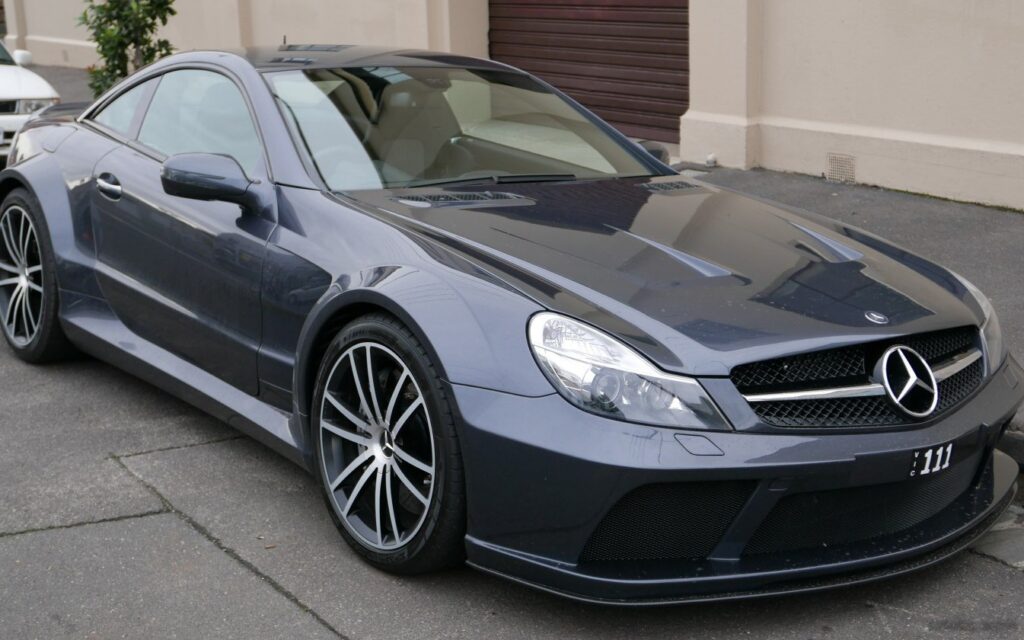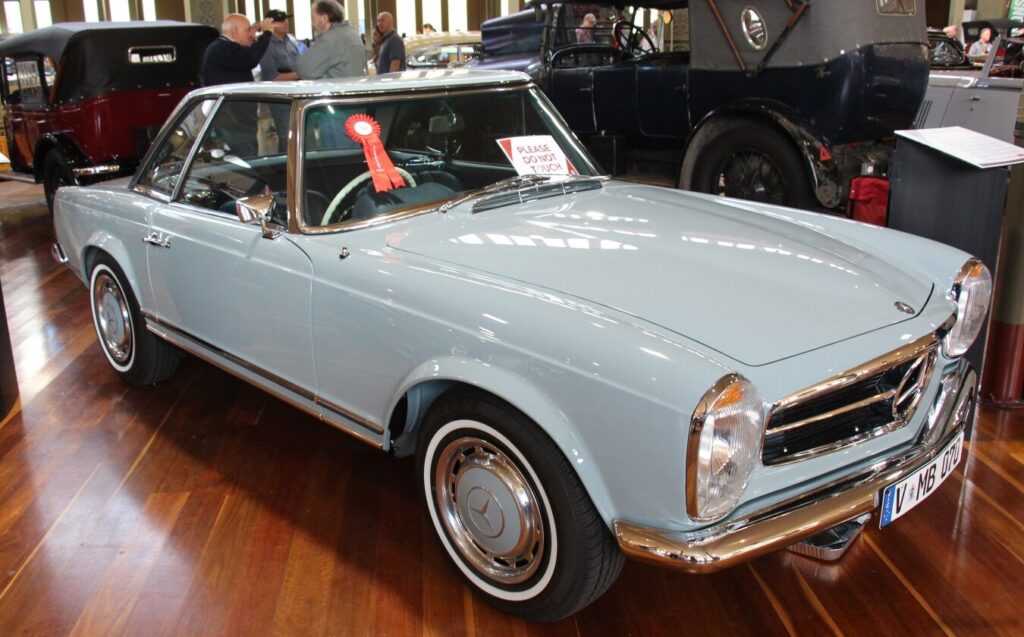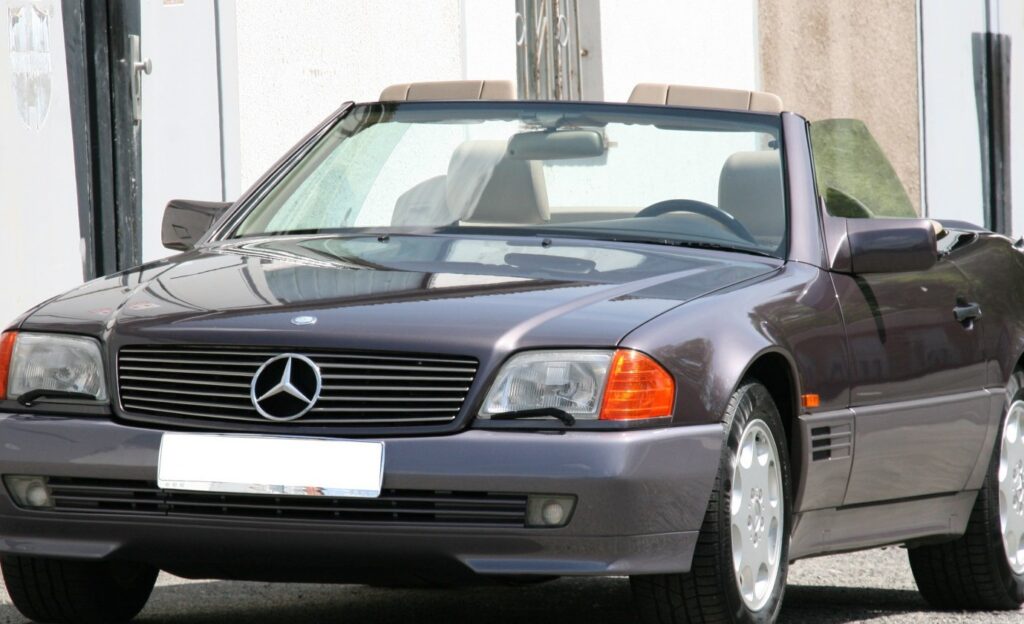
The Mercedes-Benz SL 320 (R129) was a roadster produced between June 1993 and August 1995, representing a key variant within the R129 generation of the iconic SL model. Positioned as a mid-range offering, the SL 320 bridged the gap between the entry-level SL 280 and the higher-performance SL 500 and SL 600 models. It was designed to offer a balance of performance, luxury, and relative affordability within the SL lineup, appealing to buyers seeking a sophisticated open-top experience without the expense of the flagship models. The R129 SL, launched in 1989, was a significant departure from its predecessor, the R107, featuring a more modern design, improved technology, and enhanced safety features.
Powertrain & Engine Architecture
The SL 320 was powered by the M104.991 3.2-liter inline-six cylinder engine. This engine was a cornerstone of Mercedes-Benz’s mid-range offerings during the early to mid-1990s, known for its smoothness and reliability. The M104 featured a cast iron block with an aluminum cylinder head, incorporating a double overhead camshaft (DOHC) valvetrain with four valves per cylinder. Fuel delivery was managed by a multi-port manifold injection system, providing precise fuel metering for optimal combustion. The engine produced 231 horsepower at 5600 rpm and 315 Nm (232.33 lb-ft) of torque at 3750 rpm. The engine’s displacement was 3199 cm³ (195.21 cu. in.) with a compression ratio of 10:1. Bore and stroke measured 89.9 mm (3.54 in) and 84 mm (3.31 in) respectively.
Paired with the M104 engine was a 5-speed automatic transmission. This transmission, a common unit in Mercedes-Benz vehicles of the era, was designed for smooth and comfortable shifting. While not known for particularly sporty performance, it provided a refined driving experience suitable for the SL’s grand touring character. The transmission featured electronic control for optimized shift points based on driving conditions.
Engine Codes & Variations
The M104 engine family encompassed several variations. While the M104.991 specifically designated the 3.2-liter version found in the SL 320, other displacements existed, including 3.0-liter and 3.6-liter variants. The SL 320’s engine was considered a sweet spot in the lineup, offering a noticeable performance increase over the smaller 3.0-liter engine while remaining more accessible than the larger, more expensive 3.6-liter found in the SL 360 (available in some markets).
Driving Characteristics
The SL 320 Automatic offered a comfortable and refined driving experience. Acceleration from 0 to 100 km/h (0-62 mph) took approximately 8.4 seconds, while 0-60 mph was achieved in around 8 seconds. Top speed was electronically limited to 240 km/h (149.13 mph). The automatic transmission, while smooth, did result in some power loss compared to the available manual transmission (though the manual was less common). The gear ratios were optimized for cruising comfort rather than outright acceleration. The engine delivered a broad torque curve, providing adequate power for overtaking maneuvers and effortless highway driving. Compared to the SL 500, the 320 felt less urgent in its acceleration, but offered a more balanced and manageable driving experience for many drivers. The SL 320’s handling was generally considered secure and predictable, though it wasn’t a particularly sporty car. The focus was on providing a comfortable and stable ride.
Equipment & Trim Levels
The SL 320 came standard with a generous array of features, reflecting its positioning as a luxury roadster. Standard equipment included leather upholstery, power-adjustable seats, automatic climate control, a high-quality sound system, and power windows and locks. The interior design was characterized by its elegant simplicity and high-quality materials. Optional extras included a wind deflector, upgraded sound systems, a sunroof, and various cosmetic enhancements. The dashboard layout was typical of Mercedes-Benz at the time, featuring a clean and functional design with analog gauges. Exterior options included a variety of paint colors and wheel designs.
Chassis & Braking
The R129 SL chassis was a robust and well-engineered structure, providing a solid foundation for the car’s handling and ride quality. The front suspension utilized coil springs, wishbones, and a transverse stabilizer bar. The rear suspension employed an independent multi-link setup with coil springs and a transverse stabilizer bar. This suspension configuration provided a comfortable ride while maintaining good handling characteristics. Braking duties were handled by ventilated discs at the front and solid discs at the rear. The SL 320 was equipped with an Anti-lock Braking System (ABS) as standard, enhancing safety and control during emergency braking situations. The steering system was a cone worm with recirculation balls, providing a relatively heavy but precise steering feel. Tire size was typically 225/55 ZR 16, mounted on 8 J x 16 H2 alloy wheels.
Market Reception & Comparison
The SL 320 was generally well-received by automotive critics. It was praised for its smooth engine, comfortable ride, and luxurious interior. However, some critics noted that the automatic transmission could feel somewhat sluggish, and the car wasn’t as sporty as some of its competitors. Fuel economy was reasonable for a vehicle of its class, with combined fuel consumption of 10 l/100 km (23.5 US mpg, 28.2 UK mpg). Compared to the SL 280, the 320 offered a significant performance upgrade. Compared to the SL 500, it provided a similar level of luxury but with slightly less power and a lower price tag. Reliability was generally good, although like all cars of this era, the R129 SL could be prone to certain age-related issues, such as hydraulic system leaks and electrical component failures.
Technical Specifications
| Brand | Mercedes-Benz |
| Model | SL |
| Generation | SL (R129) |
| Type (Engine) | SL 320 (231 Hp) Automatic |
| Start of production | June, 1993 |
| End of production | August, 1995 |
| Powertrain Architecture | Internal Combustion engine |
| Body type | Roadster |
| Seats | 2 |
| Doors | 2 |
| Fuel consumption (urban) | 14.4 l/100 km (16.3 US mpg, 19.6 UK mpg) |
| Fuel consumption (extra urban) | 8.5 l/100 km (27.7 US mpg, 33.2 UK mpg) |
| Fuel consumption (combined) | 10 l/100 km (23.5 US mpg, 28.2 UK mpg) |
| Fuel Type | Petrol (Gasoline) |
| Acceleration 0 – 100 km/h | 8.4 sec |
| Acceleration 0 – 62 mph | 8.4 sec |
| Acceleration 0 – 60 mph | 8 sec |
| Maximum speed | 240 km/h (149.13 mph) |
| Emission standard | Euro 1 |
| Weight-to-power ratio | 7.7 kg/Hp |
| Weight-to-torque ratio | 5.7 kg/Nm |
| Power | 231 Hp @ 5600 rpm |
| Torque | 315 Nm @ 3750 rpm (232.33 lb.-ft. @ 3750 rpm) |
| Engine layout | Front, Longitudinal |
| Engine Model/Code | M 104.991 |
| Engine displacement | 3199 cm3 (195.21 cu. in.) |
| Number of cylinders | 6 |
| Engine configuration | Inline |
| Cylinder Bore | 89.9 mm (3.54 in) |
| Piston Stroke | 84 mm (3.31 in) |
| Compression ratio | 10:1 |
| Number of valves per cylinder | 4 |
| Fuel injection system | Multi-port manifold injection |
| Engine aspiration | Naturally aspirated engine |
| Valvetrain | DOHC |
| Engine oil capacity | 7 l (7.4 US qt | 6.16 UK qt) |
| Coolant | 11.5 l (12.15 US qt | 10.12 UK qt) |
| Kerb Weight | 1780 kg (3924.23 lbs) |
| Max. weight | 2170 kg (4784.03 lbs) |
| Max load | 390 kg (859.8 lbs) |
| Trunk (boot) space – minimum | 265 l (9.36 cu. ft) |
| Fuel tank capacity | 80 l (21.13 US gal | 17.6 UK gal) |
| Length | 4470 mm (175.98 in) |
| Width | 1812 mm (71.34 in) |
| Height | 1303 mm (51.3 in) |
| Wheelbase | 2515 mm (99.02 in) |
| Minimum turning circle | 10.7 m (35.1 ft) |
| Drive wheel | Rear wheel drive |
| Number of gears and type of gearbox | 5 gears, automatic transmission |
Legacy
The SL 320 (R129) remains a desirable classic car today. The M104 engine is known for its durability and relatively straightforward maintenance. While age-related issues are common, parts availability is generally good. The R129 SL’s timeless design and luxurious interior continue to appeal to enthusiasts. The SL 320, in particular, offers a compelling combination of performance, comfort, and value, making it a popular choice in the used car market. Well-maintained examples command respectable prices, reflecting the enduring appeal of the R129 generation and the M104 engine.