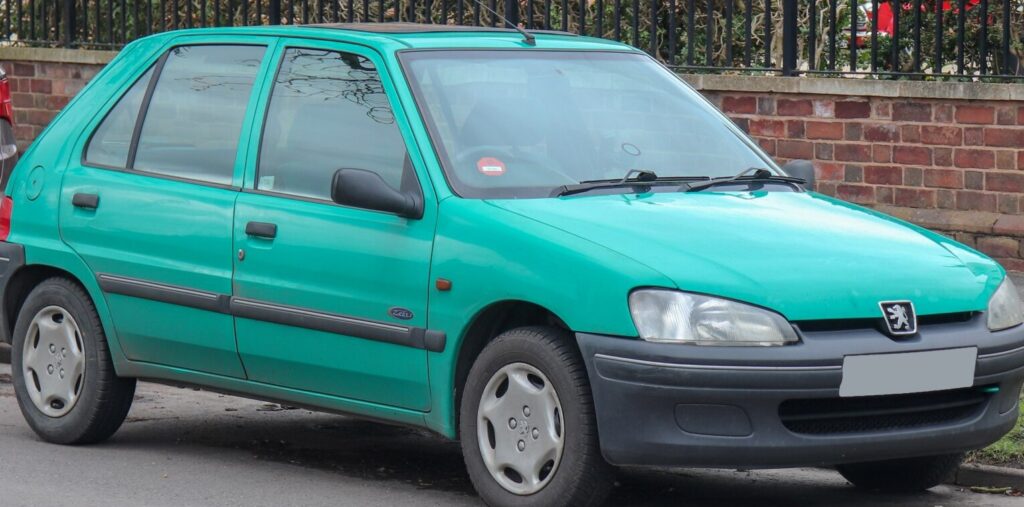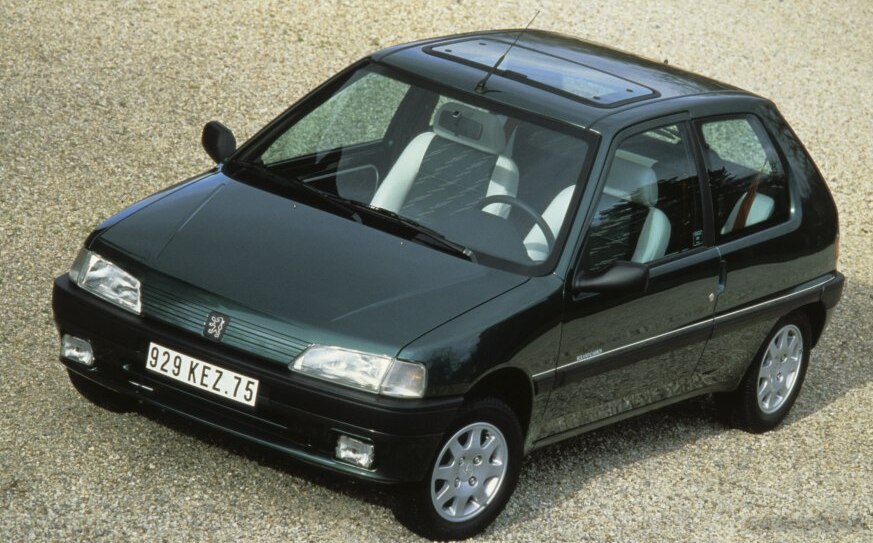
The Peugeot 106 I (1A/C) 1.4 D, produced between 1992 and 1996, was a popular subcompact hatchback offering economical transportation within the Peugeot lineup. Positioned as the entry-level diesel variant of the 106 series, it catered to buyers prioritizing fuel efficiency and low running costs over outright performance. The 106 I generation, based on the shared Peugeot-Citroën X15 platform, aimed to provide a modern and practical city car. The 1.4 D model distinguished itself from the gasoline-powered versions with its significantly improved fuel economy and torque characteristics, albeit at the expense of acceleration.
Peugeot 106 I 1.4 D: Powertrain & Engine Architecture
The heart of the 106 I 1.4 D is the K9Y TUD3Y engine, a 1.4-liter inline four-cylinder diesel engine. This engine, a mainstay in many Peugeot and Citroën vehicles of the era, is known for its robustness and simplicity. It features a naturally aspirated intake and utilizes precombustion chamber injection – a system where fuel is injected into a small pre-chamber connected to the main combustion chamber, promoting more complete combustion and reducing engine noise. The engine produces 50 horsepower at 5000 rpm and 82 Nm (60.48 lb-ft) of torque at 2500 rpm. The compression ratio is a high 22.5:1, typical for diesel engines, contributing to its efficiency. The engine employs an overhead camshaft (OHC) valvetrain with two valves per cylinder. Engine oil capacity is 3.5 liters (3.7 US qt | 3.08 UK qt) and coolant capacity is 5.5 liters (5.81 US qt | 4.84 UK qt).
Transmission
The 106 I 1.4 D was exclusively offered with a five-speed manual transmission. This gearbox was chosen to maximize fuel efficiency and provide adequate control for the engine’s torque output. The gear ratios were optimized for urban driving and highway cruising, prioritizing economy over sporty acceleration. The transmission is a standard front-wheel-drive configuration, reflecting the 106’s front-engine, front-wheel-drive layout.
Driving Characteristics
The driving experience in the 106 I 1.4 D is characterized by its practicality and economy. Acceleration is modest, taking approximately 21 seconds to reach 100 km/h (62 mph) and 20 seconds to reach 60 mph. The engine’s torque, however, provides reasonable pulling power for everyday driving situations, making it suitable for navigating city streets and carrying passengers. The gear ratios are spaced to keep the engine within its optimal operating range, maximizing fuel efficiency. Compared to the gasoline-powered 106 variants, the 1.4 D offers significantly better fuel economy but lacks the responsiveness and higher top speed. The diesel engine also produces a characteristic sound and vibration that is more noticeable than in the gasoline models.
Equipment & Trim Levels
The 106 I 1.4 D was typically equipped with basic, functional features. Standard equipment generally included cloth upholstery, a simple dashboard layout, and manual windows and door locks. Power steering was not standard on all models, and air conditioning was typically an optional extra. Trim levels were relatively limited, with the focus being on providing an affordable and reliable vehicle. Optional extras could include upgraded interior trim, a radio/cassette player, and central locking. The interior space is adequate for a subcompact car, comfortably seating five passengers, although rear legroom can be limited. The hatchback configuration provides a versatile cargo area, with a minimum capacity of 215 liters (7.59 cu. ft.) expanding to 564 liters (19.92 cu. ft.) with the rear seats folded down.
Chassis & Braking
The 106 I 1.4 D utilizes a front-wheel-drive chassis with a wishbone front suspension and a trailing arm rear suspension. This suspension setup provides a comfortable ride quality, particularly on smoother roads. The front brakes are discs, offering good stopping power, while the rear brakes are drums, a cost-saving measure common in this class of vehicle. The steering is a rack and pinion system, providing precise and responsive handling. The car rides on 155/70 R13 tires mounted on 13-inch steel wheels. The kerb weight of 840 kg (1851.88 lbs) contributes to the car’s nimble handling and relatively low fuel consumption. The maximum weight is 1280 kg (2821.92 lbs) with a maximum load capacity of 440 kg (970.03 lbs).
Market Reception & Comparison
The Peugeot 106 I 1.4 D was well-received in the European market as an affordable and economical city car. Critics praised its fuel efficiency, reliability, and ease of driving. However, its modest performance and basic interior were often noted. Compared to other diesel-powered subcompacts of the time, such as the Renault Clio 1.9 D, the 106 1.4 D offered a competitive fuel economy and a slightly more refined driving experience. Against the gasoline-powered 106 variants, the 1.4 D appealed to buyers who prioritized running costs over performance. The 1.4 D’s fuel consumption of 5.1 l/100 km (46.1 US mpg, 55.4 UK mpg, 19.6 km/l) was a significant selling point, particularly in countries with high fuel taxes. The 1.4 D was often chosen by driving instructors and delivery drivers due to its low operating costs and durability.
Technical Specifications
| Brand | Peugeot |
| Model | 106 |
| Generation | 106 I (1A/C) |
| Type (Engine) | 1.4 D (50 Hp) |
| Start of production | 1992 |
| End of production | 1996 |
| Powertrain Architecture | Internal Combustion engine |
| Body type | Hatchback |
| Seats | 5 |
| Doors | 3-5 |
| Fuel consumption (combined) | 5.1 l/100 km |
| Fuel consumption (US mpg) | 46.1 |
| Fuel consumption (UK mpg) | 55.4 |
| Fuel Type | Diesel |
| Acceleration 0 – 100 km/h | 21 sec |
| Acceleration 0 – 62 mph | 21 sec |
| Acceleration 0 – 60 mph | 20 sec |
| Maximum speed | 145 km/h (90.1 mph) |
| Weight-to-power ratio | 16.8 kg/Hp |
| Power | 50 Hp @ 5000 rpm |
| Torque | 82 Nm @ 2500 rpm (60.48 lb.-ft. @ 2500 rpm) |
| Engine layout | Front, Transverse |
| Engine Model/Code | K9Y TUD3Y |
| Engine displacement | 1361 cm3 (83.05 cu. in.) |
| Number of cylinders | 4 |
| Engine configuration | Inline |
| Cylinder Bore | 75 mm (2.95 in.) |
| Piston Stroke | 77 mm (3.03 in.) |
| Compression ratio | 22.5:1 |
| Number of valves per cylinder | 2 |
| Fuel injection system | Precombustion chamber injection |
| Engine aspiration | Naturally aspirated |
| Valvetrain | OHC |
| Engine oil capacity | 3.5 l (3.7 US qt | 3.08 UK qt) |
| Coolant capacity | 5.5 l (5.81 US qt | 4.84 UK qt) |
| Kerb Weight | 840 kg (1851.88 lbs.) |
| Max. weight | 1280 kg (2821.92 lbs.) |
| Max load | 440 kg (970.03 lbs.) |
| Trunk (boot) space – minimum | 215 l (7.59 cu. ft.) |
| Trunk (boot) space – maximum | 564 l (19.92 cu. ft.) |
| Fuel tank capacity | 45 l (11.89 US gal | 9.9 UK gal) |
| Length | 3564 mm (140.31 in.) |
| Width | 1590 mm (62.6 in.) |
| Height | 1369 mm (53.9 in.) |
| Wheelbase | 2385 mm (93.9 in.) |
| Front track | 1380 mm (54.33 in.) |
| Rear track | 1300 mm (51.18 in.) |
| Drive wheel | Front wheel drive |
| Number of gears | 5 |
| Gearbox type | Manual transmission |
Legacy
The Peugeot 106 I 1.4 D, while not a performance icon, has earned a reputation for reliability and durability. The K9Y TUD3Y engine is known to be long-lasting when properly maintained. Today, these cars are relatively rare, but those that remain are often sought after by enthusiasts and those looking for a simple, economical classic. Parts availability can be a challenge, but many components are still available through specialist suppliers. The 106 I 1.4 D represents a practical and affordable era of automotive engineering, offering a glimpse into a time when fuel efficiency and reliability were paramount.