
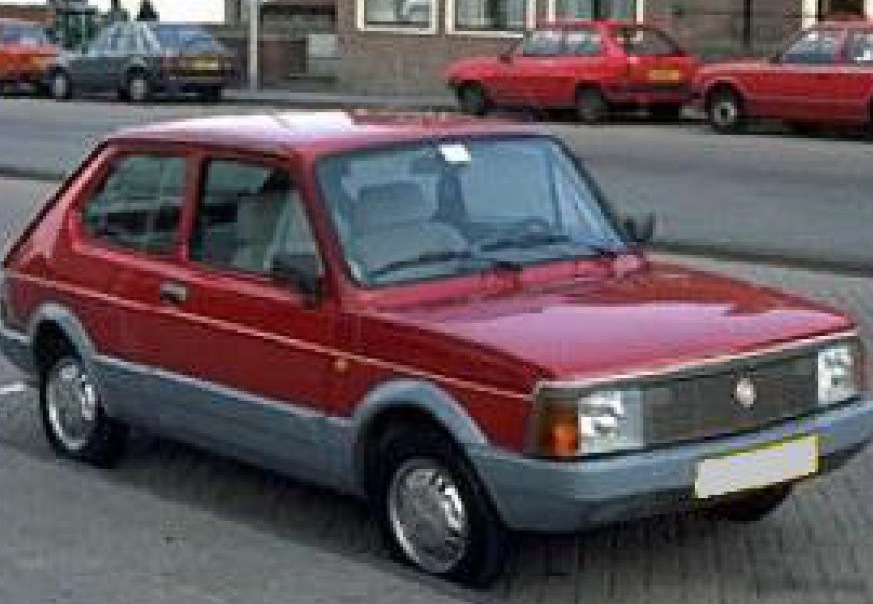
The Seat Fura, produced between 1981 and 1986, was a small, economical hatchback built by the Spanish automaker SEAT. The 025A designation refers to the second generation of the Fura, which built upon the original model launched in 1973. The 1.4-liter, 75 horsepower variant represented a key offering within the Fura lineup, positioned as a practical and affordable option for the burgeoning European small car market. It was designed to provide basic transportation with reasonable fuel efficiency, appealing to a broad customer base. The Fura, and specifically this 1.4L engine option, was heavily based on the Fiat 127, a result of SEAT’s historical partnership with the Italian manufacturer.
The 1.4L (75 hp) Seat Fura: Positioning and Overview
The 1.4-liter, 75 hp Fura occupied a middle ground within the model range. Initially, the Fura was offered with smaller displacement engines, primarily the 850cc and 903cc units. Later, a 1.0-liter engine was added. The 1.4L represented a step up in performance and refinement, offering a more capable engine for highway driving and carrying a full load of passengers. While not the sportiest option – that role was largely absent in the Fura lineup – it provided a noticeable improvement over the smaller engines. It was aimed at buyers who needed a bit more power without incurring the higher costs associated with larger, more luxurious vehicles. The Fura, in general, was a product of a specific economic and political climate in Spain during the early 1980s, offering a domestically produced alternative to imported vehicles.
Powertrain & Engine Architecture
The heart of the 1.4-liter Fura was the SEAT 1430 engine, a naturally aspirated, inline-four cylinder gasoline engine. While bearing a strong resemblance to the Fiat 127’s engine, it incorporated some modifications and improvements by SEAT engineers. The engine displaced 1,438 cc (87.7 cubic inches) and produced 75 horsepower (56 kW) at 6000 rpm. Peak torque was approximately 98 lb-ft (133 Nm) at 3000 rpm. The engine utilized a single overhead camshaft (SOHC) valvetrain, operating two valves per cylinder. Fuel delivery was managed by a Weber 32/36 DGV carburetor, a common setup for European cars of that era. The carburetor provided adequate fuel atomization for the engine’s modest power output, but it wasn’t as efficient or precise as fuel injection systems found in more modern vehicles.
The Fura 1.4 was typically paired with a four-speed manual transmission. An automatic transmission was not offered on this model. The transmission was a conventional setup, with synchromesh on all forward gears. The final drive was a simple differential, providing power to the front wheels. The engine’s relatively low compression ratio (around 8.8:1) allowed it to run on lower octane gasoline, which was a significant advantage in some markets. The engine block was cast iron, providing durability, while the cylinder head was made of aluminum alloy to reduce weight.
Driving Characteristics
The driving experience in a Seat Fura 1.4 was characterized by its simplicity and practicality. Acceleration was modest, with a 0-60 mph time estimated to be around 14-16 seconds. Top speed was approximately 95-100 mph, although sustaining such speeds for extended periods was not recommended. The four-speed manual transmission offered a reasonable spread of gears, allowing the driver to keep the engine in its optimal power band. However, the gear ratios were relatively widely spaced, requiring frequent shifting. The Fura’s light weight (around 1,760 lbs or 800 kg) helped to offset the engine’s modest power output, making it feel reasonably nimble in city driving. The suspension, while basic, provided a comfortable ride on smooth roads. Handling was predictable, but not particularly sporty. The steering was unassisted, requiring some effort at low speeds, but providing good feedback to the driver.
Compared to the smaller-engined Furas, the 1.4L offered a noticeable improvement in performance, particularly when carrying passengers or luggage. It was also more capable of handling highway speeds and inclines. However, it lacked the refinement and power of larger, more expensive cars. The absence of power steering and a relatively basic interior contributed to a utilitarian driving experience.
Equipment & Trim Levels
The Seat Fura 1.4 was typically offered in a relatively basic trim level. Standard equipment included cloth upholstery, vinyl floor covering, and a simple dashboard with basic instrumentation – speedometer, fuel gauge, and temperature gauge. The steering wheel was a two-spoke design, and the seats were manually adjustable. Exterior features included steel wheels with hubcaps, chrome bumpers, and basic lighting. Optional extras were limited, but could include a radio, a sunroof, and upgraded upholstery. The Fura was not designed to be a luxury car, and its interior reflected this. The focus was on providing a functional and durable interior that could withstand the rigors of daily use.
Chassis & Braking
The Seat Fura 1.4 utilized a front-engine, front-wheel-drive layout. The chassis was a monocoque construction, providing a good balance of strength and weight. The suspension consisted of independent front suspension with MacPherson struts and a twist-beam rear axle. The front suspension provided a comfortable ride and reasonable handling, while the rear suspension was simple and robust. The braking system consisted of disc brakes on the front wheels and drum brakes on the rear wheels. The brakes were adequate for the car’s weight and performance, but lacked the stopping power of more modern braking systems. Steering was a rack and pinion system, providing precise and responsive steering. The Fura’s relatively small size and light weight contributed to its agility and ease of maneuverability.
Market Reception & Comparison
The Seat Fura 1.4 was generally well-received by the Spanish public as an affordable and reliable small car. It competed with other small hatchbacks such as the Renault 5, Peugeot 104, and Fiat 127. Critics praised its practicality, fuel efficiency, and durability. However, they also noted its basic interior, modest performance, and lack of refinement. Compared to the smaller-engined Furas, the 1.4L offered a significant improvement in performance, making it a more appealing option for buyers who needed a bit more power. Fuel economy was around 35-40 mpg, which was competitive for the time. Reliability was generally good, although the carburetor required periodic adjustment and maintenance. The Fura’s relatively simple design made it easy to repair and maintain, which was a significant advantage for owners.
Technical Specifications
| Engine Type | Inline-4, Naturally Aspirated |
| Displacement | 1,438 cc (87.7 cu in) |
| Horsepower | 75 hp (56 kW) @ 6000 rpm |
| Torque | 98 lb-ft (133 Nm) @ 3000 rpm |
| Fuel System | Weber 32/36 DGV Carburetor |
| Valvetrain | SOHC, 2 valves per cylinder |
| Compression Ratio | 8.8:1 |
| Transmission | 4-speed Manual |
| Drivetrain | Front-Wheel Drive |
| Brakes (Front) | Disc |
| Brakes (Rear) | Drum |
| Weight | 1,760 lbs (800 kg) approx. |
| Top Speed | 95-100 mph (153-161 km/h) approx. |
Legacy
The Seat Fura, and particularly the 1.4L variant, holds a nostalgic place in the hearts of many Spanish car enthusiasts. While not a groundbreaking vehicle, it represented a significant step forward for SEAT as a domestic automaker. The Fura helped to modernize the Spanish automotive industry and provided affordable transportation for a generation of drivers. Today, the Fura is a relatively rare sight on the roads, but well-maintained examples are sought after by collectors. The 1430 engine, while simple, proved to be durable and reliable, and many examples are still running today. The Fura’s legacy lies in its practicality, affordability, and its role in shaping the Spanish automotive landscape.
