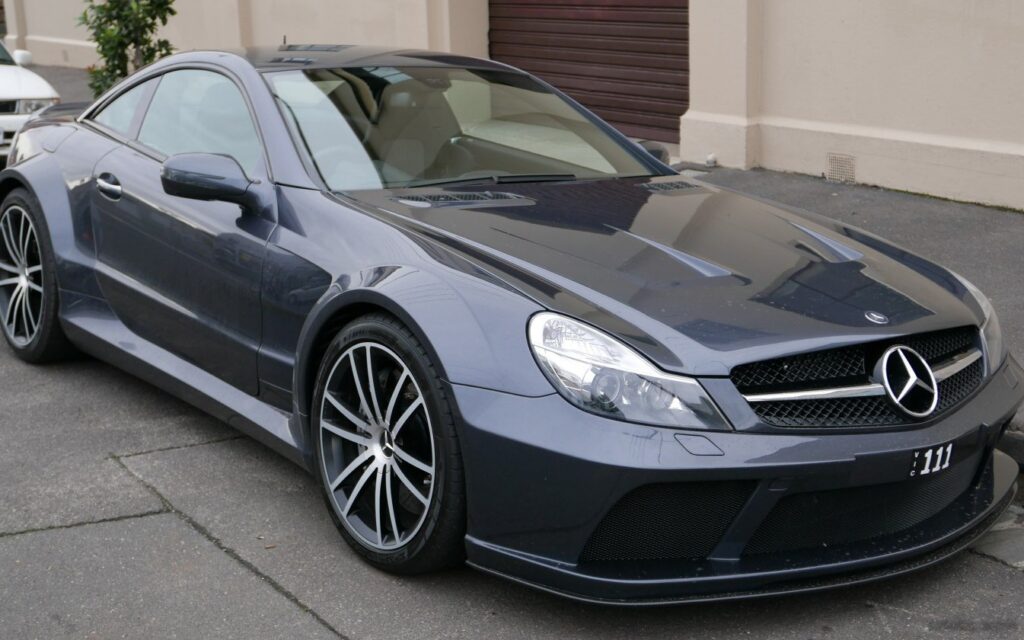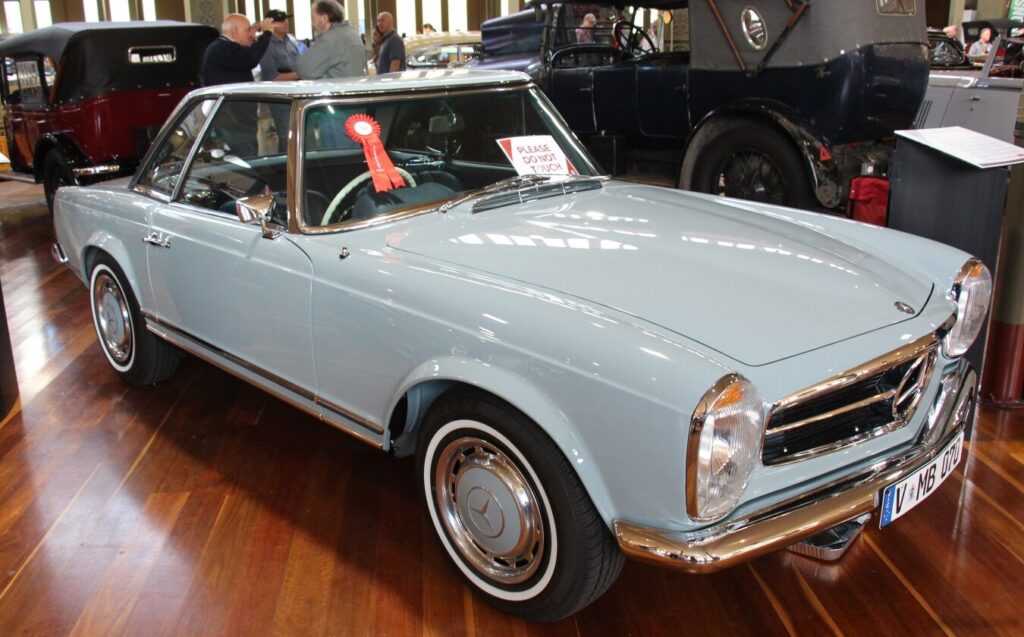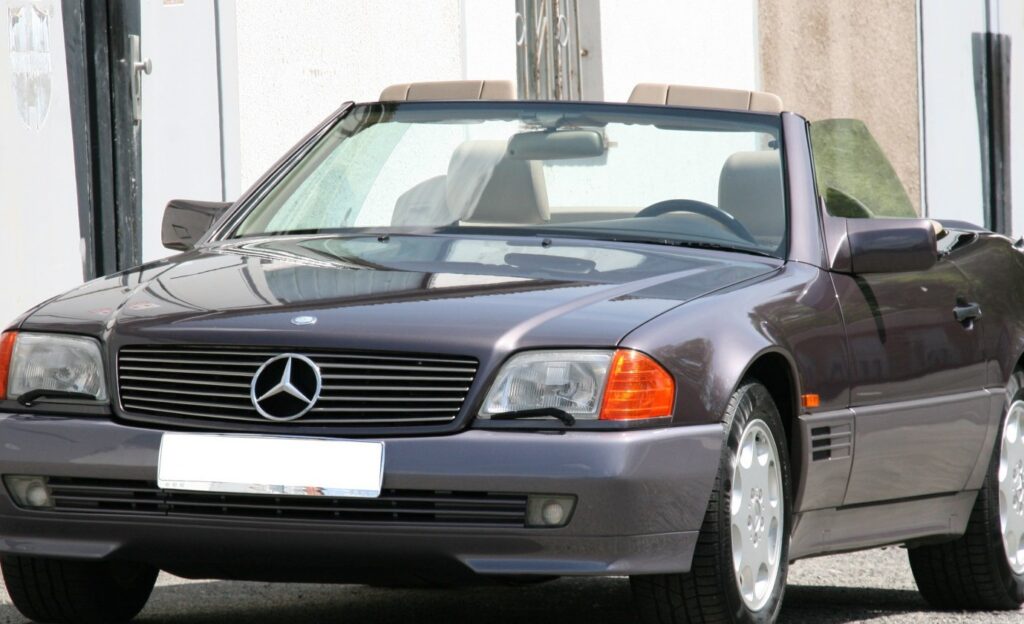
The Mercedes-Benz SL (R129) SL 500 V8 Automatic, produced from June 1993 to August 1995, represented a significant evolution in the iconic SL roadster lineage. Part of the R129 generation, which ran from 1989 to 2001, the SL 500 occupied the premium position within the early lineup, offering a substantial step up in performance and luxury compared to the entry-level SL 300. It served as a bridge between the more economical six-cylinder models and the later, even more powerful SL 600 V12. The R129 platform was a major departure from its predecessor, the R107, featuring a more modern design, improved technology, and enhanced safety features, including the automatically extending roll bar – a first for any roadster.
Powertrain & Engine Architecture
The heart of the SL 500 is the M119.972 5.0-liter (4973 cm3 / 303.47 cu. in.) V8 engine. This engine is a naturally aspirated, longitudinal front-mounted powerplant, boasting a 10:1 compression ratio and producing 320 horsepower at 5600 rpm and 470 Nm (346.65 lb-ft) of torque at 3900 rpm. The engine utilizes multi-port manifold fuel injection and a double overhead camshaft (DOHC) valvetrain with four valves per cylinder. The M119 engine family was known for its robust construction and smooth power delivery, characteristics that contributed to the SL 500’s refined driving experience.
Paired with the M119 engine is a 4-speed automatic transmission. While not as technologically advanced as some contemporary transmissions, this unit was specifically tuned to handle the V8’s substantial torque. The transmission’s gear ratios were optimized for a balance of acceleration and cruising efficiency, though it lacked the responsiveness of a manual gearbox. The automatic transmission contributed to the SL 500’s appeal to buyers seeking a comfortable and effortless grand touring experience.
Engine Specifications
The M119.972 engine featured a cast iron block with aluminum cylinder heads. Bore and stroke dimensions were 96.5 mm (3.8 in) and 85 mm (3.35 in) respectively. Engine oil capacity was 8 liters (8.45 US qt / 7.04 UK qt), and the engine required 15 liters (15.85 US qt / 13.2 UK qt) of coolant. The engine was designed to meet Euro 1 emission standards, which were relatively lenient compared to later regulations.
Driving Characteristics
The SL 500 Automatic offered a distinctly grand touring experience. Acceleration from 0 to 100 km/h (0-62 mph) took approximately 6.5 seconds, while 0-60 mph was achieved in around 6.2 seconds. Top speed was electronically limited to 250 km/h (155.34 mph). Compared to the SL 300, the SL 500 provided significantly more power and torque, resulting in noticeably quicker acceleration and more effortless highway cruising. However, the automatic transmission did detract somewhat from the overall driving engagement, especially when compared to the available manual transmissions in other SL models.
The 4-speed automatic transmission, while smooth, wasn’t particularly quick-shifting. This resulted in a slight delay in response when downshifting for overtaking maneuvers. The gear ratios were spaced to prioritize comfortable cruising, meaning the engine didn’t always feel as responsive as it could be. The weight-to-power ratio of 5.6 kg/hp and weight-to-torque ratio of 3.8 kg/Nm contributed to a feeling of substantial, yet manageable, performance.
Equipment & Trim Levels
The SL 500 came standard with a high level of equipment, reflecting its position as the premium model in the early R129 lineup. Standard features included leather upholstery, power-adjustable seats, automatic climate control, a high-quality sound system, and power windows and locks. The interior design was characterized by its elegant simplicity and focus on driver comfort.
Optional extras were plentiful, allowing buyers to customize their SL 500 to their preferences. These included upgraded sound systems, burl walnut trim, heated seats, a sunroof, and various exterior color options. The SL 500 was often specified with a combination of luxury and performance options, further enhancing its grand touring credentials.
Chassis & Braking
The R129 SL featured a robust chassis designed for both comfort and handling. The front suspension utilized coil springs, wishbones, and a transverse stabilizer bar, while the rear suspension employed an independent multi-link setup with coil springs and a transverse stabilizer bar. This suspension configuration provided a comfortable ride while maintaining good body control.
Braking duties were handled by ventilated discs on all four wheels, assisted by an Anti-lock Braking System (ABS). The braking system provided ample stopping power for the SL 500’s weight and performance. Steering was accomplished via a cone worm with recirculation balls and hydraulic power assistance, offering a balanced feel between precision and ease of use. The SL 500 was equipped with 225/55 ZR 16 tires mounted on 8 J x 16 H2 alloy wheels.
Market Reception & Comparison
The SL 500 was generally well-received by automotive critics. It was praised for its powerful engine, comfortable ride, and luxurious interior. However, some critics noted the automatic transmission’s lack of responsiveness and the relatively high fuel consumption. Compared to the SL 300, the SL 500 offered a significant performance upgrade, but at a higher price point. Fuel economy figures were 16 l/100 km (14.7 US mpg / 17.7 UK mpg) in urban conditions, 9.6 l/100 km (24.5 US mpg / 29.4 UK mpg) extra-urban, and 11.5 l/100 km (20.5 US mpg / 24.6 UK mpg) combined.
Compared to the later SL 600 V12, the SL 500 offered a more balanced driving experience. The V12 was even more powerful, but its added weight and complexity sometimes detracted from its overall agility. The SL 500 struck a sweet spot between performance, luxury, and usability.
Technical Specifications
| Brand | Mercedes-Benz |
| Model | SL |
| Generation | SL (R129) |
| Type | SL 500 V8 (320 Hp) Automatic |
| Start of production | June, 1993 |
| End of production | August, 1995 |
| Engine Model/Code | M 119.972 |
| Engine displacement | 4973 cm3 / 303.47 cu. in. |
| Number of cylinders | 8 |
| Power | 320 Hp @ 5600 rpm |
| Torque | 470 Nm @ 3900 rpm / 346.65 lb.-ft. @ 3900 rpm |
| Fuel Type | Petrol (Gasoline) |
| Acceleration 0 – 100 km/h | 6.5 sec |
| Acceleration 0 – 62 mph | 6.5 sec |
| Acceleration 0 – 60 mph | 6.2 sec |
| Maximum speed | 250 km/h / 155.34 mph |
| Kerb Weight | 1800 kg / 3968.32 lbs. |
| Max. weight | 2190 kg / 4828.12 lbs. |
| Fuel tank capacity | 80 l / 21.13 US gal / 17.6 UK gal |
| Length | 4470 mm / 175.98 in. |
| Width | 1812 mm / 71.34 in. |
| Height | 1303 mm / 51.3 in. |
| Wheelbase | 2515 mm / 99.02 in. |
| Number of gears and type of gearbox | 4 gears, automatic transmission |
Legacy
The SL 500 V8 Automatic remains a desirable classic car today. The M119 engine is known for its durability and relatively straightforward maintenance, although parts can be expensive. The R129 SL, in general, has proven to be a well-built and reliable platform, and well-maintained examples continue to command strong prices in the used car market. The combination of performance, luxury, and classic styling ensures that the SL 500 will continue to be appreciated by enthusiasts for years to come. However, potential buyers should be aware of potential issues with the hydraulic suspension system and the soft top mechanism, which may require refurbishment over time.