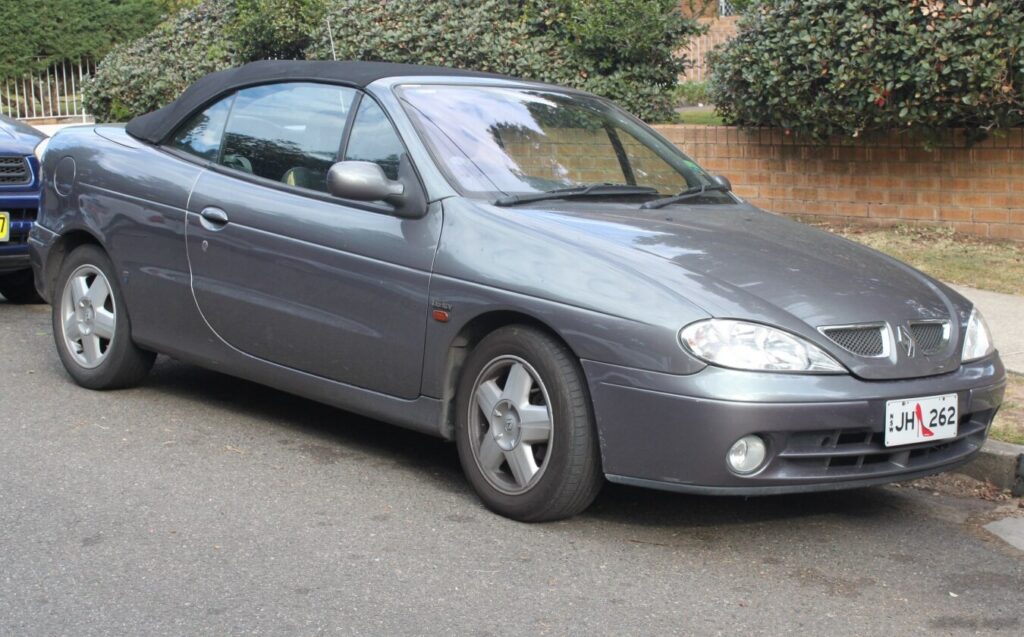
The Renault Megane I Cabriolet Phase II, produced from 1999 to 2002, represented a significant evolution of Renault’s compact convertible offering. This generation, built on the 1HX0 platform (shared with the first generation Megane), aimed to provide an affordable and stylish open-top experience. Among the various engine and trim options available, the 2.0 IDE 16V variant, producing 140 horsepower, occupied a mid-range position in the lineup, offering a balance between performance and economy. It was positioned above the lower-powered 1.6L and 1.9L diesel options, and below the more performance-focused, though less common, 2.0L 16V with slightly higher output.
The 2.0 IDE 16V Powertrain & Engine Architecture
The heart of this Megane Cabriolet is the Renault F5R engine, a 1998cc (121.93 cubic inches) inline-four cylinder gasoline engine. The “IDE” designation refers to Renault’s Indirect Direct Injection system, a form of stratified charge fuel injection designed to improve fuel efficiency and reduce emissions. While not true direct injection as understood in modern engines, it represented a step forward for Renault at the time. The engine features a double overhead camshaft (DOHC) valvetrain with four valves per cylinder, contributing to its respectable power output.
The F5R engine utilizes a multi-point fuel injection system controlled by a Bosch Motronic engine control unit (ECU). This system carefully meters fuel delivery based on various sensor inputs, optimizing combustion for both power and efficiency. The engine’s compression ratio is 10:1, a common figure for naturally aspirated engines of this era. Lubrication is provided by a 5.4-liter (5.71 US quarts) oil capacity, requiring an oil specification adhering to Renault’s standards for the period. The engine is transversely mounted in the front of the vehicle, driving the front wheels.
The 2.0 IDE 16V engine was typically paired with a five-speed manual transmission. While an automatic transmission was offered in some markets, it was less common and generally considered to detract from the driving experience due to its slower shift times and reduced fuel economy. The manual gearbox featured a conventional shift linkage and was known for its relatively smooth operation.
Driving Characteristics
The 140 hp and 200 Nm (147.51 lb-ft) of torque produced by the F5R engine provided the Megane I Cabriolet with adequate performance for its intended market. Acceleration from 0 to 62 mph (0-100 km/h) took approximately 9 seconds, making it competitive with other convertibles in its class. The engine felt responsive at mid-range speeds, offering sufficient power for overtaking maneuvers on the highway. However, it lacked the outright punch of more powerful engines, and required the driver to utilize the full rev range to extract maximum performance.
The five-speed manual transmission was well-matched to the engine’s characteristics, with gear ratios designed to maximize acceleration and fuel efficiency. First gear was relatively short, providing brisk off-the-line acceleration, while fifth gear was geared for comfortable cruising at highway speeds. The steering, utilizing a hydraulic rack and pinion system, offered a reasonable level of feedback and precision. The suspension, consisting of independent coil springs at the front and a torsion beam at the rear, provided a comfortable ride, although it was not particularly sporty.
Equipment & Trim Levels
The 1999-2002 Renault Megane I Cabriolet 2.0 IDE 16V typically came equipped with a reasonable level of standard features. These included power steering, central locking, electric front windows, and an AM/FM radio. Interior upholstery was typically cloth, with options for upgraded materials available. The dashboard layout was functional and straightforward, with clearly labeled controls.
Optional extras included air conditioning, alloy wheels, a leather steering wheel, and a more advanced audio system. Some models also featured a wind deflector, designed to reduce wind turbulence in the cabin when the roof was lowered. Safety features included ABS (Anti-lock Braking System), which was standard equipment. The trunk space, at 281 liters (9.92 cubic feet), was somewhat limited due to the convertible top mechanism, but sufficient for everyday use.
Chassis & Braking
The Megane I Cabriolet’s chassis was based on the standard Megane hatchback, but with significant reinforcement to compensate for the lack of a fixed roof. This reinforcement added weight, but ensured adequate structural rigidity. The front suspension utilized independent coil springs, providing a comfortable ride and good handling characteristics. The rear suspension employed a torsion beam, a simpler and more cost-effective design that offered acceptable ride quality.
Braking duties were handled by ventilated discs at the front and drum brakes at the rear. While the front discs provided good stopping power, the rear drums were less effective, particularly under heavy braking. The ABS system helped to prevent wheel lockup, improving stability and control during emergency stops. The vehicle rode on 195/50 R16 tires mounted on 6.5J x 16 inch wheel rims.
Market Reception & Comparison
The Renault Megane I Cabriolet 2.0 IDE 16V was generally well-received by automotive critics. It was praised for its stylish design, comfortable ride, and affordable price. However, some critics noted that the engine lacked the outright performance of some of its rivals, and that the interior quality was not as high as some more expensive convertibles. Fuel economy was considered reasonable, with combined fuel consumption figures of around 7.6 l/100 km (30.9 US mpg).
Compared to other trims in the Megane lineup, the 2.0 IDE 16V offered a significant performance upgrade over the lower-powered engines. It was more engaging to drive than the 1.6L and 1.9 TDI models, but less expensive and more fuel-efficient than the higher-output 2.0L 16V. In terms of reliability, the F5R engine was generally considered to be a robust and dependable unit, although regular maintenance was essential to prevent issues.
Technical Specifications
| Brand | Renault |
| Model | Megane I Cabriolet (Phase II) |
| Year | 1999-2002 |
| Engine Type | 2.0 IDE 16V (Gasoline) |
| Engine Code | F5R |
| Displacement | 1998 cm3 (121.93 cu. in.) |
| Power | 140 hp @ 5500 rpm |
| Torque | 200 Nm (147.51 lb-ft) @ 4250 rpm |
| Fuel Consumption (Urban) | 10.2 l/100 km (23.1 US mpg) |
| Fuel Consumption (Extra Urban) | 6.1 l/100 km (38.6 US mpg) |
| Fuel Consumption (Combined) | 7.6 l/100 km (30.9 US mpg) |
| CO2 Emissions | 181 g/km |
| Acceleration 0-100 km/h | 9 sec |
| Maximum Speed | 210 km/h (130.49 mph) |
| Kerb Weight | 1200 kg (2645.55 lbs) |
| Fuel Tank Capacity | 60 l (15.85 US gal) |
| Transmission | 5-speed Manual |
| Front Brakes | Ventilated Discs |
| Rear Brakes | Drums |
Legacy
The Renault Megane I Cabriolet 2.0 IDE 16V remains a popular choice among enthusiasts looking for an affordable and stylish classic convertible. The F5R engine, while not particularly high-tech by modern standards, is known for its durability and relatively simple maintenance requirements. Parts availability is generally good, although some components may be becoming increasingly difficult to find.
On the used car market, these models are typically priced according to condition and mileage. Well-maintained examples with low mileage can command a premium. Common issues to look out for include rust, particularly in the sills and wheel arches, and wear and tear on the convertible top mechanism. Overall, the Megane I Cabriolet 2.0 IDE 16V represents a solid and enjoyable classic convertible that offers a good balance of style, performance, and affordability.