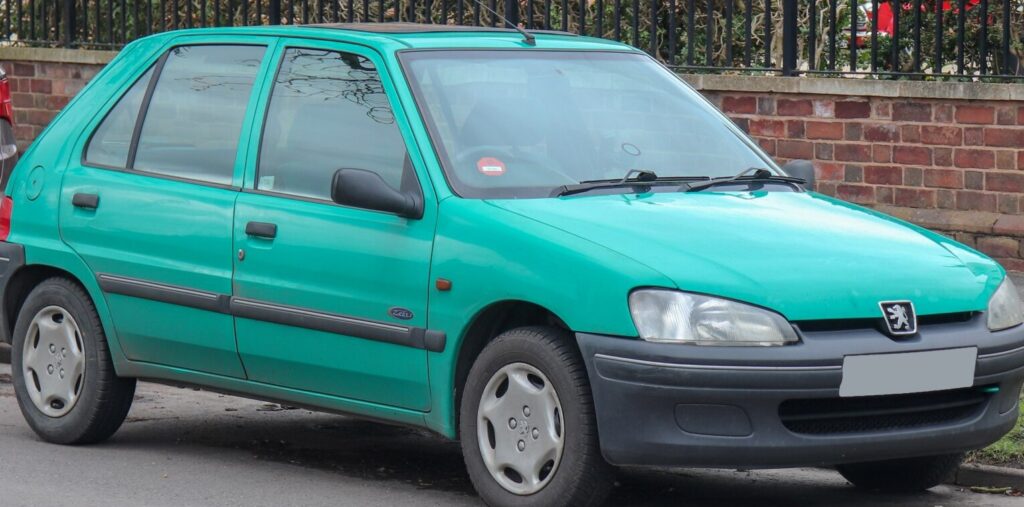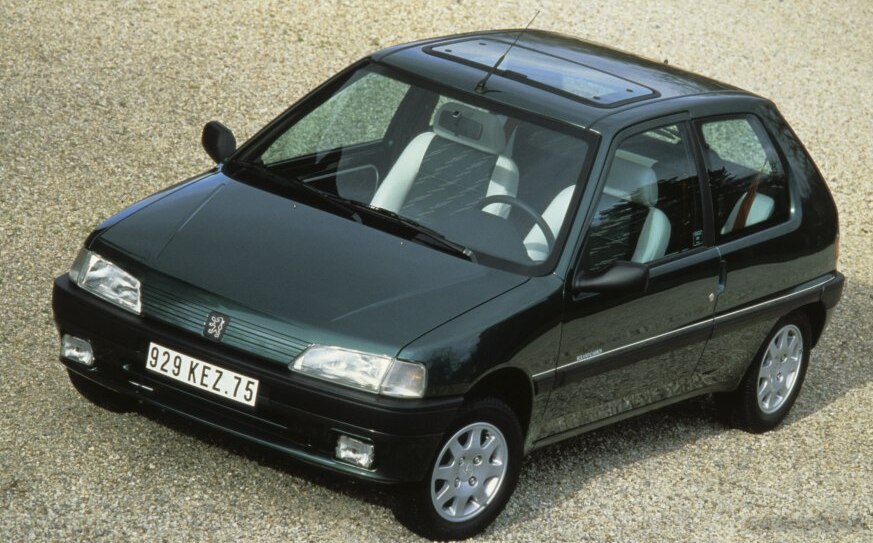
The Peugeot 106 I (1A/C) 1.6, produced between 1994 and 1996, represented a performance-oriented variant within the first generation of the Peugeot 106. Positioned as a step up from the base models, the 1.6 offered a significant increase in power and driving engagement. This model was part of Peugeot’s broader strategy to offer a range of compact hatchbacks appealing to diverse customer needs, utilizing the shared platform known as the 1A/C series. The 106, in general, aimed to provide affordable and practical transportation, while the 1.6 trim catered to drivers seeking a more spirited driving experience.
Peugeot 106 I (1A/C) 1.6: A Performance Focus
The 1.6-liter variant of the Peugeot 106 I (1A/C) distinguished itself from the lower-powered engine options – primarily the 1.1 and 1.4-liter versions – by offering a substantial boost in performance. While the base models prioritized fuel economy and affordability, the 1.6 was geared towards drivers who valued acceleration and overall driving enjoyment. It served as a bridge between the entry-level 106s and the later, more focused Rallye and GTI models. This trim level was aimed at younger drivers or those seeking a small, nimble car with a bit more punch.
Powertrain & Engine Architecture
At the heart of the 106 1.6 lay the TU5J2 engine, specifically coded NFY or NFW depending on minor variations. This 1.6-liter inline-four cylinder engine produced 104 horsepower at 6200 rpm and 135 Nm (99.57 lb-ft) of torque at 3500 rpm. The engine featured a naturally aspirated intake and a multi-port fuel injection system, a common setup for the era. The cylinder bore measured 78.5 mm (3.09 in) and the piston stroke 82 mm (3.23 in), resulting in a displacement of 1587 cm³ (96.84 cu. in) and a compression ratio of 10.2:1. The valvetrain employed an overhead camshaft (OHC) configuration with two valves per cylinder. Engine oil capacity was 3.2 liters (3.38 US qt / 2.82 UK qt), and the engine required 6 liters (6.34 US qt / 5.28 UK qt) of coolant.
Driving Characteristics
The 106 1.6 offered a noticeable improvement in driving dynamics compared to its lower-powered siblings. Acceleration from 0 to 100 km/h (0-62 mph) took approximately 10 seconds, with a 0-60 mph time calculated at 9.5 seconds. The maximum speed was rated at 195 km/h (121.17 mph). While not a sports car by any means, the 1.6 provided a lively and engaging driving experience, particularly on winding roads. The relatively lightweight chassis (870 kg / 1918.02 lbs kerb weight) contributed to its nimble handling. The engine’s torque delivery, peaking at 3500 rpm, meant that the car felt responsive in everyday driving situations, although it did require the driver to utilize the gearbox to maintain optimal power. The 5-speed manual transmission was standard, allowing for precise control and maximizing the engine’s potential.
Equipment & Trim Levels
The 1.6 trim level generally included features beyond those found in the base 106 models. Standard equipment typically included power steering, front ventilated disc brakes, and ABS (Anti-lock Braking System). Interior appointments were relatively basic but functional, with cloth upholstery and a straightforward dashboard layout. Optional extras could include features like electric windows, a sunroof, and upgraded audio systems. The specific level of equipment varied depending on the market and any optional packages selected by the original purchaser. The interior was designed with practicality in mind, offering comfortable seating for five passengers despite the car’s compact dimensions.
Chassis & Braking
The Peugeot 106 I (1A/C) utilized a front-engine, front-wheel-drive layout. The front suspension employed a wishbone configuration, while the rear suspension featured a trailing arm setup. This suspension design provided a reasonable balance between ride comfort and handling. The braking system consisted of ventilated discs on the front wheels and drum brakes on the rear. The inclusion of ABS was a significant safety feature for the time, enhancing braking performance and stability, especially in adverse conditions. The car’s relatively low weight contributed to its braking efficiency. Tire size was typically 175/60 R14.
Market Reception & Comparison
The Peugeot 106 1.6 was generally well-received by automotive critics as a capable and enjoyable small car. It was praised for its lively performance, nimble handling, and affordability. Compared to the base 1.1 and 1.4-liter models, the 1.6 offered a significant improvement in driving experience. However, it lacked the outright performance and more aggressive styling of the later Rallye and GTI versions. Fuel economy was rated at 7.6 l/100 km (30.9 US mpg / 37.2 UK mpg / 13.2 km/l), which was respectable for the time, though slightly lower than the more economical base models. Reliability was generally good, although, like any car of its age, regular maintenance was crucial to prevent issues. The 1.6 offered a good balance between performance, economy, and practicality, making it a popular choice for those seeking a fun-to-drive small car.
Technical Specifications
| Brand | Peugeot |
| Model | 106 |
| Generation | 106 I (1A/C) |
| Type (Engine) | 1.6 (104 Hp) |
| Start of production | 1994 |
| End of production | 1996 |
| Body type | Hatchback |
| Seats | 5 |
| Doors | 3 |
| Fuel consumption (combined) | 7.6 l/100 km |
| Fuel consumption (US mpg) | 30.9 US mpg |
| Fuel consumption (UK mpg) | 37.2 UK mpg |
| Fuel consumption (km/l) | 13.2 km/l |
| Fuel Type | Petrol (Gasoline) |
| Acceleration 0 – 100 km/h | 10 sec |
| Acceleration 0 – 62 mph | 10 sec |
| Acceleration 0 – 60 mph | 9.5 sec |
| Maximum speed | 195 km/h |
| Maximum speed (mph) | 121.17 mph |
| Weight-to-power ratio | 8.4 kg/Hp |
| Weight-to-torque ratio | 6.4 kg/Nm |
| Power | 104 Hp @ 6200 rpm |
| Torque | 135 Nm @ 3500 rpm |
| Torque (lb.-ft.) | 99.57 lb.-ft. @ 3500 rpm |
| Engine layout | Front, Transverse |
| Engine Model/Code | TU5J2 NFY-NFW |
| Engine displacement | 1587 cm3 |
| Engine displacement (cu. in.) | 96.84 cu. in. |
| Number of cylinders | 4 |
| Engine configuration | Inline |
| Cylinder Bore | 78.5 mm |
| Cylinder Bore (in.) | 3.09 in. |
| Piston Stroke | 82 mm |
| Piston Stroke (in.) | 3.23 in. |
| Compression ratio | 10.2:1 |
| Number of valves per cylinder | 2 |
| Fuel injection system | Multi-port manifold injection |
| Engine aspiration | Naturally aspirated engine |
| Valvetrain | OHC |
| Engine oil capacity | 3.2 l |
| Engine oil capacity (US qt) | 3.38 US qt |
| Engine oil capacity (UK qt) | 2.82 UK qt |
| Coolant | 6 l |
| Coolant (US qt) | 6.34 US qt |
| Coolant (UK qt) | 5.28 UK qt |
| Kerb Weight | 870 kg |
| Kerb Weight (lbs) | 1918.02 lbs |
| Max. weight | 1310 kg |
| Max. weight (lbs) | 2888.06 lbs |
| Max load | 440 kg |
| Max load (lbs) | 970.03 lbs |
| Trunk (boot) space – minimum | 215 l |
| Trunk (boot) space – minimum (cu. ft.) | 7.59 cu. ft. |
| Trunk (boot) space – maximum | 564 l |
| Trunk (boot) space – maximum (cu. ft.) | 19.92 cu. ft. |
| Fuel tank capacity | 45 l |
| Fuel tank capacity (US gal) | 11.89 US gal |
| Fuel tank capacity (UK gal) | 9.9 UK gal |
| Length | 3564 mm |
| Length (in.) | 140.31 in. |
| Width | 1607 mm |
| Width (in.) | 63.27 in. |
| Height | 1360 mm |
| Height (in.) | 53.54 in. |
| Wheelbase | 2385 mm |
| Wheelbase (in.) | 93.9 in. |
| Front track | 1395 mm |
| Front track (in.) | 54.92 in. |
| Rear (Back) track | 1327 mm |
| Rear (Back) track (in.) | 52.24 in. |
| Drivetrain Architecture | ICE, Front wheel drive |
| Drive wheel | Front wheel drive |
| Number of gears | 5 |
| Gearbox type | Manual transmission |
| Front suspension | Wishbone |
| Rear suspension | Trailing arm |
| Front brakes | Ventilated discs |
| Rear brakes | Drum |
| Assisting systems | ABS |
| Steering type | Steering rack and pinion |
| Power steering | Hydraulic |
| Tires size | 175/60 R14 |
Legacy
Today, the Peugeot 106 1.6 remains a popular choice among enthusiasts and classic car collectors. Its affordability, nimble handling, and relatively simple mechanicals make it an attractive option for those seeking a fun and engaging driving experience. While parts availability can be a challenge, the TU5J2 engine is known for its durability and reliability when properly maintained. The 106 1.6 has also become a popular platform for motorsport, particularly in rallycross and hillclimb events. Its lightweight chassis and responsive engine make it a competitive choice in its class. The 1.6 variant, in particular, is remembered as a sweet spot in the 106 lineup, offering a significant step up in performance without the higher costs and complexity of the GTI models.