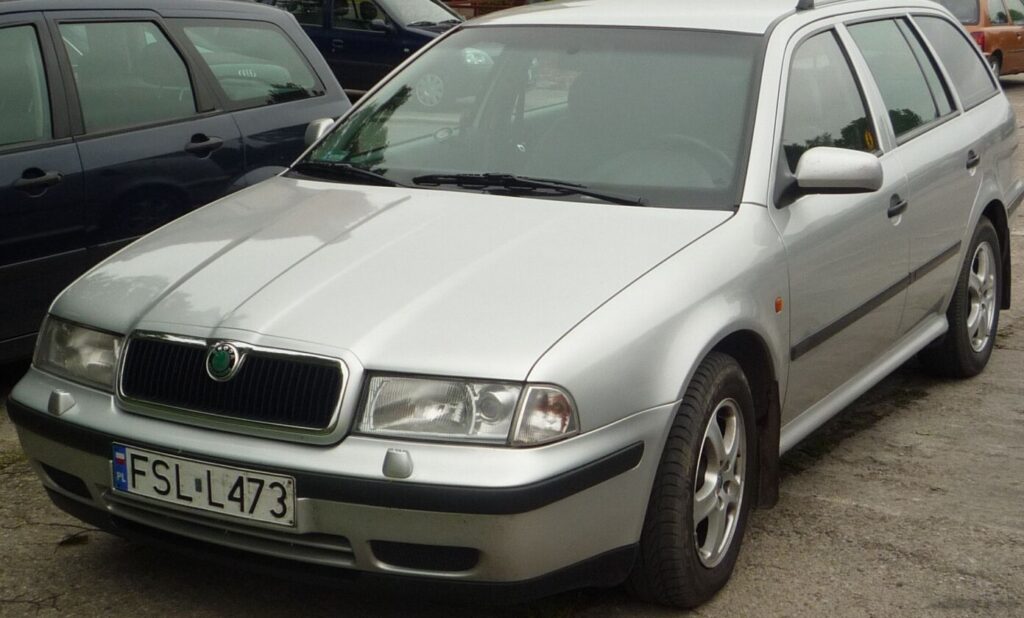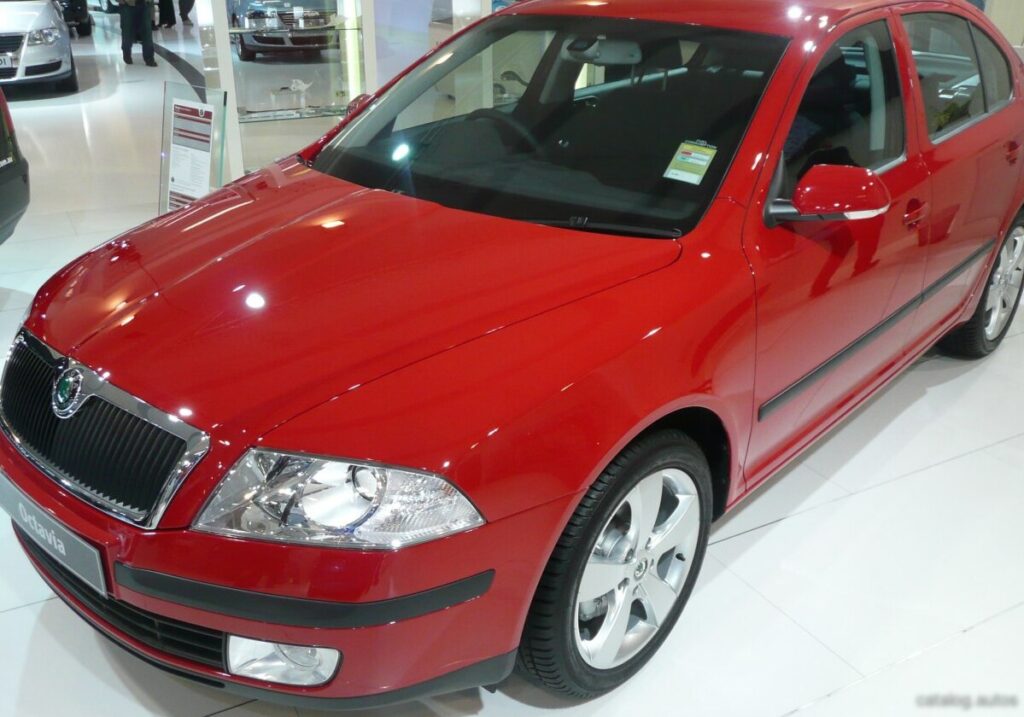
The Skoda Octavia II 2.0 16V FSI, producing 150 horsepower, was a significant variant within the second generation Octavia (2004-2008), built on the Volkswagen Group’s A5 (1Z) platform, also known internally as the 1Z chassis. Introduced in November 2004 and continuing through October 2008, this model represented a step up in performance and technology compared to the base 1.4 and 1.6 liter engines, while remaining more accessible than the flagship 2.0 TDI and vRS models. It primarily targeted buyers seeking a balance of fuel efficiency, respectable power, and practicality in a family-oriented hatchback or estate (wagon) body style.
Powertrain & Engine Architecture
The heart of the Octavia II 2.0 16V FSI is the BLR, BLX, BLY, BVX, BVY, or BVZ engine code, a 1.984-liter (121.07 cubic inches) inline-four cylinder gasoline engine. “FSI” stands for Fuel Stratified Injection, denoting the engine’s direct injection system. Unlike traditional port fuel injection, FSI injects fuel directly into the combustion chamber, allowing for more precise fuel control, higher compression ratios (11.5:1 in this case), and improved thermal efficiency. This direct injection system, coupled with a double overhead camshaft (DOHC) valvetrain with four valves per cylinder, contributes to the engine’s relatively high specific output of 75.6 horsepower per liter.
The engine utilizes a variable valve timing system to optimize performance across the rev range. The 2.0 FSI engine is naturally aspirated, meaning it does not employ a turbocharger or supercharger. The engine’s bore measures 82.5 mm (3.25 inches) and the piston stroke is 92.8 mm (3.65 inches). Standard engine oil capacity is 4.6 liters (4.86 US quarts / 4.05 UK quarts), and the recommended coolant capacity is 7.7 liters (8.14 US quarts / 6.78 UK quarts). The engine is transversely mounted in the front of the vehicle.
Transmission
While a six-speed manual transmission was the most common pairing for the 2.0 FSI, a six-speed automatic transmission was also available. This automatic transmission, typically the 6F24A, is a conventional torque converter automatic, offering smooth shifts but at the expense of some fuel economy compared to the manual. The automatic transmission’s gear ratios are tuned for a balance of acceleration and cruising efficiency. First gear is relatively short for quick take-off, while higher gears are geared for lower engine speeds at highway speeds.
Driving Characteristics
The 2.0 16V FSI Octavia II delivers a noticeable improvement in performance over the lower-displacement engines. Acceleration from 0 to 62 mph (0-100 km/h) takes approximately 9.3 seconds, with a top speed of 132.35 mph (213 km/h). The engine provides a linear power delivery, with peak torque of 200 Nm (147.51 lb-ft) available at 3500 rpm. This makes it a flexible engine, capable of providing adequate power for everyday driving and overtaking maneuvers. Compared to the 1.4 or 1.6 liter engines, the 2.0 FSI feels significantly more responsive, particularly at higher speeds. However, it lacks the outright punch of the turbocharged 2.0 TDI or the high-revving character of the vRS models.
The automatic transmission, while convenient, can sometimes feel hesitant during quick downshifts. The manual transmission offers a more engaging driving experience and allows the driver to fully exploit the engine’s power. The weight-to-power ratio of 8.9 kg/hp and weight-to-torque ratio of 6.7 kg/Nm contribute to a reasonably agile feel, although the Octavia II is not a sports car.
Equipment & Trim Levels
The 2.0 16V FSI Octavia II typically occupied a mid-range position in the Octavia lineup. Standard equipment generally included air conditioning, power windows, central locking, an audio system, and alloy wheels. Higher trim levels, such as the Elegance and Ambiente, added features like climate control, a multi-function steering wheel, parking sensors, and upgraded upholstery. Optional extras included a sunroof, leather seats, and a navigation system. Interior upholstery was typically cloth, with leather options available. The dashboard layout was functional and well-designed, with clear instrumentation and logically placed controls.
Chassis & Braking
The Octavia II’s chassis features independent suspension at the front (MacPherson strut) and a semi-independent torsion beam suspension at the rear. A transverse stabilizer bar is fitted to both the front and rear axles to reduce body roll. The braking system consists of ventilated discs at the front and solid discs at the rear. Anti-lock Braking System (ABS) was standard. The suspension setup is tuned for comfort, providing a compliant ride quality. The steering is a rack and pinion system, offering reasonable precision and feedback. Standard tire size was 195/65 R15, mounted on 6J x 15 inch wheel rims.
Market Reception & Comparison
The Skoda Octavia II 2.0 16V FSI was generally well-received by automotive critics. It was praised for its spacious interior, practical hatchback/estate body style, and refined engine. Fuel economy was considered good for a gasoline engine of this size, achieving approximately 10.1 l/100 km (23.3 US mpg / 28 UK mpg) in urban driving and 5.5 l/100 km (42.8 US mpg / 51.4 UK mpg) on the extra-urban cycle. Compared to the 2.0 TDI, the FSI offered a smoother and quieter driving experience, but lacked the TDI’s superior fuel economy and low-end torque. Compared to the base engines, the 2.0 FSI provided a significant performance upgrade, making it a more enjoyable car to drive. Reliability was generally good, although some owners reported issues with the FSI direct injection system over the long term.
Technical Specifications
| Brand | Skoda |
| Model | Octavia |
| Generation | Octavia II |
| Type (Engine) | 2.0 16V FSI (150 Hp) |
| Start of production | November, 2004 |
| End of production | October, 2008 |
| Powertrain Architecture | Internal Combustion engine |
| Body type | Hatchback |
| Seats | 5 |
| Doors | 5 |
| Fuel consumption (urban) | 10.1 l/100 km (23.3 US mpg / 28 UK mpg) |
| Fuel consumption (extra urban) | 5.5 l/100 km (42.8 US mpg / 51.4 UK mpg) |
| Fuel Type | Petrol (Gasoline) |
| Acceleration 0 – 100 km/h | 9.3 sec |
| Acceleration 0 – 62 mph | 9.3 sec |
| Acceleration 0 – 60 mph | 8.8 sec |
| Maximum speed | 213 km/h (132.35 mph) |
| Weight-to-power ratio | 8.9 kg/Hp |
| Weight-to-torque ratio | 6.7 kg/Nm |
| Power | 150 Hp @ 6000 rpm |
| Torque | 200 Nm @ 3500 rpm (147.51 lb.-ft. @ 3500 rpm) |
| Engine layout | Front, Transverse |
| Engine Model/Code | BLR, BLX, BLY, BVX, BVY, BVZ |
| Engine displacement | 1984 cm3 (121.07 cu. in.) |
| Number of cylinders | 4 |
| Engine configuration | Inline |
| Cylinder Bore | 82.5 mm (3.25 in.) |
| Piston Stroke | 92.8 mm (3.65 in.) |
| Compression ratio | 11.5:1 |
| Number of valves per cylinder | 4 |
| Fuel injection system | Direct injection |
| Engine aspiration | Naturally aspirated engine |
| Valvetrain | DOHC |
| Engine oil capacity | 4.6 l (4.86 US qt | 4.05 UK qt) |
| Coolant | 7.7 l (8.14 US qt | 6.78 UK qt) |
| Kerb Weight | 1335 kg (2943.17 lbs.) |
| Max. weight | 1995 kg (4398.22 lbs.) |
| Max load | 660 kg (1455.05 lbs.) |
| Trunk (boot) space – minimum | 560 l (19.78 cu. ft.) |
| Trunk (boot) space – maximum | 1350 l (47.67 cu. ft.) |
| Fuel tank capacity | 55 l (14.53 US gal | 12.1 UK gal) |
| Length | 4572 mm (180 in.) |
| Width | 1769 mm (69.65 in.) |
| Height | 1462 mm (57.56 in.) |
| Wheelbase | 2578 mm (101.5 in.) |
| Front track | 1539 mm (60.59 in.) |
| Rear track | 1539 mm (60.59 in.) |
| Drive wheel | Front wheel drive |
| Number of gears | 6 |
| Gearbox type | Manual or Automatic |
| Front brakes | Ventilated discs |
| Rear brakes | Disc |
| Tires size | 195/65 R15 |
Legacy
The Skoda Octavia II 2.0 16V FSI remains a popular choice in the used car market, appreciated for its practicality, reliability, and relatively low running costs. While the direct injection system can require more careful maintenance than older port fuel injection systems, the engine is generally durable if properly serviced. Common issues include carbon buildup on the intake valves, a typical concern with direct injection engines, and occasional problems with the ignition coils. Overall, the 2.0 FSI Octavia II represents a well-rounded and dependable family car that continues to offer good value for money.