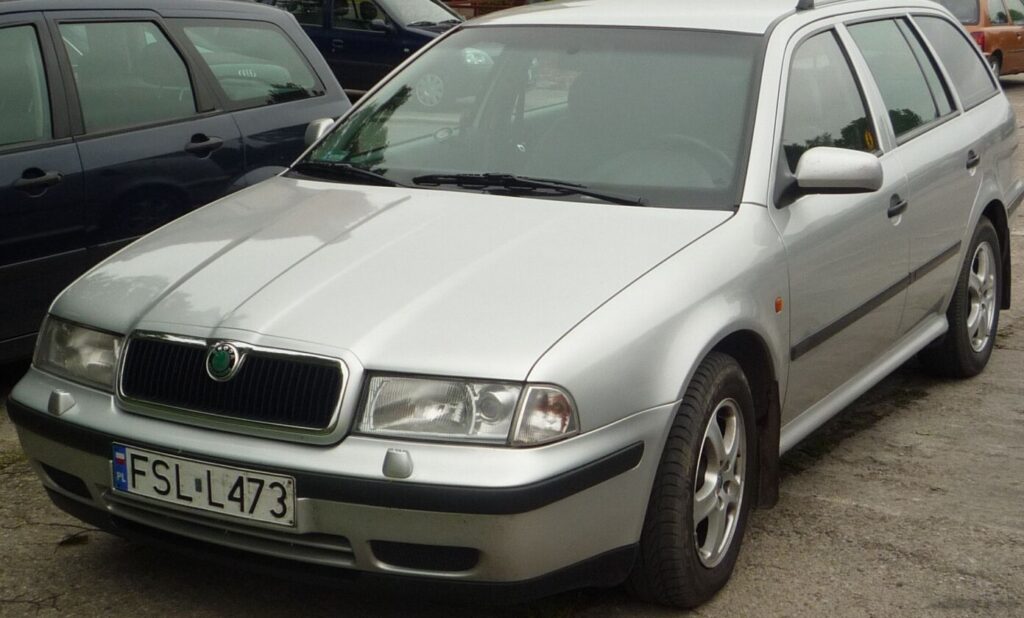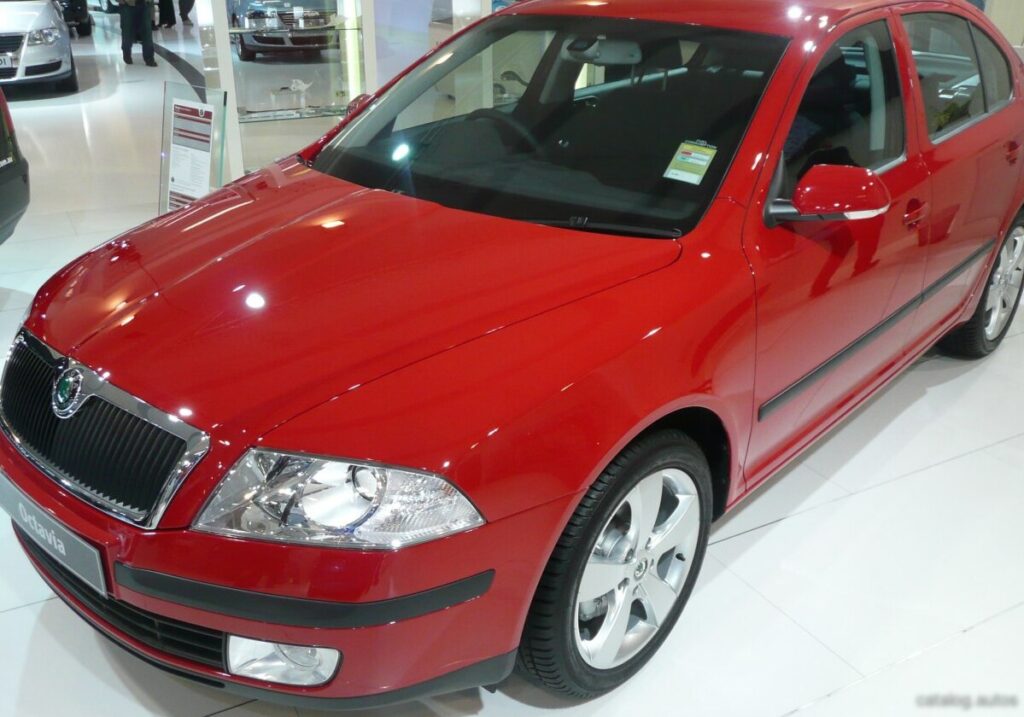
The Skoda Octavia II 2.0 16V FSI Automatic, produced between November 2004 and October 2008, represented a significant step up in the Octavia lineup. Part of the second generation Octavia (1Z chassis), this variant offered a blend of performance and convenience aimed at buyers seeking a more refined driving experience than the base models, but without the expense of the top-tier trims. Positioned as a mid-range offering, it bridged the gap between the more economical 1.4 and 1.6 liter engines and the sportier, higher-performance options like the RS. The Octavia II was built on the Volkswagen Group’s A5 (or 1Z) platform, shared with models like the Volkswagen Golf Mk5 and Audi A3.
Powertrain & Engine Architecture
At the heart of the Octavia II 2.0 16V FSI Automatic lies the BLR, BLX, BLY, BVX, BVY, or BVZ engine code, a 1984cc (121.07 cubic inches) inline-four cylinder gasoline engine. The “FSI” designation stands for Fuel Stratified Injection, indicating a direct injection system. This system injects fuel directly into the combustion chamber, allowing for more precise fuel control, improved combustion efficiency, and increased power output compared to traditional multi-point injection. The engine boasts a compression ratio of 11.5:1 and utilizes a Double Overhead Camshaft (DOHC) valvetrain with four valves per cylinder, contributing to its responsive nature.
The 2.0 FSI engine produces 150 horsepower at 6000 rpm and 200 Nm (147.51 lb-ft) of torque at 3500 rpm. The engine’s power delivery is relatively linear, with a noticeable surge in the mid-range. Paired with this engine is a six-speed automatic transmission, offering smooth shifts and enhancing the car’s usability in everyday driving conditions. This transmission was a common unit within the Volkswagen Group at the time, known for its reliability and adaptability. The transmission’s gear ratios are tuned for a balance between acceleration and fuel economy, prioritizing comfortable cruising over outright performance.
Fuel Injection and Valvetrain Details
The direct injection system employed in the 2.0 FSI engine is a key component of its efficiency and performance. Unlike port fuel injection, where fuel is sprayed into the intake manifold, direct injection allows for more precise control over fuel delivery, resulting in reduced fuel consumption and lower emissions. The DOHC valvetrain, with its four valves per cylinder, further enhances the engine’s breathing capabilities, contributing to its higher power output. Variable valve timing is also incorporated, optimizing valve opening and closing events for improved performance across the engine’s operating range.
Driving Characteristics
The Skoda Octavia II 2.0 16V FSI Automatic delivers a comfortable and refined driving experience. Acceleration from 0 to 100 km/h (0-62 mph) takes approximately 10.1 seconds, while 0-60 mph is achieved in around 9.6 seconds. While not a sports car, the 150 hp engine provides adequate power for overtaking and highway cruising. The automatic transmission contributes to a relaxed driving style, particularly in urban environments. Compared to the manual transmission versions of the same engine, the automatic offers slightly reduced acceleration due to inherent transmission losses. However, the convenience and ease of use often outweigh this performance difference for many drivers.
The automatic transmission’s shift points are generally well-chosen, providing smooth transitions between gears. Drivers can also manually override the automatic shifts, offering a degree of control when desired. The Octavia’s suspension is tuned for comfort, absorbing bumps and imperfections in the road surface effectively. The steering is light and precise, making it easy to maneuver in tight spaces.
Equipment & Trim Levels
The 2.0 16V FSI Automatic trim typically included features such as air conditioning, power windows, central locking, an audio system with CD player, and alloy wheels. Safety features included ABS (Anti-lock Braking System) and front airbags. Higher trim levels, often denoted by designations like “Elegance” or “Laurin & Klement,” added features such as climate control, rear parking sensors, a multi-function steering wheel, and upgraded interior upholstery. Optional extras included a sunroof, leather seats, and a navigation system. Interior upholstery was typically cloth, with leather options available on higher trims. The dashboard layout was functional and well-designed, with clear instrumentation and intuitive controls.
Chassis & Braking
The Octavia II 2.0 16V FSI Automatic features a MacPherson strut front suspension and a multi-link rear suspension. Both front and rear axles are equipped with transverse stabilizer bars to reduce body roll during cornering. The braking system consists of ventilated discs on the front wheels and solid discs on the rear wheels. ABS (Anti-lock Braking System) is standard, enhancing braking performance and stability, particularly on slippery surfaces. The curb weight of the vehicle is approximately 1335 kg (2943.17 lbs), contributing to its balanced handling characteristics. Tire size was typically 195/65 R15, mounted on 6J x 15 inch wheel rims.
Market Reception & Comparison
The Skoda Octavia II 2.0 16V FSI Automatic was generally well-received by automotive critics. It was praised for its comfortable ride, spacious interior, and refined engine. Fuel economy was considered reasonable for its class, with combined fuel consumption figures around 8.5 l/100 km (23.9 UK mpg or 19.9 US mpg). Compared to the 1.4 and 1.6 liter versions, the 2.0 FSI offered significantly more performance, making it a more enjoyable driving experience. However, it was also more expensive to purchase and maintain. Compared to the diesel-powered Octavia variants (like the 1.9 TDI), the 2.0 FSI offered a smoother and quieter engine, but with lower fuel economy and torque. Reliability was generally good, although some owners reported issues with the direct injection system and the automatic transmission over the long term.
Technical Specifications
| Brand | Skoda |
| Model | Octavia |
| Generation | Octavia II |
| Type | 2.0 16V FSI Automatic |
| Start of Production | November 2004 |
| End of Production | October 2008 |
| Engine Displacement | 1984 cm3 (121.07 cu. in.) |
| Number of Cylinders | 4, Inline |
| Power | 150 Hp @ 6000 rpm |
| Torque | 200 Nm (147.51 lb.-ft.) @ 3500 rpm |
| Fuel Type | Petrol (Gasoline) |
| Fuel Consumption (Urban) | 11.8 l/100 km (19.9 US mpg, 23.9 UK mpg) |
| Fuel Consumption (Extra Urban) | 6.3 l/100 km (37.3 US mpg, 44.8 UK mpg) |
| Acceleration 0-100 km/h | 10.1 sec |
| Acceleration 0-60 mph | 9.6 sec |
| Maximum Speed | 210 km/h (130.49 mph) |
| Kerb Weight | 1335 kg (2943.17 lbs) |
| Max. Weight | 1995 kg (4398.22 lbs) |
| Fuel Tank Capacity | 55 l (14.53 US gal, 12.1 UK gal) |
| Transmission | 6-speed Automatic |
| Drive Type | Front Wheel Drive |
Legacy
The Skoda Octavia II 2.0 16V FSI Automatic remains a popular choice in the used car market. Its combination of practicality, comfort, and performance makes it a versatile vehicle for a wide range of drivers. While the direct injection system can require more careful maintenance than older fuel injection systems, the engine is generally reliable if properly cared for. The automatic transmission is also known for its durability. However, potential buyers should be aware of the possibility of issues with the fuel injectors and the transmission control unit. Overall, the Octavia II 2.0 FSI Automatic represents a well-engineered and well-built vehicle that continues to offer good value for money.