
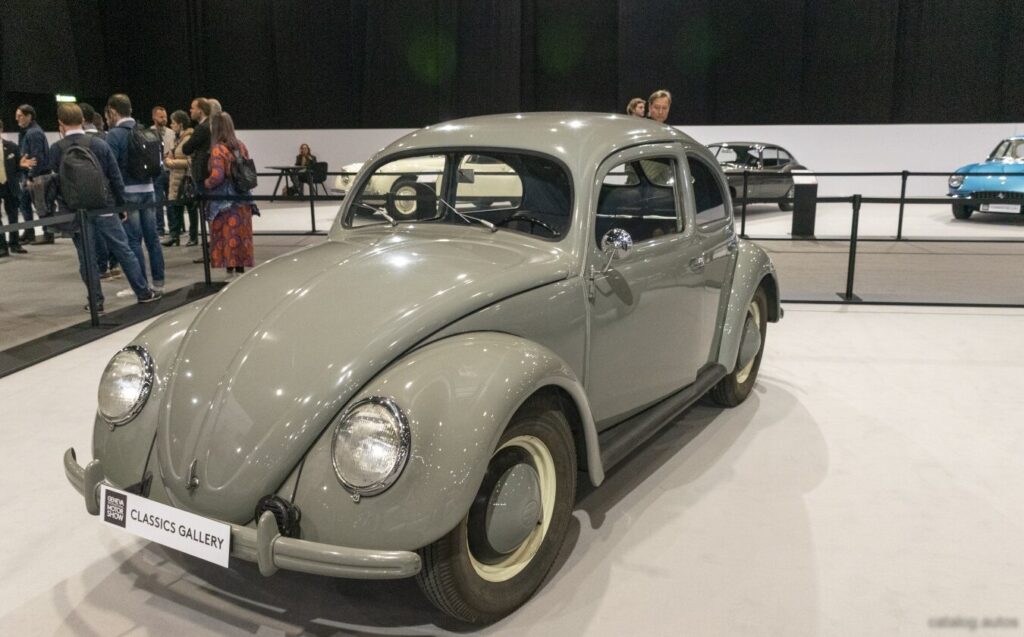
The Volkswagen Käfer, universally known as the Beetle, represents a pivotal moment in automotive history. Produced from 1938 to 2003, it became a symbol of post-war Germany and a global automotive icon. The early Käfer models, particularly those produced between 1946 and 1953, are often referred to as the “Brezel” (Pretzel) due to their split rear window design. This article focuses specifically on the 1.1-liter, 24 horsepower variant of the Käfer produced during this initial post-war period, a foundational version that established the Beetle’s enduring appeal. This model represents the very beginning of mass production for the Volkswagen, and its simplicity was key to its initial success.
Early Käfer Production & the 1.1L “Brezel”
Following the end of World War II, Volkswagen production slowly resumed under British supervision. The initial focus was on providing basic, affordable transportation for the German populace. The early Käfers, including the 1.1-liter version, were characterized by their spartan equipment levels and focus on functionality. The “Brezel” designation stems from the distinctive split rear window, which was a defining feature of these first-generation models. Production began in 1946 and continued until 1953, with incremental changes occurring throughout the years. The 1.1-liter engine was the standard powerplant during the majority of this period, representing the entry point into Volkswagen ownership.
Powertrain & Engine Architecture
The heart of the 1946-1953 Käfer “Brezel” is its air-cooled, naturally aspirated 1.1-liter (1131cc) flat-four engine. This engine, designated as the Type 1 engine, is a defining characteristic of the Beetle. It features a cast iron block and cylinder heads, with aluminum alloy pistons. The engine’s design prioritized simplicity and durability over outright performance. Fuel delivery was managed by a single Solex carburetor, providing a relatively basic fuel-air mixture. The valvetrain employed pushrods operating overhead valves, a configuration that contributed to the engine’s mechanical simplicity. The compression ratio was approximately 6.6:1. The engine produced 24 horsepower at 3300 rpm and approximately 56 lb-ft of torque at 2000 rpm. The engine was mounted rearward, driving the rear wheels. The transmission was a four-speed manual gearbox, as automatic transmissions were not yet available on the Käfer during this period. The engine oil capacity was 2.5 liters (2.64 US quarts / 2.2 UK quarts).
Driving Characteristics
The driving experience in a 1.1-liter Käfer “Brezel” is markedly different from modern automobiles. Acceleration is leisurely, and the car is not designed for high-speed cruising. The 24 horsepower engine provides sufficient power for navigating city streets and country roads, but requires careful planning when overtaking or climbing hills. The four-speed manual transmission necessitates frequent gear changes to maintain optimal engine speed. The rear-engine layout contributes to a unique handling characteristic, with a tendency for oversteer, particularly on slippery surfaces. Steering is relatively direct, but requires more effort than modern power-assisted systems. The suspension, consisting of torsion bars front and rear, provides a reasonably comfortable ride, although it is not as refined as more sophisticated suspension designs. The overall driving experience is characterized by its simplicity and mechanical connection between the driver and the vehicle.
Equipment & Trim Levels
The early Käfer “Brezel” models were deliberately spartan in their equipment levels. The focus was on providing basic transportation at an affordable price. Standard features included a simple bench seat upholstered in cloth, a basic instrument panel with speedometer and fuel gauge, and a steering wheel. Windows were manually operated, and there was no radio or heater as standard equipment. The exterior featured minimal chrome trim, and the paint options were limited to a few basic colors. Optional extras included a sunroof, a heater, and upgraded upholstery. The interior was functional and utilitarian, reflecting the post-war economic conditions and the car’s intended purpose. The “Brezel” models lacked many of the comfort and convenience features that would become commonplace in later Käfer generations.
Chassis & Braking
The Käfer “Brezel” utilized a body-on-frame construction, with a steel chassis supporting the bodywork. The suspension system employed torsion bars front and rear, providing a relatively simple and robust suspension setup. The front suspension featured independent trailing arms, while the rear suspension utilized a swing axle design. Braking was provided by mechanical drum brakes on all four wheels. The drum brakes were relatively basic in their design and offered limited stopping power compared to modern disc brakes. Steering was accomplished through a worm and roller steering gear, which provided direct steering feel but required significant effort. The chassis and braking system were designed to be simple, durable, and easy to maintain, reflecting the car’s intended purpose as a reliable and affordable mode of transportation.
Volkswagen Käfer 1.1 (Brezel) (24 Hp) – Technical Specifications
| Engine Type | Air-cooled, Flat-Four |
| Displacement | 1131 cc (1.1 L) |
| Horsepower | 24 hp @ 3300 rpm |
| Torque | 56 lb-ft @ 2000 rpm |
| Fuel System | Solex Carburetor |
| Valvetrain | Pushrod, Overhead Valves |
| Compression Ratio | 6.6:1 |
| Transmission | 4-Speed Manual |
| Drivetrain | Rear-Wheel Drive |
| Brakes | Mechanical Drum Brakes (All Wheels) |
| Suspension (Front) | Torsion Bars, Independent Trailing Arms |
| Suspension (Rear) | Torsion Bars, Swing Axle |
| Body Type | Coupe |
| Engine Oil Capacity | 2.5 liters (2.64 US qt / 2.2 UK qt) |
| Production Years | 1946-1953 |
Market Reception & Comparison
The early Käfer “Brezel” models were initially met with mixed reactions. Some critics dismissed the car as being underpowered and too basic, while others praised its affordability and reliability. However, as post-war economies began to recover, the Käfer gained popularity as a practical and economical mode of transportation. Compared to other vehicles available at the time, the Käfer offered a unique combination of affordability, durability, and fuel efficiency. It was significantly cheaper than most other cars on the market, and its air-cooled engine required less maintenance than water-cooled engines. Within the early Käfer lineup, the 1.1-liter version represented the entry-level model, appealing to buyers seeking the most affordable option. Later models featured larger engines (1.2L and 1.5L) offering increased performance, but at a higher price point. The 1.1L was favored by those prioritizing economy and simplicity.
Legacy
The 1.1-liter Käfer “Brezel” holds a significant place in automotive history as the foundational model that launched the Beetle’s global success. While the engine itself is relatively simple and prone to wear and tear, its robust design and readily available parts have ensured that many examples remain on the road today. In the used car market, these early “Brezel” models are highly sought after by collectors and enthusiasts, commanding premium prices due to their rarity and historical significance. The engine’s simplicity makes it relatively easy to rebuild and maintain, appealing to those who enjoy hands-on mechanical work. The 1.1-liter engine, while not powerful by modern standards, represents a testament to Volkswagen’s engineering ingenuity and its commitment to providing affordable and reliable transportation to the masses. The “Brezel” remains a beloved icon, symbolizing a bygone era of automotive simplicity and enduring design.
