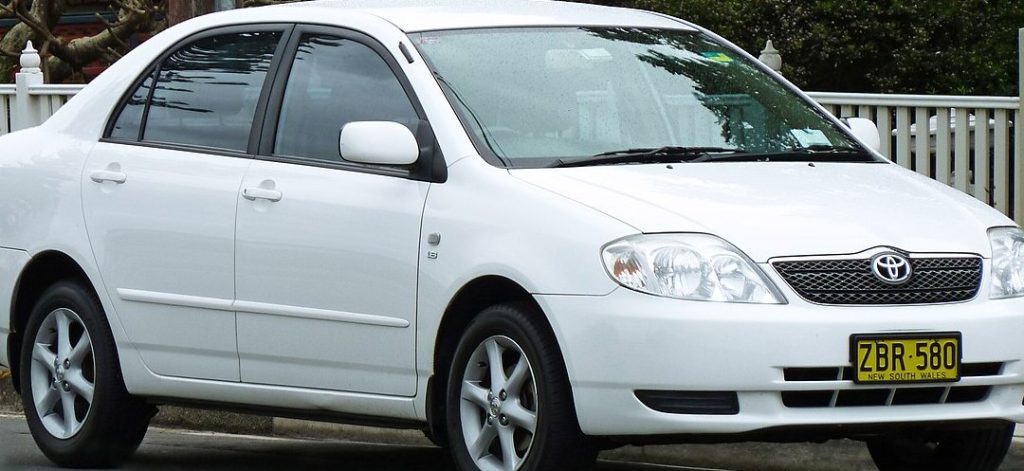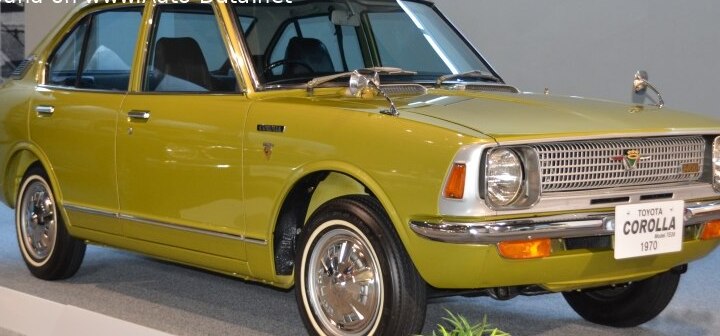
The Toyota Corolla II 4-door sedan, designated as the E20 series, was produced between 1970 and 1974. This generation represented a significant step forward for Toyota, offering a more refined and spacious vehicle compared to its predecessor. Within the E20 lineup, the 1200 model equipped with a 73 horsepower engine and an automatic transmission occupied a unique position, aimed at buyers seeking a comfortable and convenient entry-level sedan. It was positioned as a step up from the base models, offering the ease of an automatic gearbox, but remained below the more powerful and often more expensive trims.
The 1.2L 73 hp Automatic: A Detailed Overview
The 1200 Automatic variant of the Corolla II was characterized by its relatively modest power output and focus on practicality. It was designed to appeal to a broad audience, particularly families and individuals prioritizing fuel efficiency and ease of driving over outright performance. This trim level was a popular choice in markets where automatic transmissions were gaining acceptance, offering a more relaxed driving experience compared to the standard manual gearbox.
Powertrain & Engine Architecture
At the heart of the Corolla II 1200 Automatic lay the 3K-D engine, a 1.2-liter (1166 cc) inline-four cylinder gasoline engine. This engine featured a relatively simple overhead valve (OHV) valvetrain with two valves per cylinder. The 3K-D engine utilized a carburetor for fuel delivery, a common practice for vehicles of this era. It produced 73 horsepower at 6600 rpm and 94 Nm (69.33 lb-ft) of torque at 4200 rpm. The engine’s bore and stroke measured 75mm x 66mm, respectively, and it operated with a compression ratio of 10:1. The engine was mounted longitudinally in the front of the vehicle.
The automatic transmission was a 3-speed unit. While specific details regarding the transmission’s internal construction are scarce, it was a conventional hydraulic automatic, offering a Drive, Neutral, and Reverse selection. The gear ratios were optimized for fuel economy and smooth acceleration, rather than sporty performance. The automatic transmission contributed to the vehicle’s overall weight and slightly reduced acceleration compared to the manual transmission equipped models.
Driving Characteristics
The driving experience in the Corolla II 1200 Automatic was characterized by its smoothness and ease of operation. Acceleration was adequate for everyday driving, but not particularly brisk. The 3-speed automatic transmission provided relatively smooth shifts, although it lacked the responsiveness of modern automatic gearboxes. The power delivery was linear, with peak torque arriving at 4200 rpm. This meant that the engine required to be revved to achieve optimal performance. Compared to the manual transmission versions, the automatic suffered a slight performance penalty due to the transmission’s inherent inefficiencies. The higher-output engines available in other Corolla II trims, such as the 1600, offered significantly more spirited acceleration.
Equipment & Trim Levels
The Corolla II 1200 Automatic typically came with a fairly basic level of standard equipment. Interior upholstery was generally vinyl or a durable cloth material. The dashboard layout was functional and straightforward, featuring a speedometer, fuel gauge, and basic warning lights. Options available for this trim level included a radio, upgraded upholstery, and occasionally, a heater. The level of trim was generally considered to be a step above the most basic Corolla II models, but below the more luxurious trims. The focus was on providing a comfortable and reliable transportation solution at an affordable price point.
Chassis & Braking
The Corolla II 1200 Automatic featured a relatively conventional chassis design for the early 1970s. The front suspension utilized an independent coil spring setup with a transverse stabilizer bar, providing a reasonable level of ride comfort and handling. The rear suspension employed a rigid axle with leaf springs, a cost-effective and durable design. The braking system consisted of disc brakes on the front wheels and drum brakes on the rear wheels. The steering system was a cone worm with recirculation balls, offering a reasonable level of steering feel and precision. The relatively light curb weight of 790 kg (1741.65 lbs) helped to mitigate the effects of the less powerful engine and drum brakes.
Market Reception & Comparison
The Corolla II 1200 Automatic was generally well-received by automotive critics and consumers alike. It was praised for its reliability, fuel efficiency (5.1 l/100 km, 46.1 US mpg), and comfortable ride. However, some critics noted its lack of outright performance compared to other trims and competitors. Compared to the manual transmission versions of the 1200, the automatic offered greater convenience but at the expense of fuel economy and acceleration. The 1600 models, with their larger engines, provided a more engaging driving experience but came at a higher price point. The 1200 Automatic appealed to a specific segment of the market – those who prioritized ease of use and comfort over sporty performance.
Technical Specifications
| Brand | Toyota |
| Model | Corolla II |
| Generation | E20 |
| Engine Type | 1200 (73 Hp) Automatic |
| Production Years | 1970-1974 |
| Engine Model/Code | 3K-D |
| Engine Displacement | 1166 cm3 (71.15 cu. in.) |
| Number of Cylinders | 4, Inline |
| Bore x Stroke | 75 mm x 66 mm (2.95 in. x 2.6 in.) |
| Compression Ratio | 10:1 |
| Valves per Cylinder | 2 |
| Fuel Injection System | Carburetor |
| Maximum Power | 73 Hp @ 6600 rpm |
| Maximum Torque | 94 Nm (69.33 lb-ft) @ 4200 rpm |
| Transmission | 3-speed Automatic |
| Drive Wheels | Rear Wheel Drive |
| Kerb Weight | 790 kg (1741.65 lbs) |
| Fuel Tank Capacity | 45 l (11.89 US gal | 9.9 UK gal) |
| Length | 3945 mm (155.31 in.) |
| Width | 1505 mm (59.25 in.) |
| Height | 1375 mm (54.13 in.) |
| Wheelbase | 2335 mm (91.93 in.) |
| Fuel Consumption (Combined) | 5.1 l/100 km (46.1 US mpg, 55.4 UK mpg, 19.6 km/l) |
| Maximum Speed | 140 km/h (86.99 mph) |
Legacy
The Toyota Corolla II 1200 Automatic, while not the most powerful or sporty variant of its generation, holds a significant place in Toyota’s history. The 3K-D engine proved to be remarkably durable and reliable, and many examples continue to operate today. The automatic transmission, while simple by modern standards, provided a comfortable and convenient driving experience for its time. In the used car market, these vehicles are often sought after by collectors and enthusiasts who appreciate their simplicity, reliability, and classic styling. The 1200 Automatic represents a pivotal moment in Toyota’s evolution, demonstrating the company’s commitment to producing affordable, reliable, and practical vehicles for a global audience.