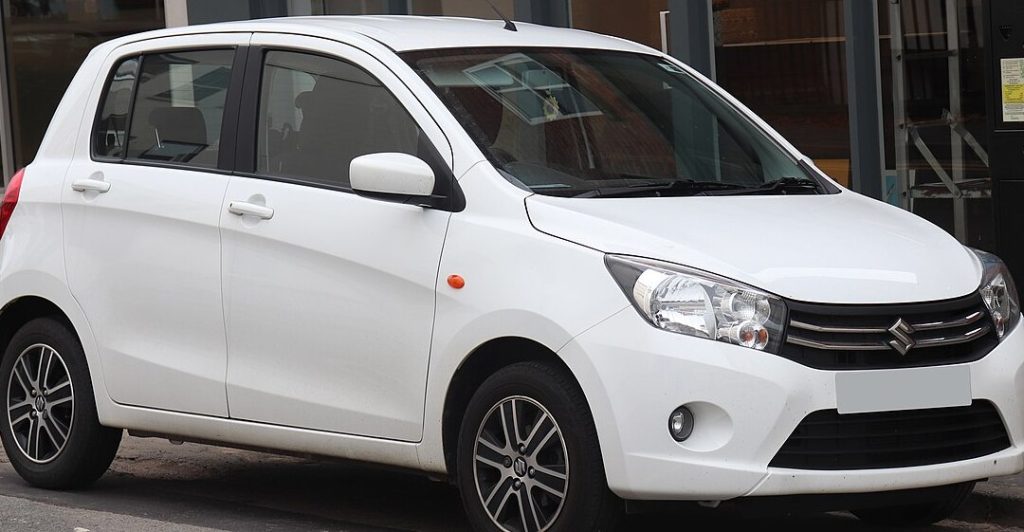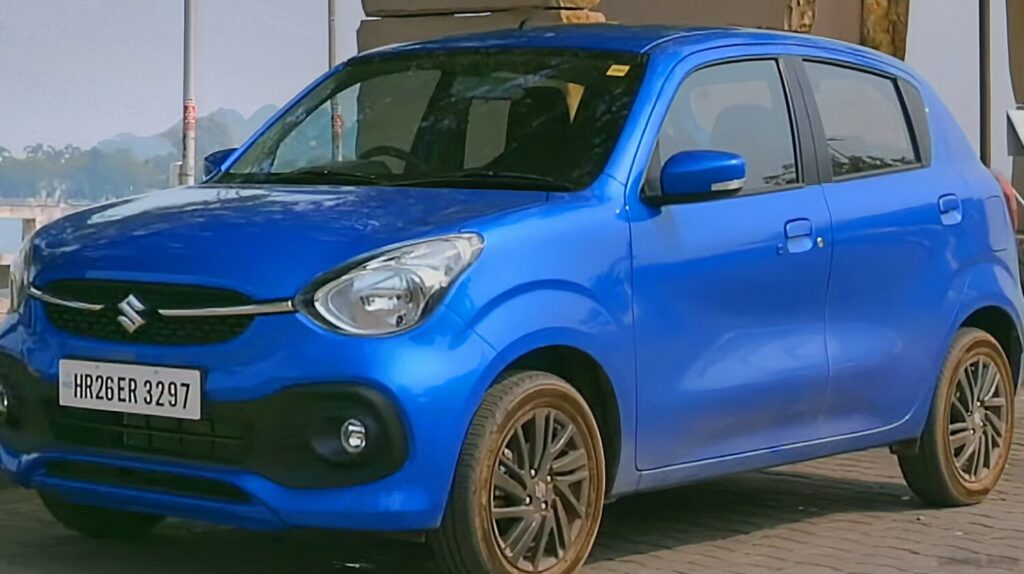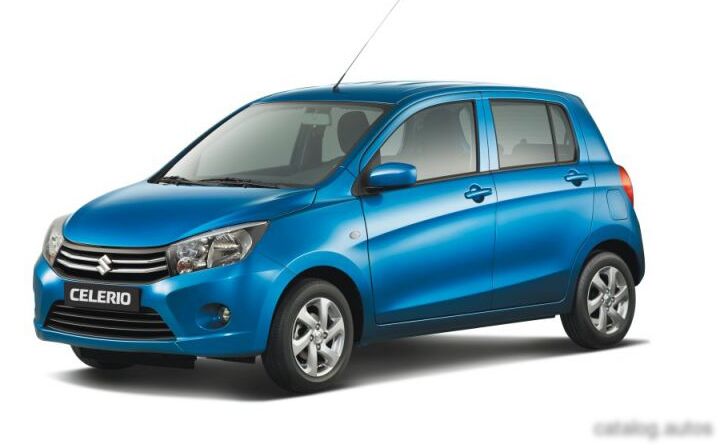
The Suzuki Celerio II 1.0 (68 hp) ECO+ is a city car produced by Suzuki from February 2014 to November 2021. Representing the second generation of the Celerio, this variant was positioned as the entry-level model within the range, focusing on fuel efficiency and affordability. It was primarily aimed at urban commuters and first-time car buyers. The Celerio II utilized Suzuki’s HEARTECT lightweight body frame, contributing to its low weight and impressive fuel economy. This model is part of the broader Celerio lineage, designed to offer a practical and economical transportation solution in various global markets.
Powertrain & Engine Architecture
The Celerio II 1.0 (68 hp) ECO+ is powered by the K10B engine, a 998 cc inline-three cylinder petrol engine. This engine is characterized by its compact size and lightweight construction, contributing to the vehicle’s overall efficiency. The K10B utilizes a multi-point fuel injection system, delivering fuel directly to the intake ports. The engine features four valves per cylinder, enhancing volumetric efficiency and contributing to improved power output. The compression ratio is set at 12:1, optimizing combustion for fuel economy. The engine is naturally aspirated, meaning it does not employ a turbocharger or supercharger.
The ECO+ designation refers to Suzuki’s efforts to maximize fuel efficiency. This included optimizing engine management and reducing internal friction. The engine produces 68 horsepower at 6000 rpm and 93 Nm (68.59 lb-ft) of torque at 3500 rpm. The engine’s power-to-weight ratio is 13.1 kg/hp, and the torque-to-weight ratio is 9.6 kg/Nm. The engine is transversely mounted at the front of the vehicle, driving the front wheels. The engine oil capacity is 2.8 liters (2.96 US qt / 2.46 UK qt) and requires a specification adhering to Suzuki’s recommendations. The cooling system holds 3.3 liters (3.49 US qt / 2.9 UK qt) of coolant.
Transmission
The Celerio II 1.0 (68 hp) ECO+ was primarily equipped with a five-speed manual transmission. This transmission was chosen to maximize fuel efficiency and provide a direct driving experience. The gear ratios were optimized for city driving, with a focus on providing adequate acceleration from low speeds. While an automated manual transmission (AMT) was available in some markets, the standard offering was the manual gearbox.
Driving Characteristics
The Celerio II 1.0 (68 hp) ECO+ delivers a driving experience focused on practicality and fuel economy rather than outright performance. Acceleration from 0 to 100 km/h (0-62 mph) takes approximately 13 seconds, and 0 to 60 mph is achieved in around 12.4 seconds. The top speed is limited to 155 km/h (96.31 mph). The engine’s torque output is modest, requiring drivers to utilize the full range of the five-speed gearbox to maintain momentum, particularly when overtaking or climbing hills. The lightweight nature of the vehicle helps to mitigate the effects of the low power output, making it feel reasonably nimble in urban environments. The steering is light and responsive, making it easy to maneuver in tight spaces. The suspension is tuned for comfort, absorbing bumps and imperfections in the road surface effectively.
Equipment & Trim Levels
The Celerio II 1.0 (68 hp) ECO+ was typically offered with a basic level of standard equipment, reflecting its position as the entry-level model. Standard features generally included power steering, central locking, electric front windows, and a basic audio system. Safety features included ABS (Anti-lock Braking System) and airbags. Interior upholstery was typically cloth, with a simple and functional dashboard layout. Optional extras varied depending on the market but could include air conditioning, alloy wheels, and a more advanced audio system. The rear seats could be folded down to increase cargo space, providing flexibility for carrying larger items. The trunk space ranges from 254 liters (8.97 cu. ft.) with the rear seats up to 726 liters (25.64 cu. ft.) with the rear seats folded down.
Chassis & Braking
The Celerio II utilizes a McPherson strut front suspension with a coil spring and anti-roll bar. This setup provides a good balance of ride comfort and handling. The rear suspension is a semi-independent coil spring arrangement, designed to minimize cost and weight. The front brakes are ventilated discs, providing adequate stopping power. The rear brakes are drums, a cost-saving measure common in this segment. The steering system is a rack and pinion type, offering precise and responsive steering. The vehicle rides on 165/65 R14 79S tires, mounted on 5J x 14 inch wheel rims. The minimum turning circle is 9.4 meters (30.84 ft).
Market Reception & Comparison
The Suzuki Celerio II 1.0 (68 hp) ECO+ was generally well-received by critics for its exceptional fuel economy and affordability. It was often praised as a practical and economical city car, ideal for short commutes and urban driving. However, its limited power output and basic interior were points of criticism. Compared to other trims in the Celerio lineup, the 1.0-liter ECO+ offered the lowest price point and the highest fuel economy, but at the expense of performance. It competed with other city cars such as the Hyundai i10, Kia Picanto, and Toyota Aygo. In terms of fuel economy, the Celerio II 1.0 (68 hp) ECO+ typically outperformed its rivals, achieving a combined fuel consumption of 3.6 l/100 km (65.3 US mpg / 78.5 UK mpg) and CO2 emissions of 84 g/km (Euro 6 standard).
Technical Specifications
| Brand | Suzuki |
| Model | Celerio |
| Generation | Celerio II |
| Type (Engine) | 1.0 (68 Hp) ECO+ |
| Start of production | February, 2014 |
| End of production | November, 2021 |
| Powertrain Architecture | Internal Combustion engine |
| Body type | Hatchback |
| Seats | 5 |
| Doors | 5 |
| Fuel consumption (urban) | 4.1 l/100 km (57.4 US mpg / 68.9 UK mpg / 24.4 km/l) |
| Fuel consumption (extra urban) | 3.4 l/100 km (69.2 US mpg / 83.1 UK mpg / 29.4 km/l) |
| Fuel consumption (combined) | 3.6 l/100 km (65.3 US mpg / 78.5 UK mpg / 27.8 km/l) |
| CO2 emissions | 84 g/km |
| Fuel Type | Petrol (Gasoline) |
| Acceleration 0 – 100 km/h | 13 sec |
| Acceleration 0 – 62 mph | 13 sec |
| Acceleration 0 – 60 mph | 12.4 sec |
| Maximum speed | 155 km/h (96.31 mph) |
| Emission standard | Euro 6 |
| Weight-to-power ratio | 13.1 kg/Hp |
| Weight-to-torque ratio | 9.6 kg/Nm |
| Power | 68 Hp @ 6000 rpm |
| Torque | 93 Nm @ 3500 rpm (68.59 lb.-ft. @ 3500 rpm) |
| Engine layout | Front, Transverse |
| Engine Model/Code | K10B |
| Engine displacement | 998 cm3 (60.9 cu. in.) |
| Number of cylinders | 3 |
| Engine configuration | Inline |
| Cylinder Bore | 73 mm (2.87 in.) |
| Piston Stroke | 79.5 mm (3.13 in.) |
| Compression ratio | 12:1 |
| Number of valves per cylinder | 4 |
| Fuel injection system | Multi-port manifold injection |
| Engine aspiration | Naturally aspirated engine |
| Engine oil capacity | 2.8 l (2.96 US qt | 2.46 UK qt) |
| Coolant | 3.3 l (3.49 US qt | 2.9 UK qt) |
| Kerb Weight | 890 kg (1962.11 lbs.) |
| Max. weight | 1260 kg (2777.82 lbs.) |
| Max load | 370 kg (815.71 lbs.) |
| Trunk (boot) space – minimum | 254 l (8.97 cu. ft.) |
| Trunk (boot) space – maximum | 726 l (25.64 cu. ft.) |
| Fuel tank capacity | 35 l (9.25 US gal | 7.7 UK gal) |
| Length | 3600 mm (141.73 in.) |
| Width | 1600 mm (62.99 in.) |
| Height | 1540 mm (60.63 in.) |
| Wheelbase | 2425 mm (95.47 in.) |
| Front track | 1420 mm (55.91 in.) |
| Rear (Back) track | 1410 mm (55.51 in.) |
| Ride height (ground clearance) | 145 mm (5.71 in.) |
| Minimum turning circle (turning diameter) | 9.4 m (30.84 ft.) |
| Drivetrain Architecture | Front wheel drive |
| Number of gears and type of gearbox | 5 gears, manual transmission |
| Front suspension | Independent, type McPherson with coil spring and anti-roll bar |
| Rear suspension | Semi-independent, coil spring |
| Front brakes | Ventilated discs |
| Rear brakes | Drum |
Legacy
The Suzuki Celerio II 1.0 (68 hp) ECO+ has proven to be a relatively reliable vehicle, with the K10B engine known for its durability and low running costs. While not known for its performance, the powertrain has demonstrated a good track record for longevity. In the used car market, the Celerio II 1.0 (68 hp) ECO+ remains an attractive option for budget-conscious buyers seeking an economical and practical city car. Its low fuel consumption and affordable maintenance costs continue to make it a popular choice, particularly for first-time car owners and those with limited driving needs. However, potential buyers should be aware of its limited power output and basic interior appointments.