
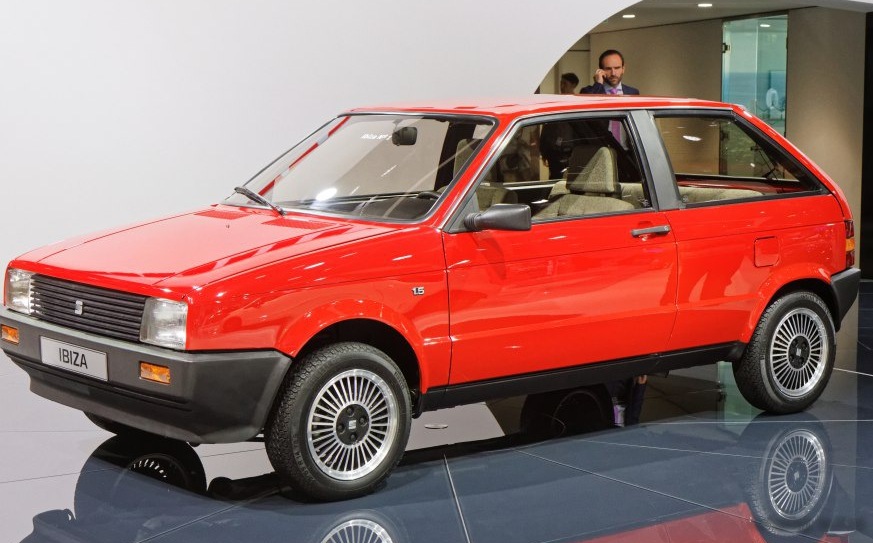
The Seat Ibiza I 1.5, producing 85 horsepower, was a mainstay of the first-generation Ibiza lineup, produced from 1984 to 1993. Positioned as a practical and economical entry-level option, it represented the core of the Ibiza’s appeal to a broad market. The Ibiza I, based on the Volkswagen Polo Mk2 platform (internally designated 1HX0/A3), was Seat’s first foray into front-wheel-drive hatchbacks, marking a significant departure from their earlier, rear-wheel-drive offerings. The 1.5-liter engine and five-speed manual transmission combination was the most common configuration during much of the Ibiza I’s production run, offering a balance between affordability and usability.
Powertrain & Engine Architecture
The heart of the Ibiza I 1.5 was the 021A2 engine, a 1.5-liter inline four-cylinder gasoline engine. This engine, derived from the Volkswagen Polo’s powerplant, featured a relatively simple design. It utilized a single overhead camshaft (SOHC) valvetrain with two valves per cylinder. Fuel delivery was managed by a carburetor, a common feature for vehicles of this era, rather than fuel injection. This carburetor setup, while less precise than modern fuel injection systems, contributed to the engine’s simplicity and lower production cost. The engine displaced 1461 cc (89.16 cubic inches) and produced 85 hp at 5600 rpm and 116 Nm (85.56 lb-ft) of torque at 3500 rpm. The compression ratio was 10.5:1. The engine was transversely mounted in the front of the vehicle, driving the front wheels.
Transmission Details
The standard transmission for the Ibiza I 1.5 was a five-speed manual gearbox. This transmission was chosen for its efficiency and affordability, aligning with the car’s overall positioning. The gear ratios were tailored to provide reasonable acceleration and fuel economy. First gear was relatively short, aiding in starting from a standstill, while fifth gear was geared for comfortable cruising at highway speeds. An automatic transmission was offered as an option in some markets, but it was less common and generally resulted in slightly reduced performance and fuel economy compared to the manual version.
Driving Characteristics
The Seat Ibiza I 1.5 offered modest but adequate performance for everyday driving. Acceleration from 0 to 60 mph took approximately 12.4 seconds, and the car had a top speed of around 108.74 mph (175 km/h). The engine’s torque peak at 3500 rpm meant that it felt reasonably responsive in normal driving conditions, but it lacked the outright punch of higher-powered variants. Compared to the later 1.6-liter engines or the diesel options, the 1.5 felt less refined and required more frequent gear changes to maintain momentum, especially when loaded or climbing hills. The front-wheel-drive configuration provided predictable handling, although it wasn’t particularly sporty. The steering was light and easy to use, making it well-suited for urban environments.
Equipment & Trim Levels
The Ibiza I 1.5 was typically offered in fairly basic trim levels, reflecting its entry-level status. Standard equipment generally included cloth upholstery, a simple dashboard layout, and manual windows and door locks. The interior was functional and durable, prioritizing practicality over luxury. Optional extras included a sunroof, upgraded stereo systems, and central locking. Higher trim levels, such as the GLX, offered additional features like alloy wheels, a more sophisticated interior trim, and improved sound insulation. The dashboard layout was straightforward, with clearly marked gauges for speed, fuel level, and coolant temperature. Air conditioning was a relatively rare option.
Chassis & Braking
The Ibiza I utilized a relatively simple chassis design. Front suspension consisted of MacPherson strut springs, while the rear suspension employed a twist beam setup. This configuration provided a reasonable balance between ride comfort and handling. The front brakes were disc brakes, offering adequate stopping power, while the rear brakes were drum brakes, a cost-saving measure common in vehicles of this class. The steering system was a rack and pinion type, providing precise and responsive steering. Tire size was typically 165/65 SR14. Stabilizer bars were often omitted on base models, contributing to a slightly more pronounced body roll in corners. ABS (Anti-lock Braking System) was not standard equipment and was only available as an option on higher trim levels.
Market Reception & Comparison
The Seat Ibiza I 1.5 was generally well-received by automotive critics as a practical and affordable hatchback. It was praised for its fuel efficiency, reliability, and ease of driving. However, it was also criticized for its relatively basic interior and modest performance. Compared to other hatchbacks in its class, such as the Ford Fiesta and the Renault 5, the Ibiza offered a good value proposition, particularly in terms of space and practicality. The 1.5-liter engine offered better fuel economy than the larger 1.6-liter engines available in some markets, but it lacked the same level of performance. The diesel versions of the Ibiza offered even better fuel economy but were significantly slower. The automatic transmission version of the 1.5 suffered from reduced fuel economy and slower acceleration compared to the manual version.
Technical Specifications
| Brand | Seat |
| Model | Ibiza |
| Generation | Ibiza I |
| Type (Engine) | 1.5 (85 Hp) |
| Start of production | 1984 |
| End of production | 1993 |
| Engine Displacement | 1461 cm3 (89.16 cu. in.) |
| Number of Cylinders | 4, Inline |
| Power | 85 Hp @ 5600 rpm |
| Torque | 116 Nm @ 3500 rpm (85.56 lb.-ft. @ 3500 rpm) |
| Fuel Type | Petrol (Gasoline) |
| Acceleration 0-60 mph | 12.4 sec |
| Acceleration 0-100 km/h | 13 sec |
| Maximum Speed | 175 km/h (108.74 mph) |
| Kerb Weight | 915 kg (2017.23 lbs.) |
| Fuel Consumption (Urban) | 8.8 l/100 km (26.7 US mpg) |
| Fuel Consumption (Extra Urban) | 4.8 l/100 km (49 US mpg) |
| Fuel Consumption (Combined) | 6.4 l/100 km (36.8 US mpg) |
| Fuel Tank Capacity | 50 l (13.21 US gal) |
| Transmission | 5-speed Manual |
| Front Suspension | Spring Strut |
| Rear Suspension | Spring Strut |
| Front Brakes | Disc |
| Rear Brakes | Drum |
Legacy
The Seat Ibiza I 1.5, while not a particularly groundbreaking vehicle, played a crucial role in establishing Seat as a modern automaker. The 021A2 engine proved to be relatively reliable, and many examples are still on the road today. However, age and mileage can lead to issues such as carburetor wear, oil leaks, and corrosion. The simplicity of the engine makes it relatively easy to maintain and repair, and parts are still available, although sourcing them can sometimes be challenging. In the used car market, the Ibiza I 1.5 is often sought after by enthusiasts looking for a classic, affordable hatchback. Its low running costs and simple mechanics make it an appealing option for those seeking a nostalgic driving experience. The 1.5-liter engine, while not powerful, is known for its durability and relatively low maintenance requirements, contributing to its continued popularity among classic car owners.
