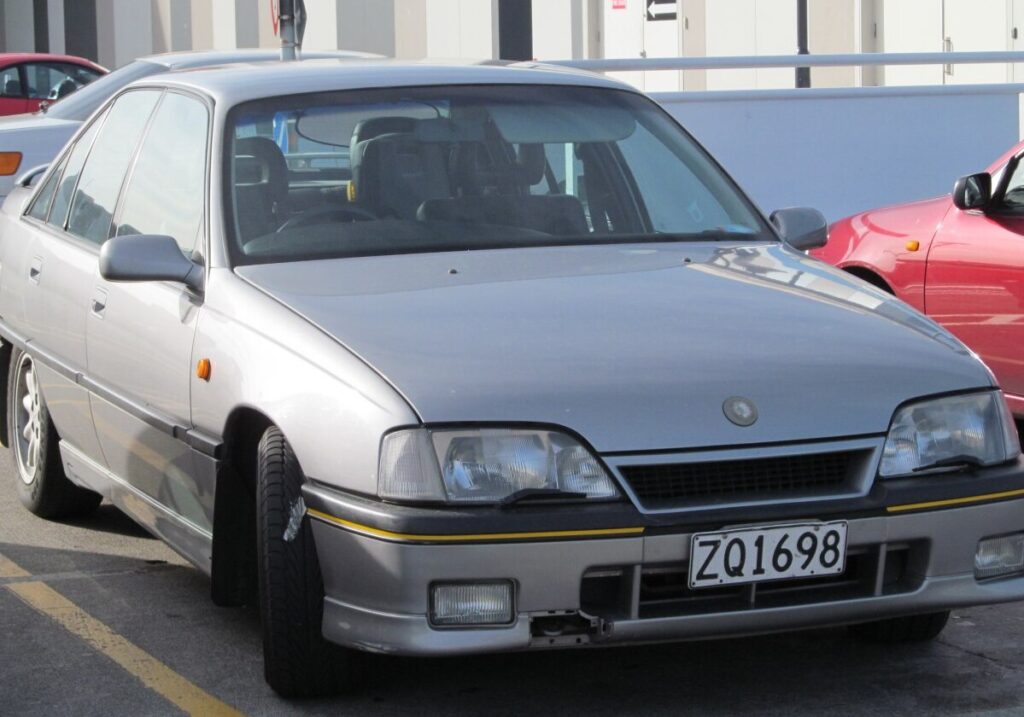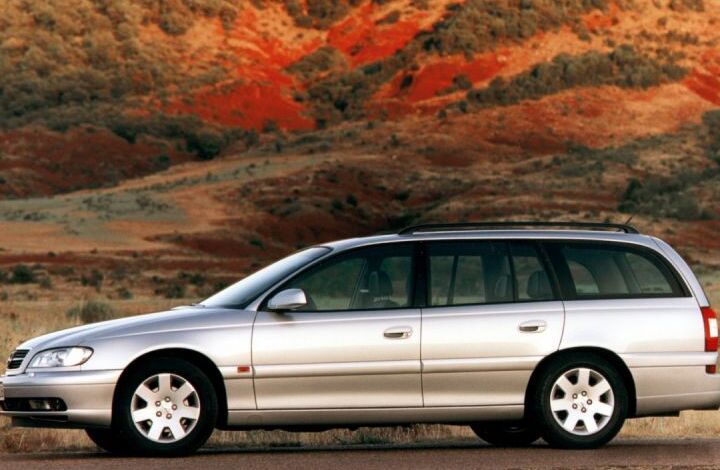
The Opel Omega B Caravan (facelift, 1999) 5.7 V8 was a high-performance, luxury-oriented station wagon produced between 2000 and 2001. Representing the pinnacle of the Omega B range, it was positioned as a premium offering, catering to buyers seeking a blend of practicality, space, and substantial power. The Omega B, built on the GM Epsilon platform (internally designated 1HX0/A3), was Opel’s flagship model, and the 5.7 V8 Caravan was a relatively rare and exclusive variant. It aimed to compete with high-end executive wagons from manufacturers like BMW and Audi, though it remained a niche product due to its limited production run and the brand’s overall market positioning.
The 5.7 V8 Powertrain & Engine Architecture
The heart of the Omega B Caravan 5.7 V8 was the Y57XE engine, a naturally aspirated 5.7-liter (5665 cc / 345.7 cu. in.) V8. This engine was derived from Chevrolet’s Small-Block V8 family, adapted for European markets and Opel’s engineering standards. It featured a cast iron block and aluminum cylinder heads, with two valves per cylinder. Fuel delivery was managed by a multi-port manifold injection system, providing precise fuel metering for optimal performance and efficiency. The engine produced 310 horsepower at 5600 rpm and 450 Nm (331.9 lb-ft) of torque at 4400 rpm, delivering a power-to-liter ratio of 54.7 hp/l.
The engine was longitudinally mounted in the front of the vehicle. Power was transmitted to the rear wheels via a 4-speed automatic transmission. While not the most modern transmission available at the time, it was chosen for its robustness and suitability for the engine’s torque characteristics. The transmission was calibrated to provide smooth shifts and responsive acceleration, though it lacked the sophistication of newer automatic gearboxes with more gears.
Engine Specifications Breakdown
Key engine specifications included a compression ratio of 10.1:1, a cylinder bore of 99 mm (3.9 in), and a piston stroke of 92 mm (3.62 in). The engine required 6 liters (6.34 US qt / 5.28 UK qt) of engine oil. The Y57XE engine, while powerful, was known for its relatively high fuel consumption, a trade-off for its substantial performance.
Driving Characteristics
The Omega B Caravan 5.7 V8 offered a distinctly different driving experience compared to other Omega B variants. The substantial torque output of the V8 engine provided strong acceleration, enabling a 0-100 km/h (0-62 mph) time of approximately 7 seconds and a 0-60 mph time of 6.7 seconds. The top speed was electronically limited to 250 km/h (155.34 mph). The rear-wheel-drive configuration contributed to a balanced feel, although it could be challenging to control in adverse weather conditions without the aid of the anti-lock braking system (ABS).
Compared to the more common four-cylinder or six-cylinder Omega B models, the V8 offered significantly more power and a more refined driving experience. However, the 4-speed automatic transmission, while reliable, didn’t allow the engine to fully exploit its potential, especially in terms of maximizing fuel efficiency. The weight-to-power ratio of 5.5 kg/hp and weight-to-torque ratio of 3.8 kg/Nm indicated a good balance between power and weight, contributing to the car’s brisk performance.
Equipment & Trim Levels
The 5.7 V8 Caravan was typically equipped with a high level of standard features, reflecting its premium positioning. These included leather upholstery, automatic climate control, power-adjustable front seats, a premium sound system, and alloy wheels. Additional features often included a sunroof, heated seats, and parking sensors. The interior trim was generally well-appointed, with a focus on comfort and luxury. While specific trim levels varied depending on the market, the V8 model consistently represented the highest level of equipment available for the Omega B Caravan.
Chassis & Braking
The Omega B Caravan 5.7 V8 utilized a coil spring suspension system for both the front and rear axles. The suspension was tuned to provide a comfortable ride while maintaining reasonable handling characteristics. The front brakes were ventilated discs, while the rear brakes were also ventilated discs, providing adequate stopping power for the car’s weight and performance. The car was equipped with ABS (Anti-lock braking system) as standard, enhancing safety and control during braking. The steering system was a rack and pinion type with hydraulic power steering, offering precise and responsive steering feel. The vehicle rode on 235/45 R17 tires mounted on 17-inch alloy wheels.
Market Reception & Comparison
The Opel Omega B Caravan 5.7 V8 received mixed reviews from automotive critics. While the engine’s performance was widely praised, the car’s relatively high fuel consumption and the somewhat dated 4-speed automatic transmission were points of criticism. Compared to its rivals, such as the BMW 5 Series Touring and Audi A6 Avant, the Omega B V8 offered a compelling combination of space, performance, and value, but it lacked the brand prestige and sophisticated technology of its German competitors. Fuel economy figures were substantial: 18 l/100 km (13.1 US mpg / 15.7 UK mpg / 5.6 km/l) in urban conditions, 10 l/100 km (23.5 US mpg / 28.2 UK mpg / 10 km/l) extra-urban, and 14 l/100 km (16.8 US mpg / 20.2 UK mpg / 7.1 km/l) combined.
Technical Specifications
| Brand | Opel |
| Model | Omega |
| Generation | Omega B Caravan (facelift 1999) |
| Type (Engine) | 5.7 V8 (310 Hp) |
| Start of production | 2000 year |
| End of production | 2001 year |
| Powertrain Architecture | Internal Combustion engine |
| Body type | Station wagon (estate) |
| Seats | 5 |
| Doors | 5 |
| Fuel consumption (urban) | 18 l/100 km (13.1 US mpg / 15.7 UK mpg) |
| Fuel consumption (extra urban) | 10 l/100 km (23.5 US mpg / 28.2 UK mpg) |
| Fuel consumption (combined) | 14 l/100 km (16.8 US mpg / 20.2 UK mpg) |
| Fuel Type | Petrol (Gasoline) |
| Acceleration 0 – 100 km/h | 7 sec |
| Acceleration 0 – 62 mph | 7 sec |
| Acceleration 0 – 60 mph | 6.7 sec |
| Maximum speed | 250 km/h (155.34 mph) |
| Weight-to-power ratio | 5.5 kg/Hp |
| Weight-to-torque ratio | 3.8 kg/Nm |
| Power | 310 Hp @ 5600 rpm |
| Torque | 450 Nm @ 4400 rpm (331.9 lb.-ft. @ 4400 rpm) |
| Engine layout | Front, Longitudinal |
| Engine Model/Code | Y57XE |
| Engine displacement | 5665 cm3 (345.7 cu. in.) |
| Number of cylinders | 8 |
| Engine configuration | V-engine |
| Cylinder Bore | 99 mm (3.9 in.) |
| Piston Stroke | 92 mm (3.62 in.) |
| Compression ratio | 10.1:1 |
| Number of valves per cylinder | 2 |
| Fuel injection system | Multi-port manifold injection |
| Engine aspiration | Naturally aspirated engine |
| Engine oil capacity | 6 l (6.34 US qt | 5.28 UK qt) |
| Kerb Weight | 1690 kg (3725.81 lbs.) |
| Max. weight | 2295 kg (5059.61 lbs.) |
| Max load | 605 kg (1333.8 lbs.) |
| Trunk (boot) space – minimum | 540 l (19.07 cu. ft.) |
| Trunk (boot) space – maximum | 1800 l (63.57 cu. ft.) |
| Fuel tank capacity | 75 l (19.81 US gal | 16.5 UK gal) |
| Length | 4898 mm (192.83 in.) |
| Width | 1776 mm (69.92 in.) |
| Height | 1540 mm (60.63 in.) |
| Wheelbase | 2730 mm (107.48 in.) |
| Front track | 1510 mm (59.45 in.) |
| Rear track | 1530 mm (60.24 in.) |
| Drivetrain Architecture | Rear wheel drive |
| Number of gears | 4 |
| Gearbox type | Automatic transmission |
| Front suspension | Coil spring |
| Rear suspension | Coil spring |
| Front brakes | Ventilated discs |
| Rear brakes | Ventilated discs |
| Assisting systems | ABS (Anti-lock braking system) |
| Steering type | Steering rack and pinion |
| Power steering | Hydraulic Steering |
| Tires size | 235/45 R17 |
| Wheel rims size | 17 |
Legacy
The Opel Omega B Caravan 5.7 V8 remains a relatively rare and sought-after vehicle among enthusiasts. The Y57XE engine, while known for its fuel consumption, is generally considered to be a robust and reliable unit when properly maintained. Parts availability can be a challenge, as the model is now over two decades old. However, the engine’s Chevrolet origins mean that some components are interchangeable with parts from American V8 engines. On the used car market, well-maintained examples command a premium price, appealing to collectors and those seeking a unique and powerful classic station wagon.