
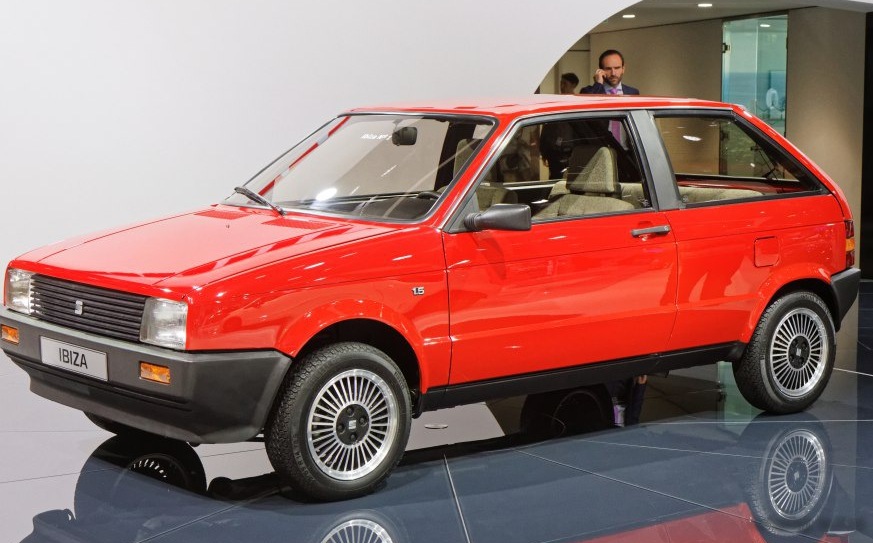
The Seat Ibiza I 1.5 i, produced between 1986 and 1993, represented a significant step for the Spanish automaker, marking its entry into the supermini segment. This first-generation Ibiza, internally designated as the 1HX0, was heavily based on the Fiat Tipo, a result of Seat’s collaboration with the Italian manufacturer under the Fiat Group umbrella. The 1.5 i variant, delivering 100 horsepower, occupied a mid-range position within the Ibiza I lineup, offering a balance between affordability and performance. It served as a step up from the base 0.9L models, while remaining more accessible than the later, more powerful 1.6L and 2.0L versions. The Ibiza I aimed to provide a modern, European-designed hatchback to a growing market segment.
The 1.5 i Engine and Powertrain
The heart of the Seat Ibiza I 1.5 i was the 1461cc inline four-cylinder gasoline engine. This engine, while sharing architectural similarities with Fiat’s offerings, was tuned specifically for Seat. It featured a naturally aspirated configuration with multi-port fuel injection, a significant advancement over earlier carburetor-based systems. The engine produced 100 horsepower at 5900 rpm and 128 Nm (94.41 lb-ft) of torque at 4700 rpm. This output provided adequate performance for everyday driving, though it wasn’t designed for outright speed. The compression ratio was set at 11:1, contributing to the engine’s efficiency and responsiveness.
The 1.5 i engine utilized a two-valve per cylinder (8-valve) valvetrain, a common design for engines of this era. Engine oil capacity was 4 liters (4.23 US qt | 3.52 UK qt) and coolant capacity was 7.5 liters (7.93 US qt | 6.6 UK qt). The engine was transversely mounted in the front of the vehicle, driving the front wheels. The Ibiza I 1.5 i was exclusively offered with a five-speed manual transmission. While an automatic transmission was available on some Ibiza models, it was not paired with the 1.5-liter engine.
Engine Codes and Variations
The 1.5-liter engine used in the Ibiza I was identified by various engine codes depending on the specific year and market. While specific codes varied, they generally indicated minor revisions to the engine management system or components. These variations didn’t drastically alter the engine’s fundamental characteristics, but were aimed at improving emissions or refining performance.
Driving Characteristics
The Seat Ibiza I 1.5 i offered a reasonably engaging driving experience for a supermini of its time. The 100 horsepower engine, coupled with the five-speed manual transmission, allowed for brisk acceleration, achieving 0-100 km/h (0-62 mph) in approximately 12.1 seconds. Top speed was rated at 175 km/h (108.74 mph). The engine’s torque curve provided decent pull throughout the rev range, making it suitable for both city driving and highway cruising. The five-speed gearbox allowed drivers to keep the engine in its optimal power band, maximizing efficiency and responsiveness.
Compared to the base 0.9L Ibiza, the 1.5 i offered a noticeable improvement in performance, making it more comfortable for longer journeys and overtaking maneuvers. However, it didn’t possess the outright punch of the later 1.6L and 2.0L models. The 1.5 i’s handling was generally considered competent, with a relatively lightweight chassis and responsive steering. It wasn’t a sports car, but it provided a stable and predictable driving experience.
Equipment and Trim Levels
The Seat Ibiza I 1.5 i was typically equipped with a modest level of standard features, reflecting its position as a mainstream supermini. Standard equipment generally included cloth upholstery, a basic instrument cluster, and manual windows and door locks. Power steering was not standard on all models, often being an optional extra. The interior design was functional and straightforward, prioritizing practicality over luxury.
Optional extras available for the 1.5 i included upgraded audio systems, alloy wheels, and a sunroof. Higher trim levels, if available in specific markets, might have featured additional comfort and convenience features, such as central locking and electric windows. The dashboard layout was relatively simple, with clearly labeled controls and a focus on driver ergonomics.
Chassis and Braking
The Seat Ibiza I utilized a relatively simple chassis design, featuring a front strut suspension and a rear strut suspension. This setup provided a comfortable ride quality, though it wasn’t particularly sophisticated. The front suspension incorporated a stabilizer bar to reduce body roll during cornering. The Ibiza I 1.5 i weighed approximately 945 kg (2083.37 lbs), contributing to its relatively nimble handling.
The braking system consisted of disc brakes on the front wheels and drum brakes on the rear wheels. This configuration was common for vehicles in this class during the late 1980s and early 1990s. Anti-lock braking system (ABS) was available as an optional extra on some models, enhancing braking performance and safety. The steering system employed a rack and pinion setup, providing precise and responsive steering feel. The standard tire size was 165/65 SR15.
Market Reception and Comparison
The Seat Ibiza I 1.5 i was generally well-received by automotive critics as a competent and affordable supermini. It was praised for its modern design, decent performance, and relatively spacious interior. However, some critics noted that the interior materials were somewhat basic and that the ride quality could be improved. Compared to its rivals, such as the Peugeot 205 and the Renault Clio, the Ibiza I offered a competitive package, particularly in terms of value for money.
Fuel economy was a strong point for the 1.5 i, with combined fuel consumption figures of around 7.2 l/100 km (32.7 US mpg, 39.2 UK mpg). Reliability was generally considered good, although some owners reported minor issues with the electrical system. The 1.5 i offered a good balance between performance, economy, and reliability, making it a popular choice among budget-conscious buyers.
Technical Specifications
| Body Type | Hatchback, 3-5 Doors |
| Engine Displacement | 1461 cm3 (89.16 cu. in.) |
| Number of Cylinders | 4, Inline |
| Power Output | 100 Hp @ 5900 rpm |
| Torque | 128 Nm @ 4700 rpm (94.41 lb.-ft. @ 4700 rpm) |
| Fuel Type | Petrol (Gasoline) |
| Fuel Consumption (Urban) | 9.1 l/100 km (25.8 US mpg, 31 UK mpg) |
| Fuel Consumption (Extra Urban) | 5.3 l/100 km (44.4 US mpg, 53.3 UK mpg) |
| Fuel Consumption (Combined) | 7.2 l/100 km (32.7 US mpg, 39.2 UK mpg) |
| Acceleration 0-100 km/h | 12.1 sec |
| Maximum Speed | 175 km/h (108.74 mph) |
| Kerb Weight | 945 kg (2083.37 lbs.) |
| Fuel Tank Capacity | 50 l (13.21 US gal, 11 UK gal) |
| Transmission | 5-speed Manual |
| Front Brakes | Disc |
| Rear Brakes | Drum |
Legacy
The Seat Ibiza I 1.5 i, while now a classic vehicle, remains a relatively affordable and accessible option in the used car market. The 1.5-liter engine is known for its durability and relatively simple maintenance requirements. However, as with any vehicle of this age, potential buyers should be aware of potential issues such as rust, worn suspension components, and aging electrical systems. Parts availability can be a challenge in some regions, but many components are still available through specialist suppliers. The Ibiza I 1.5 i represents a significant milestone in Seat’s history, marking its successful entry into the competitive supermini segment and establishing a foundation for future generations of the Ibiza.
